3.4.19

White Knights and ‘Muslimsplaining’


From Jacinda Ardern to Eggboy, the white saviours have taken over the Muslim story once again from the Muslims. To commemorate a week of the Christchurch terror attacks on two mosques there were a series of moves and events designed to make Muslims feel they belong.

New Zealand radio and television sounded the call for prayer at 1.30 pm, the time of the shootings. Policewomen and TV anchors wore the scarf; the latter began their telecast with a ‘salaam alaikum (peace be upon you), newspapers had Arabic scrawling on their front pages with an explanation of Muslim rituals, and Prime Minister Ardern quoted the Prophet. The distinction between state and religion was lost. Also, instead of an expression of solidarity, it appeared to be a catering to a homogenised people, if not a special needs people.

Entitled brown folks were, however, over the crescent moon. They were complicit in propping up such privilege with their gratefulness for a white headscarf wearer or a young man egg-splattering the head of a racist Australian senator.

A fundraiser for Eggboy Will Connolly raised a whole lot of money for his legal fees and for being “a good egg”. Using him as an example of how the West responds to hate speech ignores the immensity of the vile comments by Sen Fraser Anning blaming immigrants for the terror act.

Ardern visiting the bereaved with much empathy is no doubt a potent image of a caring leader, but would a Muslim leader reaching out to his people be greeted with as much enthusiasm?

These gestures have a limited shelf life, but by becoming totems they reduce the Muslim identity to a community that cannot manage without an Other’s heroism.

***

“I’d love to wear one, how do I tie it?” asked an enthusiastic white woman expressing her support for the March 22 Scarves in Solidarity Day.

To lift the spirits of New Zealanders, Christchurch youth worker Jay Geldard decided on Colour Your Day: Colour Your Day has come from asking how do 4.8 million people respond to an event like this? You get a sense that there's this desire, and it's like people who have been quite down don't know how to respond. So it's saying, let's just put on something bright. It could be socks, it could be scarves, it could just be mufti - you'll just see people in bright colours and you'll know you are all together.”

The problem with sentimental gestures is that they do not go deeper than the displayed symbolism. While wearing colourful socks could have worked as casual weekend dressing, it being a Friday – the day of prayer for Muslims, the day when the attacks took place while they were on their knees in obeisance – the sense of joyousness was a bit incongruous.


However, it was not as disingenuous as wearing a scarf in solidarity. As a Muslim woman who does not wear one, I often get praised for my assumed breaking of shackles by the rightwing and the liberals in India. The hijab has been a red rag for democratic regimes as well as feminists. Curiously, both these pro-choice proponents use it to indicate oppression and refuse to grant the wearer the dignity of having made a choice to assert an identity. They also seem to forget that women are shamed in the streets for wearing this identity.

That these liberals were ready to don a scarf in solidarity amounts to a denial of the rights of a people to stand up for themselves without being caricatured, howsoever benevolent the motive might be.

***

The notion behind speaking on behalf of a community is not inclusive but exclusive. It is a declaration that white is the mainstream, the standard gold. To belong, immigrants will have to look through this prism.

In an impassioned speech, Ms. Ardern said, “He is a terrorist, he is a criminal, he is an extremist, but he will, when I speak, be nameless, and to others I implore you: Speak the names of those who were lost rather than the name of the man who took them. He may have sought notoriety, but we in New Zealand will give him nothing – not even his name.”

This is most simplistic. He did not merely seek notoriety; he wanted to annihilate people. His manifesto clearly stated that. Terrorism by a white man cannot be explained away as an attention-seeking exercise. By making him invisible, his supremacism is being whitewashed.


Aiding in this process are the elite among the immigrants who rarely speak about such entrenched racism in their adopted homes and help in sidestepping the dangerous fact that such violent responses are not really an exception that commentators and Ms. Ardern herself makes it look like. They do the white thing by deifying a man who lost his wife in the attacks but forgave the killer because he represents the spirit of Islam. How different is it from the West creating binary stereotypes of the good Muslim and the bad Muslim?

Unless we have a Muslim, an Arab, an immigrant speak up against supremacists, and not just with eggs, and unless Muslim societies stop feeling beholden for tokens, the white killer will remain in whitened public perception merely a gunman seeking notoriety and not the terrorist that he is.

*****

Images: The Washington Post, New International

Published in CounterPunch

8.2.18

Power, Piffle and Padmaavat


The problem with a film that has been in the news and resulted in violent protests is that it gets a pedestal, and the resultant pigeon droppings, before you have even watched it. There is baggage as you enter the auditorium. You are already emotionally tuned into it – whether it be its message or its very existence as triumph over opposition. (The Karni Sena, a sort of watchdog organisation that burned the sets and demanded the head of the actors, claiming that the portrayal of Padmaavati, their hero who did not bow down to Allaudin Khilji, would be an insult to Rajputs.)

Despite all the intellectual titillation provided by an open letter where an actor claimed that she felt reduced to a vagina after watching Padmaavat (more on that later), the film did not reduce or elevate me to anything.  

I sat through it, not squirming as much as feeling detached. There was no emotional connect, as character after character piled on bravado and bluster in the automated manner of updated robots.

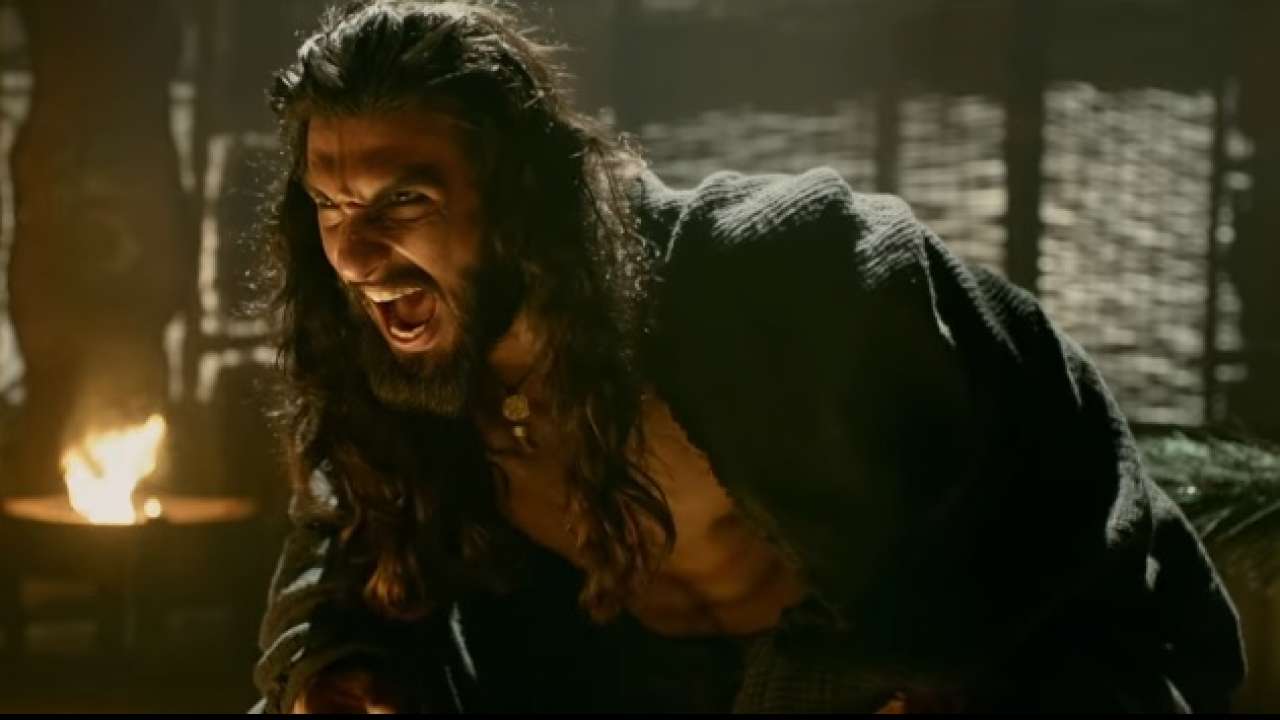
Director Sanjay Leela Bhansali has taken to making epic-type films that beneath their grandeur manage to camouflage the caricatures his characters come across as. For a movie that spouted honour, it struck one as a weakling constantly seeking affirmation.

The primary criticism of Padmaavat has been from the feminist point of view, and because one actor Swara Bhasker has decided to reduce the whole female population of India to genitals while smartly trying to win brownies by flattering the director with terms like “brilliant auteur” as well as the online coteries by adding mandatory references to “today’s India”, I’ll address a few points:

Why exactly was she reduced to a vagina?
 “Yes, women have vaginas, but they have more to them as well. So their whole life need not be focused on the vagina, and controlling it, protecting it, maintaining it’s purity. (Maybe in the 13th century that was the case, but in the 21st century we do not need to subscribe to these limiting ideas. We certainly do not need to glorify them.)”


You’ve got to be an obstetrician if that is all you see. This is ridiculous, whether the reference is to the film or to reality. Khilji has heard about Padmaavati’s beauty and wants to acquire her because “har nayaab cheez par hamara haq hai” (he has claims over every beautiful thing). His actions, at least according to this film, do not show him to be an aesthete and I’m afraid he does not appear to be terribly interested in the vagina either. His lust is essentially about jerking off the excess pressure of immense power he imagines he has.

You can’t find the jauhar scene glorified and not have a problem with the glorification of a queen who conveniently married a married man and let the first wife get side-lined.

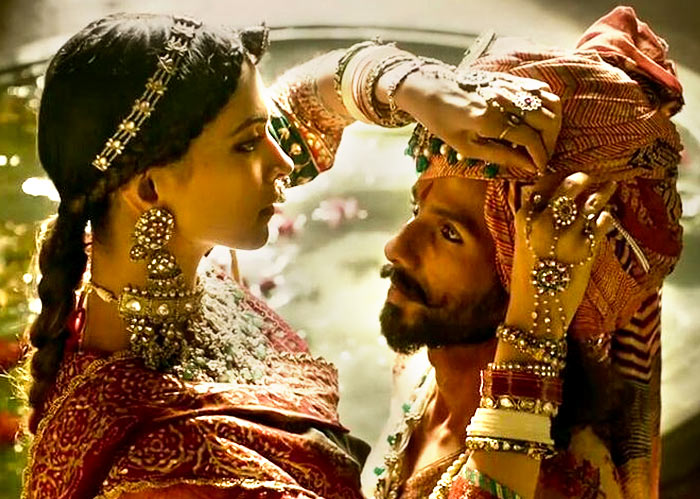
You cannot rant about being reduced to a vagina and not notice that this first wife was not only dehumanised, but desexualised as well. Padmaavati too spends more time trussing up her husband’s turban than any expression of amour.


You cannot have a problem with women choosing to end their lives instead of falling prey to the enemy and not flinch when men routinely speak of embracing death fighting the same enemy. What is so valorous about the latter? That they don’t have a vagina? So who is being reductive?

You can’t talk about Nirbhaya, the Delhi gangrape victim’s brave fight against her assaulters and not see Padmaavati fighting a similar threat. For all we know, had Khilji made it anywhere close to her she, a warrior herself, would have put up a good fight. All women do, unless they are muffled, shackled or rendered immobile. And people should just stop using rape and Dalit girls for their posh little consciences.
“I felt like all the ‘minor’ achievements that women and women’s movements have made over the years– like the right to vote, the right to own property, the right to education, equal pay for equal work…all of it was pointless; because we were back to basics.”

There is so much hyperbole here that it sounds like she is cloning Bhansali. Nobody, and certainly not rape victims, feels reduced to a vagina. They suffer from trauma not because their vagina was violated but because they were. I wish people would stop demoting the strides in law and social justice regarding women only to use it to make the self-righteous point that they, as opposed to the rest, care.

Even more appalling is the belief that cinema ought not to portray what may have happened without taking a moral position on it.  

“I understand that Jauhar and Sati are a part of our social history…but then so were the lynchings of blacks by murderous white mobs in the 19th century in the US – sensational, shocking dramatic social occurrences. Does that mean one should make a film about it with no perspective on racism? Or, without a comment on racial hatred?”


Political correctness and vacuous op-eds are killing reportage and delineation. The creator would certainly be free to explore the material as s/he wishes, but that does not necessarily amount to an opinion. It is choosing what part of the landscape to focus on. Many do-gooder films that overtly comment do not flinch from sensationalising the evils they depict. Patina is not perspective. Just as binaries are no plausible response to cardboard portrayals.

***

Swara Bhasker posted a video where she told Bhansali that she had taken up for his film during the protests. I watched more than that one clip. On the casting couch of which she was a potential victim, she refuses to name the man because he is not as important as her now. The message being that if your perpetrator is someone lower in the hierarchy, what’s the point? No eyeballs to grab.
She also puts the onus of the casting couch on women. She says, and this is pretty much her quote, that a man asking you to sleep with him is offering a bribe; you have the choice to refuse it. Women must say No. There will be consequences. But women shouldn’t be in a position where their ambitions become their greatest disadvantage.

To think that people like this are seen as the sensible and brave voices on social media. Oh, but they would be. Social media props up blather because it can’t handle complexities.


9.11.17

Revisiting Akbar-Salim-Anarkali


Last weekend I watched the stage version of Mughal-e-Azam. I like new perspectives, even if they do not hold the old charm.

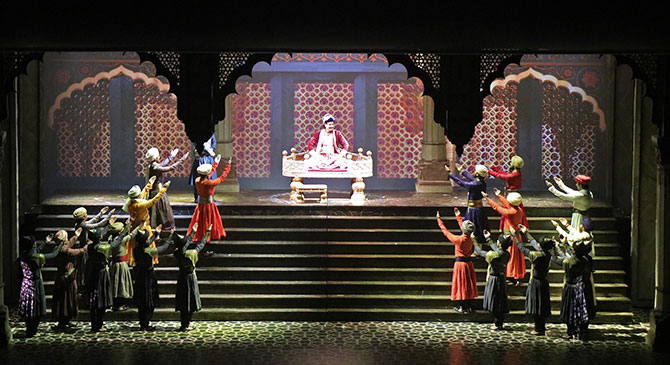
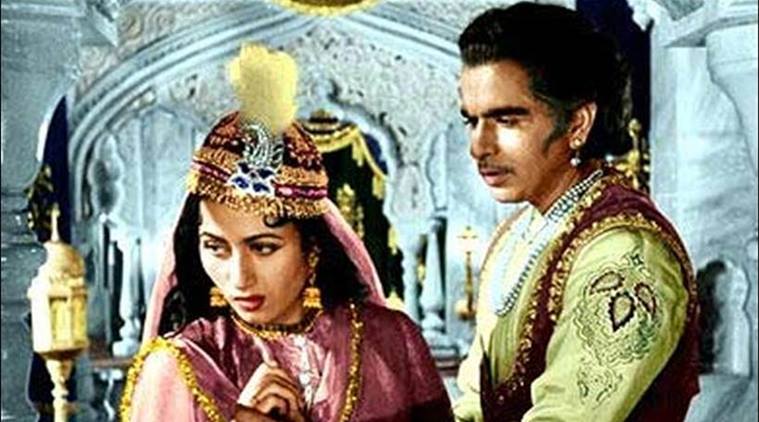
Feroz Abbas Khan’s take on the Anarkali-Prince Salim love story under the not benevolent eye of Emperor Akbar is an ambitious project. How could K.Asif’s landmark movie translate in the confined space of a stage, especially since there weren’t any claims at ‘reinventing’ the classic and the intent was to almost repeat the scenes and the dialogues verbatim?

As a tribute it succeeds; it has the  head-bowed quality about it, aware all the time of looking up to an icon. And it has improvised marvellously. That battle scene is breath-taking because it relies on lights, sound and choreography. The same applies to the kathak interludes – these are professional dancers and, to be honest, it was they who elevated the Pyar kiya to darna kya song sequence by adding heft to Anarkali’s challenge, and pathos; in the film the song was about Madhubala. There was also an innovative use of ‘mirrors’ and light to create the sheesh mahal, although the light hitting the audience made me squint and miss out on some ‘chakkars’ by the dancers.

There was also live singing. Neha Sargam as Anarkali did a marvellous job, but was it necessary, considering it was the same music? It was also rather disappointing when at curtains down, the announcer mentioned how people weren’t convinced that it was live singing and asked her to sing a few lines right there. To my mind, this was insulting to the artiste. The makers do not have to justify anything and ask their own actors to give proof.


If the original was about performances, this was not. For a supposedly more intimate medium, the acting was alienating. Probably it is the stage where expressions rely on voice and body language. Nissar Khan as Akbar was powerful at moments and desultory at others. Sunil Palwal as Salim has presence, but where was the angst? And where was the passion with Anarkali, the understated caresses, that choke in the voice? As for Jodha, there is no real pining for a son nor the conflict between suhaag and motherhood. Bahar’s - the daasi hoping to become a princess - character too does not have enough oomph and guile that the original possessed.

For me that was sad because on the film I felt Nigar Sultana had overtaken Madhubala in the qawaali not due to the lines but gumption (aidedhugely by Shamshad Begum’s voice).

Naushad’s music was the stuff of legend and it was good to revisit it ‘pictorially’, even if not entirely satisfactorily. Theatre, unlike cinema, is not really a director’s medium. But here the director rules, followed by stage design, lighting, choreography. It was treated like an occasion. People were taking selfies before the posters in the lobby…after all they had paid good money for the tickets.


-->
I’d say it was worth the few thousand bucks. For the million bucks’ worth, buy a DVD for a couple of hundred rupees.