Showing posts with label rich. Show all posts

20.11.16

Show me the money


For over ten days now, all of India is talking about money. A nation where over 32 per cent people live below the poverty line, and where some have not even seen big denomination currency notes, this itself seems like dark comedy. Dark comedy becomes a reality when the demonetisation move ostensibly introduced to get rid of black money mocks itself with a bureaucrat seeking and getting a bribe in the new currency notes.

On November 8, Prime Minister Modi decided that all ₹500 and ₹1000 notes were not to be legal tender from midnight onwards. This pushed even those who did not have black money to rush and offload these stacks.

A lot has been said and discussed on the subject, and it is rather obvious that the PM's populist move, and the false premise of how such money is used for terror funding, is not going to work this time.

What the overnight tamasha has done, though, is to challenge the social dynamics of class. Suddenly, anybody not categorised as poor is assumed to be rich.

I did not suffer because I did not have too many old notes with me. Just ₹15,000. The just is deliberate when you consider that four people in India would survive on this much for one month. As though this is not humbling enough, there have been stories of deaths, violence, illness, quarrels, hunger, of marriages postponed, of empty markets, half-stocked stores...people are affected.

I thought I was the affected, too. On the first day, I landed up at the bank. This was most unusual for me. I suspect I wanted to experience the moment. A friend I bumped into said, "Why do you need money? I thought you lived on ideas."

"Yes. But what if right now that idea is money?"

In the queue I did not see any poverty. In keeping with its international reputation, the bank was plying us with tea and coffee. We, the few people ahead and behind, were jokey and relaxed. We were more concerned about Americans under Donald Trump. But live jokes can't be played in a loop. After an hour and a bit, I gave up.

My banking is these days restricted to using the ATM. One is in control there and not waiting before a teller who will scrutinise your cheque to authenticate whether your money is indeed yours.

***

The doctor did not have a credit card swiping machine. His secretary pointed at a bundle of notes that were used to return as change. I didn't have the cash and I had got this appointment after a month. "You stay quite nearby, don't you? Then you can issue a cheque."

"Oh, that would be nice. I'll be back soon."

"We have that much trust in you."

I wondered why I was trusted. This was my first visit, we did not know each other. Trust in social situations is based on class factors - I wore a fragrance, was reasonable dressed, seems educated, and spoke in English. Would this courtesy have been extended to a person who would speak in Hindi or Marathi, who would be shabbily dressed?

We, all of us, judge people on superficial aspects. It isn't always wrong to do so, but is it a foolproof yardstick?

***


Eight days later when I managed to get the new notes, I had my first encounter with the streets. At a small store where I made some purchases, I told the seller that I had the ₹2000 notes and he would have to get me the change and, no, I would not accept the old currency. In the next ten minutes he had tapped people around his store and brought me the change, some in ₹10 denomination. 

He was accepting old money because he had no choice. "I wait in the bank for 4 hours to exchange and then come here. Can't afford to lose clients."

"But there is a limit to the amount changed..."

"We try all sources...different banks, different people."

***

At the signal, a eunuch approached me. "Dus, bees rupaiyya de do, sab achcha hoga..."

For 10-20 bucks I was being promised utopia. I had no change and said so.

"To phir 500 de do, saree khareed loongi aur tumko yaad karoongi..."

For 500 bucks, I'd be remembered by a eunuch. 

This was an unusual barter, especially since I have an inbuilt need to be forgotten. 

***

Any such upheaval brings forth genuine sympathy, and then there is a segment that will ride on it. On public fora, such displays reek of opportunism where this becomes one more chance to build up a samaritan profile. 


14.5.14

The price of a home


Mukesh Ambani's home at Mumbai's Altamount Road still appears to me to be under-construction. There is something incomplete about it. Or, like a wedding cake that's been haphazardly sliced through. At night, it transforms into a lit-up bauble for Brobdingnagians.

It comes at a price and now it has topped the list, according to Forbes:

The title of the most outrageously expensive property in the world still belongs to Mukesh Ambani’s Antilia in Mumbai, India. The 27-story, 400,000-square-foot skyscraper home–which is named after a mythical island in the Atlantic–includes six stories of underground parking, three helicopter pads, and reportedly requires a staff of 600 to keep it running. Construction costs for Antilia have been reported at a range of $1 billion to $2 billion. To put that into perspective, 7 World Trade Center, the 52-story tower that stands just north of Ground Zero in Manhattan with 1.7 million square feet of office space, cost a reported $2 billion to build.


A rich person is most certainly entitled to spend wealth as s/he desires. There are wannabes who aspire to things the rich want. However, when it is a home in a city with a huge disparity in wealth among its citizens, then it ceases to be a question merely of personal riches.

Reminds me of wellknown architect Charles Correa, who and said:

“When I visited Australia I realised that save for a few homes most of the people in the cities live on similar-sized plots. Australia, I thought is locked into equality while in India we are locked into inequality. Mukesh Ambani has proved it. ‘This is the amount of urban space I control,’ he is telling us by building that home. At the same time you have to be impressed. What a huge ivory tower!”


Poverty bothers us, whether it is due to sympathy or because its presence is considered a nuisance, an intrusion into our space. We drive past, eyes averted. We walk past, waiting to get out and inhale. We are uncomfortable; this is not about us.

Why don't we feel the same way about the ostentatious although that too is not about us? We drive past and look with awe. We walk past, slow our steps until a guard looks with suspicion. This makes us uncomfortable because poor guy has access to super rich.

In that, we too live in ivory towers sponging on other people's make-believe.

© Farzana Versey

24.4.14

When Mumbai was boothed

Everything is not about cynicism. We have a tendency to applaud only acceptable forms of protest. Now that 54 per cent have voted, Mumbai seems to have reclaimed itself.


There was much carping about the low turnout in the city until late afternoon on poll day. As the celebrities from Page 3, Bollywood, industry have been photographed, it is obvious that the others who didn’t go out and vote do not fall into the ‘luxury’ category. Not everybody is holidaying, not everybody is at kitty parties or watching movies, not everybody is smug.

It is for these not everybodys that I still laud my city. Whether they say so or not, refraining is dissent. I do have a problem about showing the middle finger though, because it insults the Indian Constitution and is churlish. But, for those who made a conscious decision, it is time to feel empowered. As residents of the financial capital, this sends out a strong signal to the complacent establishment.

There is the usual noise about how you can therefore not criticise the government. You can. If you pay taxes, don't throw garbage in the street, don't clog drains, don't incite people to anti-social activities. You can and you must.
This option is visible. For all those with inked fingers, nobody knows where their affiliations lie and therefore it would be interesting how willing they would be to stick their necks out for the party of choice, irrespective of the results.

This brings me to the idea of ‘privacy’ of choice. It appears to contradict the process of 'assembly'. If people voted en masse with a specific ideology/manifesto in mind, then it would be active participation. I am beginning to respect those who vote for freebies because they are not those insufferable ones voicing their tosh about rights. They seem more selfish than politicians, who are often upfront about their ruthless ambitions and even their lies. You can see through them.

My constant refrain is that the candidate or party you vote for is not going to be answerable. They might change alliances anytime.

---

How prudent was it to carry this story about 28,000 safai kaamgaars from the sweeper’s colony and their voting choice on the eve of the polls in Mumbai?

We have spent over 100 years here but we do not own these rooms. Several generations of our family have been in this profession and even the educated members of the community have been forced to take up this job as we do not have any other accommodation. No party takes active interest in our upliftment. So, we have unanimously decided to use the None of the Above (NOTA) option in the Lok Sabha elections," says Devendra Makwana, a resident of the BMC sweepers' colony near Arthur Road Jail, Byculla. 

This was uploaded on the website at 11.30 pm. The Congress MP or his supporters, of the rival parties’ candidates could easily approach them for what is essentially a municipal issue. They could make promises, offer sops, anything. In fact, members of the Maharashtra Navnirman Sena (MNS) and Aam Aadmi Party have been quoted in the report.

---

This picture in the social media was touted as evidence of democratic power:


Is it applause-worthy? It is shameful and distressing that in this city, this country, the poor, the elderly, and the disabled do not have the means to live with dignity. Unless, somebody decided to deliberately stage this for a photo-op.

---

So this is exercising franchise - go vote and get discounts, and fatten the purses of those who will benefit the most anyway?


Or this:

“Share your inked selfie using #dnaVoteGuru to encourage your friends & stand to win movie vouchers.”

---

Then there was the Election Commission doing its bit from secularism. Or, was it the media?


---

How do people vote?

The poor with their helplessness.

The middle class with the belief that their version of right and wrong are supreme.

The very rich by calculating who will give them the best deals and pass their lolly dreams.

Therefore, voting is all about getting returns.

And it is only one part of democracy. The whole of India waits in long queues for every little thing. No one applauds them for standing for hours to get their rations, their buses and trains, their seats in schools and colleges, and water dripping into dirty buckets from slowly drying taps.

Will those who did go to the booths accept whatever be the verdict and stop cribbing from now? Unlikely.

I have retained my right to rant. I am the alpha satvik voter.

© Farzana Versey

30.1.14

The flying MPs: Should they get special treatment?


Okay. Get angry. How dare our ‘public servants’ behave like feudals. Why should the taxpayer’s money be wasted on giving them the red carpet treatment? Get more angry.

Here is what is to happen:

Being treated like a Maharaja by Air India alone is not enough for our status-conscious members of Parliament. The aviation ministry now wants all private airlines to also accord royal treatment to nearly 800 members of the Lok Sabha and Rajya Sabha...The red carpet they are expected to roll out will include a designated protocol officer meeting MPs when they reach the airport and escort them to lounge. Check-in will be done by staff when the netas are resting there and having free refreshments. After that, they will be zipped through immigration and/or security checks to an aircraft waiting for them to board so that it can take off! Similar courtesy will have to be accorded on arrival too.

Flashback to not too long ago when Shashi Tharoor had talked about how he would have to travel “cattle class” when the government was pruning expenses. The reaction was that this was insulting to poor people, and perhaps to cattle as well.

Now, how many poor people travel by airplane? So, how would they feel insulted? For that matter, the economy class – why is it blatantly called Economy as opposed to Business or Club Class – also delineates the hierarchy. There is no chance in hell that ministers and VIPs are not treated better irrespective of how they travel.

I find it horribly treacly when I read about how Narayana Murthy and Azim Premji travel coach class. Do let me know when they are squeezed between two Amazons reading newspapers spread out, elbows tugging at them with the bloke in front reclining his seat into their laps.

Besides, many high-powered businessmen do have their staff check in for them, as well as ensure that upon arrival they sail through immigration and customs. You might say these are private individuals. But they are using the system, and therefore become it. Many do become political figures once they decide to get vocal about their positions, and contribute to different parties. When I see people like Suhel Seth, Alyque Padamsee, Sunil Alagh, and lately Capt. Gopinath holding forth on issues of the common man and pampered ministers, I really wonder how much in touch with reality they are. I would also like to know where they seat the ministers at their own sit-down dinners. Knock me down with a feather if the mantriji or mantri saheba is not at the main table.

Regarding special treatment meted out to ministers, one does not need any instruction from the directorate general of civil aviation (DGCA) for it. Private enterprise is largely indebted to, and uses the weaknesses of, those in power. It will bend, if not crawl, as long as it gets its own special benefits, some out of turn. Even if it has to use ‘common’ parlance, like say “people’s car”, which again makes it seem like ‘people’ here are those blokes who manage to scrape together Rs. 1 lakh and ride that little dinky vehicle and wave out to the non-people, the supra people, in their sedans. Even if it has meant dislocating villagers and tribals with political connivance to set up factories, and rob them of natural resources.

All this happens because ministers are the feudal lords, not of the ordinary taxpayer, but of the corporates.

A few years ago, I was quite surprised to see this activist-actress-Rajya Sabha member have a woman employee of a private airline on a domestic flight carry her hand baggage from the lounge to the van to right inside the aircraft. Was there a diktat then? No.

The problem is that we are slaves to VIP culture, which amounts to us wanting the powerful to appear powerful. In a sense, this is a hark-back to the days of rajas. The junta did not wish for them to jump off caparisoned elephants and mingle with the locals. They wanted them to throw pearls and coins. Court patronage was not looked down upon and in fact helped artistes flourish. Today, it is more of a barter system.

Is it a good thing to give such special treatment to ministers?

Good-bad are binaries. I certainly do not like the idea that DGCA would send out instructions for that would make it, in effect, a word of law. But to imagine that ministers and other favoured guests will not be given preferential treatment is rather naĆÆve.

In some ways having an airline staff accompany them is better for security than a PA carrying the minister’s little briefcase, putting it in the overhead locker, even arranging the seat for him and then wishing him a greasy-smile bon voyage, while the flight attendants hover with their hot towels. The first row 1-A or 1-D are always reserved for people like them. Why? Who has asked for this?

The problem is we make a noise over surface issues. How many of us have brought forth the problems of bad landing systems, bird hits, flight delays, airport cleanliness, lounge and plane facilities, erratic fares, and what goes on inside the cockpit before the DGCA? Don’t these affect us more than what a minister gets on a frayed red carpet?

It is like that silly move to call all elected politicians ‘sevaks’. Many of them would be only too happy to please, much in the manner of zamindars who invite you to their 'ghareeb khaana'. Humility is a luxury only the arrogant can afford.

© Farzana Versey

28.11.12

Jest Married


Weddings are probably occasions when people have every right to indulge in all their fantasies.

Around this time of the year, whenever I pass the Marine Drive stretch dotted with gymkhanas, there is opulence staring in the face. Elephants, apsaras, fountains, havelis…I once even saw a terracotta Venus lying in repose. How I wish they had a David standing over her. In bright daylight, all these decorations look forlorn, if not ridiculous. They are like discarded courtesans from another era. At night, with lights on, bedecked guests, music, they take on a respectable sheen.

It is not right to question anyone’s idea of a wedding. However, when I read about this, I was stupefied.I'll skip the names although they were on the front page:

One of the biggest weddings in the city in recent years saw...the son of city realtor tying the knot with the daughter of a business tycoon. The four-day wedding bash, rumoured to have cost around Rs 50 crore (over $5 million), attracted over 6,000 guests, including an A-list of celebrities ranging from industrialists and builders to film stars and politicians…

The celebrations spilled over to the next day with a bingo night and an array of games, with eye-popping prizes for the winners: Mercedes, BMWs, Audis, paid foreign and domestic holidays, besides other expensive gifts.

Almost all the guests were well-heeled. I find this rather downmarket. Affluent people carrying away keys to cars, envelopes with tickets to places they’ve been to several times. I would feel terribly insulted.

It is good to have games and fun. Take-away gifts have also become mandatory. This is just so much tosh. Avarice seems to afflict the elite more than anyone else. It is not just greed for money; it is greed for one-upmanship, for power, for acceptance. But, how would a big name feel driving a BMW won in a game of bingo at a wedding? Or, what is one of them is spotted at the airport to catch a flight and someone from those 6000 guests is present and smiles knowingly at the ticket that was won and is being used?

That is the reason I call it downmarket. If you imagine for a moment that such gifts might be passed on to the less fortunate, who do you think those would be? What will the staff do with fancy cars? Besides, many will have to ‘respect the sentiments’ of the giver and keep the gifts. It is all hogwash because they would in all likelihood be backbiting about the host’s dĆ©classĆ© showing off.

 For all the poshness, there are other areas where the hosts reveal chinks:

The menu was multidimensional: Indian, continental, Punjabi, Rajasthani, south Indian, Italian, Chinese et al. “In short, from dhokla-patra to noodles-pasta, there was everything to suit the taste buds of the distinguished gathering,” a family friend said.

Distinguished people do not attend wedding to eat. Distinguished people might be quite discerning and appreciate one sort of cuisine, instead of biting into dhoklas between bites of dimsums while a plate with quivering sphagetii waits for their attention, all to be washed down with robust Punjabi lassi or is it South Indian rasam?

This is not about one wedding. It has become standard fare, with different stalls set up s though you are at some buffet in a restaurant. With so many guests, it might be impossible to have a sit-down dinner. So, why don’t they just have bearers go around with finger food? Then it does not matter that patra is popped in straight after canapĆ©s.

Perhaps, the dinner spread from all regions and countries can be packed and given away as prize on some bingo night. 

- - -

Update on Nov 30:

In another context, extremely progressive and gratifying report about wedding vows to protect girl child that I shall reproduce in full:

JAIPUR: After the saat phera and agni sakhshi, health department authorities in Jhunjhunu will make the newly weds take an "official" vow.

Stung by the increasing cases of female feticide, couples will have to sign an affidavit after completing the customary seven rounds proclaiming that they would not possess any bias towards the girl child. They will have to take an oath that the bride will never undergo sex determination test. This was decided four days after bodies of two new born girls were found at separate locations in Jhunjhunju. The sex ratio of males to females is the lowest in this district in the state.

Jhunjhunu's deputy chief medical and health officer Dr Pradeep Singh told TOI, for the first time in the state, such a scheme is being launched under "Save the Girl Child" project."To raise awareness against female feticide and infanticide, we have termed it the eighth vow of marriage. We have printed about 3,000 affidavits which will be handed over to newly weds during the marriage ceremony in the district," said Singh.

The affidavit reads: "We take the eighth pledge that the bride will not undergo sex determination test. We will do our best to save the girl child and also raise awareness among others." The affidavit will be authorised by the minister of state for health Dr Rajkumar Sharma and signed by the couple. 

22.9.12

Tussi chha gaye, Sardarji! Will Manmohan Singh's Moment Last?

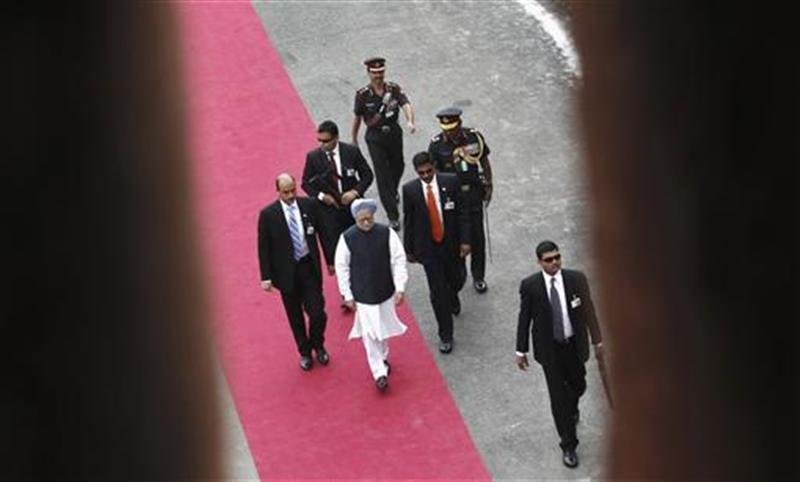
Time to roll out the red carpet?

I am not alluding to Dr. Manmohan Singh’s faith by addressing him as ‘Sardarji’ here. Sardar is a leader, and for the first ever time he spoke as one in his eight-year-long tenure. But all good packages don’t always have fresh and edible contents. In fact, the fine print on the package can be misleading.

Yet, I’d like to learn from the PM’s speech on the economic policy decisions for two reasons:

  1. I know precious little about the economy in terms of fiscal deficit and inflation. Therefore, I cannot see the issue holistically.
  2. He addressed the nation directly, instead of selecting a favourite media outlet to express his views, which is truly what a leader ought to do.

There were obvious political moments:

“No government likes to impose burdens on the common man. Our Government has been voted to office twice to protect the interests of the aam admi.”

The aam aadmi does not read party manifestos. The aam aadmi, and even industry bigwigs, like freebies.

The government has taken away the freebies:

“Let me begin with the rise in diesel prices and the cap on LPG cylinders. 
We import almost 80% of our oil, and oil prices in the world market have increased sharply in the past four years. We did not pass on most of this price rise to you, so that we could protect you from hardship to the maximum extent possible…Much of the diesel is used by big cars and SUVs owned by the rich and by factories and businesses. Should the government run large fiscal deficits to subsidize them?”

This is utterly wicked. But, then, that is what politicians do. It is not as though the corporate guys will take out a morcha; Dr. Singh works in a FICCI manner, more or less. This is really a buffer comment to hide the small cars, small homes that will bear some of the burden. It may not be huge, but with this statement he has tried to build confidence, conveying that the rich will take the blows. Reminiscent of Indira Gandhi’s “Garibi Hatao” slogan that later transmogrified into the License Raj.

It is time to revisit history and the PM did just that. He brought in 1991 when he as finance minister in P.V.Naramimha’s Rao’s cabinet made the economy ‘free’. The problem was, and continues to be, that freedom will always be in the hands of a few; that it might percolate to the lower strata is a bonus, never the main concern. I don’t wish to be a killjoy, but weren’t the big scams with lobbying and kickbacks the result of just this free-for-all?

Fine, kerosene has been left untouched because it is used by the poor. This is simplistic thinking, especially when he asks:

“Where would the money for this have come from? Money does not grow on trees. If we had not acted, it would have meant a higher fiscal deficit, that is, an unsustainable increase in government expenditure vis-a-vis government income. If unchecked, this would lead to a further steep rise in prices and a loss of confidence in our economy.  The prices of essential commodities would rise faster.  Both domestic as well as foreign investors would be reluctant to invest in our economy. Interest rates would rise.  Our companies would not be able to borrow abroad.  Unemployment would increase.”

He has created a Robinhood scenario. Rich subsiding the poor. Only, the rich will get a backdoor entry through “building investor confidence”. Is this good for the economy in the long run? How many of the poor will be employed, how many health and education schemes will see fruition as a result? Of course, this is putting the cart before the horse. The reason is that the horse can gallop away and leave the cart behind.

The PM’s views on the world situation, however, cannot be discounted:


“You should know that even after the price increase, the prices of diesel and LPG in India are lower than those in Bangladesh, Nepal, Sri Lanka and Pakistan.”


“The world is not kind to those who do not tackle their own problems. Many European countries are in this position today.  They cannot pay their bills and are looking to others for help.  They are having to cut wages or pensions to satisfy potential lenders.”


There is absolutely no doubt about this. India has remained relatively unsullied by the fall of the big economies, but who had to bear the brunt? And who were the people responsible for part of the major bungling? Wall Street. Big men with big greed.

His emphasis on global investment is a huge concern.


“The world is not kind to those who do not tackle their own problems…I am determined to see that India will not be pushed into that situation.  But I can succeed only if I can persuade you to understand why we had to act.”


It is, indeed, better for a nation to let its citizens work on the money than depend on loans directly. The “begging bowl” syndrome has not afflicted India to a great extent.

And this, the country can be proud of. The country should also be proud when people question it, for only then can there be true progress. India is not a single state whose development module can whitewash its other ills. To be more blunt, Manmohan Singh is not Narendra Modi.

We all know that there is a need for growth, but it cannot happen with a magic wand. In the process of the economy being stabilised, there might be little tremors. Can’t help but paraphrase Rajiv Gandhi’s comment (“When big tree falls, earth will shake”): When big tree is planted directly in the soil, there will be some mud that will come loose.

At this moment, my ‘aam aadmi’ imagination can only conjure up diesel-guzzling SUVs being splashed with sludge.

© Farzana Versey

11.3.11

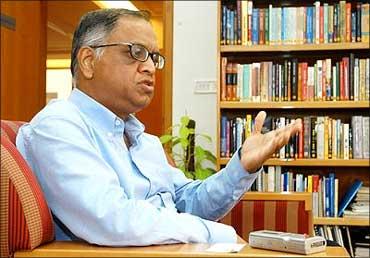
Kannada Calling, Mr. Narayan Murthy

Any Kannada books?
Infosys Chairperson N R Narayana Murthy can afford the luxury of emotions, among other luxuries. The Karnataka government wanted him to inaugurate the Vishwa Kannada Sammelan. Kannada writer Baragur Ramachandrappa was not happy with this. Murthy finds it “absurd to label him anti-Kannada”. These were the words in the report, but not by Mr. Ramachandrappa. He had written to the chief minister:

“I can understand them inviting him to inaugurate the World Investors’ Meet. His contribution to the field of business is immense. But what has he contributed to Kannada and its culture. The establishment needs to understand that they are organising a Vishwa Kannada Sammelana and not a Vishwa Karnataka Sammelana. The subtle distinction is that the former has a cultural context to it. How does Narayana Murthy fit into this scenario? He is not a cultural face.”

Culture in this context is specific to the arts and not to social mores. So, there is indeed a distinction. But the government wants a global face. Why must regional literary and artistic activities be held hostage to how the international community perceives them? Apparently, Mr. Murthy had advised the authorities to choose a litterateur, but they said it was not relegated to Kannada. In that case they ought to change the title of the event. Money power seems to be doing all the talking and also getting legitimised as the cultural faƧade. It would not hurt Murthy to be seen as such since roots have such currency, especially among global Indians. No wonder he said:

“Kannada is the language of my emotions.”

Emotions are private. They are not displayed at seminars and most certainly not as an identity card.

As happens often, it becomes a tussle between the local language and English. Baragur pointed out:

“He always quotes Chinese model, where English is being encouraged but says nothing about the fact that major IT companies there have developed software in the Chinese to ensure that their mother tongue is part of the next generation too.”

This is a moot point and not a lesson we are ready to learn. The Chinese have managed a fine balancing act and most of their enterprises can in fact said to be culture-driven, in that there is little compromise on that front. In India, at least in urban areas, we discourage regional languages; it is considered too vernacular.

This is not to dismiss English. I am writing in it. This is to give a holistic approach. But Mr Murthy’s take is different:

He said he would have 200-250 peons, drivers, etc asking him every year to get their kids admitted to English-medium schools. They asked him to take up the issue with the government so that the children of the poor can also become engineers and doctors. Murthy told the government: “Why don’t we have information on TV and press about the advantages of English and Kannada medium by qualified people. Let people then decide.”

How will people decide? Will there be elections on this issue? Or a committee will be formed? How can one lay down the advantages of a language when it is an evolving entity that is used to express several things at different times?

It is no surprise that peons and drivers would want their children to study in English-medium schools. They should not be denied it. But, as he himself stated, he studied initially in a Kannada school and went on to be what he is. Therefore, language is not an impediment. One is not so concerned about the poor getting into English-medium schools as much as the rich not being tutored at all in Kannada or any other regional language. Murthy is skirting this issue by firing from the shoulders of the poor.

This brings us to his role in Kannada culture. He may be the face of Karnataka and Bengalaru (Bangalore) more particularly. He probably does sponsor cultural activities. However, it is time the government stopped patronising people for the wrong reasons – whether they be entrepreneurs or even cultural upstarts who curry favour with the establishment. And if they want to showcase not just Kannada, then they can get whoever they wish to inaugurate the sammelan. Narayan Murthy may then not even need to waste his emotions.

- - -
More on the 'worth' of CEOs as calculated by students here

30.12.10

Open Letter to the Police Commissioner, Mumbai

Sir:

I have received a notice from your office that has been sent to some local police stations and thence to the relevant buildings regarding an “imminent terrorist threat” and the precautions to be taken. I understand the importance of security measures, but most of the points you have brought in are applicable on a day-to-day basis and they are not followed. Therefore, what is the value of informing the citizens that this will be on until January 1st? What happens after that?

Within two kilometres of where I live, there is every place of worship and several bars and restaurants with liquor permits. On New Year’s Eve I believe most places will be allowed to remain open until the early hours of dawn and people will be drunk. Who will the cops keep an eye out for - those who might indulge in drunken misbehaviour or those who are praying? How do you judge suspicious-looking characters? The milkman may have a mean-looking moustache but is a hardworking guy who is earning his livelihood. You insist he should have an ID card when he visits the building everyday. You want those who deliver groceries and other essentials to show proof that they are who they are. The security guards should be more vigilant. Why only now? They should always be vigilant. You have not said anything about firecrackers; their sounds can create havoc both literally and figuratively.

The intelligence agencies have discovered that four terrorists have turned up in our megapolis. I find that rather curious. They have made sketches of these guys, which means they have no photographs and they have not been ever caught before. Apparently, they are supposed to hit at certain areas during the holiday season. This has created a fear psychosis and will only make the already pampered sections feel more pampered. They go around with personal bodyguards as well as police protection when there are extortion or other threats from the underworld.

I would like to know whether the letter I got has also been sent to the slums, for within this radius there are slum colonies too, the ones that have not been bulldozed yet or been forced out by builders who are part of the system. I don’t mind the naka-bandi, I don’t mind the frisking, the checking of vehicles. But do not invest too much power in the local residence associations. The tendency to become keepers of society can be a power trip. And they will create their own sub-sects of what and who is suspicious.

No one bothers when there is work going on in residences and labourers walk in and out without the owners bothered about being at home and putting their neighbours at risk; the security keeps no track and the incidence of crime can increase in such cases too. Therefore, how would filling in details in the security register help? Can people not lie? Most societies do not have watchmen from reputed firms, so who will keep track of them?

And why the need to sound apologetic about the presence of police personnel? This itself reveals that there is paranoia, not only about terrorists but the police force.

I assure you of all help, but I would also want to be assured that the poor people are not harassed only because they look suspicious to the rich, and that those drunken sods don’t mow down people sleeping in the footpaths or molest or ‘eve tease’ women and get away with it, and the noise decibels do not reach dangerous levels in what are clearly residential localities and there are hospitals around, too. Should there be any unfortunate mischief in a place of worship it should be treated as just that and not a terrorist act. We have seen this sort of cow-pig thing happen before, so let us grow up.

As a citizen and a loyal Mumbaikar, I do so hope that we can enter the new year when our minds are without fear.

Sincerely,
FV

PS: I hope you will keep the media out or else we will hear no end to stories of celebrities who just missed a potential threat by a whisker and how the bhajiwalla became a braveheart.

23.12.09

Ghalib and the kiss at Indian weddings

naadaan ho jo kehte ho ki kyon jeete ho 'Ghalib'
qismat mein hai marne ki tamannaa koi din aur

Would Mirza Ghalib’s ghost have stood waiting near the coffee maker amongst neon lights for his post-dinner beverage?

The news that his haveli, which was restored only 10 years ago, was used for a wedding reception is rather appalling. Imagine people in their finery jostling amongst the poet’s personal belongings. A report says the floor was “littered with food crumbs, crushed plastic glasses and disposable plates”.

Why would anyone choose such a place for their celebrations? Do they feel culturally enlightened and wish to convey that to their guests? Is it some sort of antique value they seek? This isn’t something new. It happens all the time – old paintings, old mansions used by the nouveau riche to convey some connection with a background they often lack. Everybody has a right to strive to make money and awareness is not the jaagir of those born into wealth. But the term nouveau is used disparagingly and not without reason. There is a category of people who will flash whatever they have.

The bride and groom may not necessarily have an acquaintance with the poet’s work. What about the parents? Assuming they are fans of Ghalib, could they not respect the space? These days every little religious icon gets sanctified even if it is put up by some goon. Why don’t we learn to value those who truly contributed to our lives and their works have lived down centuries?

There are many farm houses in Delhi. They could have been given that old world look and trussed one up to appear like a crumbling haveli.

Marriages are now all about event management, so this seems par for the course.

On the other hand, there is news that Indians are giving up traditional functions (that coffee maker is an indication!). I read this from an article about fusion weddings:

One affluent and typical Gujarati family had hosted an English dinner after the dandiya function. The desi best man and maid of honour, dressed in coordinated traditional Indian wear, made speeches and raised a toast to the couple as aunties and uncles grinned behind clusters of flowers on assigned tables. The last few phera mantras were translated into English on the microphone by the pandit and the couple even exchanged I dos, says the wedding planner.


I am concerned about the English dinner. I have seen food stalls with Burmese bhel, paneer dim-sums, but since we are talking about vegetarians would they stuff the jacket potatoes with poha or dal dhokli? People do drink, but I wonder about the toast. Something like, “May Jitesbhai and Falguni ben leeve hep-peeli after”.

The sardars would go full throttle with a “Chak de phate, Hramindarr pra and Hramindarr pojai. Oye gud luck and many tandoori nights…”

When one passes the Marine Drive there are several garishly-decorated wedding venues. Some have thermocole elephants flanking the gate; others have a Venus ice sculpture. I have not yet seen David in the buff.

For a relative’s marriage in Toronto that I was present at they had traditional ceremonies before marriage, then a nikaah with an English translation (I got there late, so missed it), and the reception was a complete volte face. The bride wore a gown. There was a Best Man who emcee-ed the show and took off his shirt. There were speeches; the tables had bows and gifts for everyone. And the couple took to the floor with a waltz…dancing to the Bollywood number "Kuchch na kaho”!

The boy migrated when he was in his late teens; the girl went there after marriage. So, all of this must have taken some practice.

Anyhow, after the initial gliding softly, everyone came to their senses and started doing the bhangra and the dandiya.

Eats the time to dhisco.

22.12.09

Global Bubble of the Revivalist

Maverick: Global Bubble of the Revivalist
by Farzana Versey
Covert, December 15-30

Those who left have it good. While Prime Minister Manmohan Singh wants them to return home as “brain gain”, the right-wingers have been lauding them for precisely the same reason with an additional halo – the global revivalist.

In one of the fancy social satsangs at the altar of Mammon the luminaries wanted to know where Hindus figured on the world stage. There was no talk about India. It is precious, then, to talk about marauding Mughals and Christian missionaries. Does this not amount to merely following those notorious footsteps, the only difference being monetary power added to spiritual piffle?

Has anyone tried to understand how in those hundreds of years of occupation, India did not become a Muslim or a Christian nation? Those Hindus who converted to certain sects, like Bohras and Ismailis, are among the most educated and successful people in the country today.

In the world of the freshly-minted sophisticated anti-secularist, such details do not matter. To this mind the restoration of a hotel must be seen in the context of the Somnath temple which rose after each fall. It deviously disregards the fact that the rebuilding has been carried out by the management that has also generously set up a non- religious Trust to rehabilitate those who were affected in other areas as well. The global clock-turner is busy patting his back over restoration of places of worship and landmark sites, but there is absolutely no concern about resurrecting the ordinary citizen’s right to livelihood and dignity.

Listing the achievements of expatriates is typical of this tunnel vision. Of the few that become entrepreneurs or have prominent careers, there are thousands who perform ordinary tasks. Many have entered those western countries illegally or gone through agents after a lot of effort. Instead of wondering why this happens, this neo world citizen with a limited cultural baggage is basking in the reflected glory of achievers who had to go elsewhere to make their fortune and earn their fame because their homeland did not nurture their dreams.

The Knights and Nobel laureates refer to their Indian roots only when there is a bit of exotic drama required. How can they be considered a part of revivalism of ancient culture? Would they identify with the dubious idea of taking religion to new lands? They are on Forbes power list because of how much they influence society. Osama bin Laden is sharing space, too. If some build temples, then there are others like Swraj Paul who donate to the London Zoo. They pay huge sums to political parties in their adopted lands to get leverage for themselves and not their faith. It is quite simply business acumen and social opportunism at work. It has got nothing to do with keeping the flame of any potential Ram Rajya alive.

Yoga and levitating gurus is old hat and has little to do with healing powers and more to do with hype. It did not start with the new revivalists but old hippies. Being honoured and having festivals celebrated work as totems for ethnic minorities who may indeed possess talent. But, as Venkatraman Ramakrishnan made it amply clear, his “nationality is simply an accident of birth”. He would not want to be hailed as a global Hindu hero or be placed on the same pedestal as ashram evangelists.

In the excitement over the well-heeled, fossils of accruing mutual fund culture whose high-walled existence is no better than ghettos, the revivalist boasts that his religion is the only one that does not have a history of massacres. Loss of memory means ignoring the past of what some rulers did to demolish Jainism from South India between the 8th and 12th centuries, and the contemporary history of the Sikh carnage, the Mumbai riots and Gujarat genocide. To clothe these in the garb of a global phenomenon that has risen from the suffering of centuries is skulduggery and hypocrisy.

Perhaps it might do them well to ponder over a small fact that those Hindus who are today a part of the White House clique have been appointed by a half Muslim, half Christian.

Shall we call such resurrection a case of appeasement since delusional apocalypticism can only be a mirage?

11.12.09

Mahatma Gandhi and Lindsay Lohan

Mahatma Gandhi is an all-purpose sales guy. Mont Blanc pens know that and decided to have an imprint of his image on their limited edition fountain pen in 18-carat solid gold. This story was reported two months ago and has resurfaced because a PIL has been filed in India against the retailers.

I would not want it for the simple reason that it is cheesy and I can’t afford it. But the arguments against it are rather amusing.

$23,000, they say, is the lifetime income of the poor in India.

Rich Indians buy Swarovski crystals and Gucci bags. They do not calculate how much the poor are worth.

One of those spokesperson types said, “This pen is really funny. Gandhi would say it should be tossed in the trash or, better, sold off to pay for water and power for the poor. Gandhi would have been ashamed.”

Nope. Gandhi lived with industrialists and he knew they manufactured expensive goods. And we also knew that people commemorate heroes after they are dead. He did not ask the rich when he was alive to give up anything for the poor.

His great-grandson, who got a neat cut, it is said, had a different take: “I consider the Mont blanc pen their acknowledgment of the greatness of Gandhi. They are doing it the only way they know how. His writing implement was his greatest tool.”

I thought non-violence and swadeshi (self-reliance and abjurance of foreign goods) was. He delivered lectures and spoke a lot. He did write but that is hardly any justification for this pricey little thing. And it is limited edition, accessible to very few.

This business of an India on the move is getting on my nerves. We were always a materialistic society; some sold products, some services and some spirituality. Almost half of the population lives below the poverty line (about $1.25 a day). They don’t care about Mont Blanc or any pen because most are illiterate. And they pretty much do not care about Gandhi.

We want to purr about some big cats making it big, then fine. Let them flash that pen around too.

It is aesthetically quite unappealing and would require great gumption to expose bad taste. It won’t transform them into Gandhi clones. Or Gandhi abusers. Or people who like quoting Gandhi because it sounds like such an awesome thing to do.

So, here is one: “Capital as such is not evil; it is its wrong use that is evil. Capital in some form or other will always be needed.”

- - -

Now, we come to the other great marketing delight. Lindsay Lohan is in India to make a documentary on human trafficking. She tweeted: “Over 40 children saved so far... Within one day's work... This is what life is about... Doing THIS is a life worth living!!!”

Sure. I am sure it will keep her clean for a while. But did she have to sound like she is at some game keeping track of the goals scored? Is it all in a day’s work? Do we blame Twitter, the medium, for making everything seem so simplistic and easy? And why Lindsay? What was the BBC thinking? Role model?

Oh, and here’s a quote from her repertoire, too: “How can you not like Britney Spears?”

19.9.09

The Great Indian Rope Trick

Arrogance and Austerity
The Great Indian Rope Trick
by Farzana Versey
Counterpunch, September 18-20, 2009

The soles of his feet were cracked like the soil in barren fields. He sat idly and drank khus sherbet. There weren’t any files spread before him. He was doing no work, only shaking his legs in that nervous frenzied manner of people in power who have to sit with others.

This was in the executive class on a private airline. It was before the Congress party told its ministers that they had to go on an austerity drive and travel economy. Agriculture Minister Sharad Pawar reacted by saying there would be no space to do any work.

Why has there been such a black and white reaction to this move? Was it because two ministers started staying at luxury hotels while their government bungalows were being ‘done up’? S.M.Krishna and former UN man Shashi Tharoor claim they did not use the tax-payer’s money; the latter in his now patented fashion is throwing the “I am paying the bills from my own savings after a lifetime of international work” line.

His little tweets have made him into a five-star martyr to become a part of knee-jerk legend. In one he said he would definitely travel in ‘cattle class out of solidarity with all our holy cows’. Naturally, those who think life revolves around conveying their daily stories in small doses find it, and him, cute. The arrogance of this kind of Indian politician mirrors the same feudal mentality that upstart urbanites accuse the country bumpkins of.

The primary reason is that our society follows the “Dilli Chalo” (onward to Delhi) credo to sanctify the power of central leadership and fake cohesiveness. Our slogans have moved from “Jai Jawaan, Jai Kisaan” (Hail the solider and the farmer) to “Garibi hatao” (Banish poverty) to “India Shining”. While India was shining, farmers were committing suicide as they are now. Getting ministers to give 20 percent of their wages for drought-affected regions is simplistic. The salaries of ministers are not known to be high. They earn more through perks – for fuel, phones, travel. There is also the larger issue of corruption. Granting licences for large projects to certain firms is part of the money-making deal that keeps the political machinery lubricated.

The current move is not about hypocrisy but hyperbole. And who better fits the slot of abstinence than the father of the nation? Lalu Prasad Yadav said, “Mahatma Gandhi always preferred to travel in third class compartments... and remained frugal throughout his life.”

If there is anyone who made poverty look like a million bucks, then it was Gandhi. The land of nabobs became the land of the half-naked fakir. The Birlas played host to him not because he drank goat’s milk but because he said, “India must protect her primary industries even as a mother protects her children against the whole world without being hostile to it.”

This is the brand of selective socialism that is being replayed today, not the fashionable Nehruvian model which was about how to do a Lenin by wearing mink. It is corporatisation of spiritualism. Anyone with a begging bowl of empty dreams can head a start-up venture of couture abstemiousness.

The idea of droughts and famines do not merely fan such high thinking among politicians but intellectuals, too. Remember Amartya Sen’s facile belief that, “… famines have never afflicted any country that is independent, that goes to elections, that has opposition parties to voice criticisms, that permits newspapers to report freely and to question government policies without extensive censorship”?

Simply speaking, we would be talking about socially and economically wealthy societies. Forget famines. What about other problems that beset a country like India? We have democracy, why then does Prof. Sen subscribe to state intervention? He had concurred that the role of the state even in matters of nutrition, health, education, social insurance was connected with the outcome of economic processes, which must empower people to become economic agents in their own right.

Here was a clear case of making both sides happy without giving a thought to the fact that state intervention can never empower people; it only results in dependency if not degradation. Perhaps, that suits the purpose. As he once stated, “Buddha was asking himself what kind of life is that (of illness, old age, mortality)? These are problems we all face. For many of us it is also the impetus for our work.”

T
he concern about rural India’s suffering arises only when it affects the middle class and the rich. Food, a basic need, is in short supply. An India that is now being sold Quaker Oats by an organisation of heart cure is willing to exaggerate its misery. Where are our irrigation plants? What happens to the families of farmers? How many people are moving to other towns and cities? Have these aspects been considered? Sonia Gandhi takes a flight with the plebs. As a symbol it might work, but only for a limited audience.

Once the flight touches ground, there will be a fleet of security vehicles. The person in the street does not care. It will, however, result in more corruption. The corporate sector that has thrived due to political munificence will be happy to help. They will not go quietly and do something in the villages where they have set up factories; they already think they have done the country a huge favour by providing employment opportunities. Labour is cheap. Instead, they will provide facilities to ministers, and since many of their kind have got into the fray it will be easy. They talk the same language and suffer from the same gilt-edged greed.

Does anyone talk about austerity for them when they are in fact sponging on the shareholder’s money? Was there any talk about austerity when villagers were driven out of the leftist state to facilitate factories to produce a low-cost car for the city dweller – a car that would clearly point out the difference between the rich and the ones who would never get there?

We condescendingly let Lalu, our rustic politician, join the cavalcade of management geeks to give lectures at Harvard and Wharton. The gallery applauds as they would when they watch a comic act or an acrobat. He senses that. Years of having been marginalised have taught him lessons in hypocrisy, stereotypes, and expectations. He plays their game. He too starts quoting Gandhi even as he made money from kickbacks from cow food. How much more hick town can anyone get?

Sleepy Communism has joined ranks, clinking glasses of Old Monk and belting out the angst of foreign rebellion in the voices of Ginsberg and Che, driving kitsch up the Warhol wall. Poor India has today become a parody of its own poverty.

- - -
(An abridged version appears in The News International, September 19)

28.8.09

Wrong number?

Dialled one? Do you expect to get beaten up for it, have your hair shaved off, and then be paraded through the streets?

In Bhiwani, a village in Haryana, a Dalit youth had to go through this. Dalits belong to the lower caste. It does not matter whether they are educated or have made some money. They are stigmatised only because they are born in what is still the backward caste. It is there in the scriptures. Perhaps, it was valid then as it pointed to certain professions, although there were clear rules about how to treat the shudras. These people, even four decades after independence, carried night soil (that is, shit) on their heads in a cosmopolitan city like Mumbai. And even today in some parts of the country they have to tie a broom behind them to clean the road on which the higher caste folks will later walk. Their shadow cannot fall on these people, and they are still not permitted to enter temples.

Legally and politically they are termed Scheduled Castes/Tribes, and the term Dalit was given to lend them an identity. It is way better than being called Harijans (children of god) that Mahatma Gandhi patronisingly anointed them with.

This is what Suresh, the young man, said, “I was trying the telephone number of one of my acquaintances on Monday when I inadvertently dialled the number of Dharam Singh (another villager). The moment I realized my mistake, I apologized immediately and disconnected the phone.’’

That is what we all do. And the person either tells us it is okay or bangs down the phone. But not for him. The next day the person who received the call brought six of his friends. They tonsured him, tied him to a motorcycle and dragged him through the streets, hitting him all the while. He could not go to the cops because they threatened him.

The police have yet to register a case and are, like old Indian bureaucracy, “looking into the matter” and that too because the Dalits have demanded action.

Will they get justice? No. I am going by precedent.

And here the papers are screaming out kitschy ads about the best Ganesh pandals for which there are prizes. The deity is fed, the devotees are fed. This is the god of prosperity. Prosperity for the few. The sculptor still lives in poverty. The guys who fix those neon lights will not prosper. The fat cats will become fatter cats. The ones in the middle will think they will get something out of all this. Make a statement. The Elephant God made from different materials.

Is prosperity about this? We should be ashamed about instances such as the one I mentioned, and it is really insensitive to say, oh, what is new? No. It is not new. And it has to be restated. That is the tragedy. So, feeding gods is not going to make your home a better place and priests dunking themselves in buckets of water are not going to bring rain.

We are ethically becoming poor. Damn all the exotica. I guess, I have got the wrong number…

15.8.09

Despicable Dogs and Independence

We are free today? Rubbish. Slaves walk, talk, mock. Kuttey-kaminey, a curse made famous by Bollywood, is a reality. The strays are left to fend for themselves. Base instincts prevail.

We threw out the British 62 years ago on August 15 and internalised colonialism.


Yes, they unfurled flags today. Yes, they sang patriotic songs. Yes, the PM made a speech from a derelict monument created by the Mughals, who we hate the most. Yes, we are so happening. We proudly export talent and kids of Indian origin win Spelling Bee contests and land up among the top few in American Idol. We applaud.

I know there are parties held in the big cities where the martinis will be as frozen as the stares in high storey apartments where the menu will be “specially Indian” as though they are talking about another world. The ‘pilaf’ will be a cute three-coloured one to represent the national flag and women and men in scarves and shawls will throw orange, green and white in faces lightened by chemical peels. Lightening creams are for those who don’t matter. Dogs.


One quarter of the country is suffering from drought. Yeah, baby. India is dry. You will need a lot of time with her.

I can still hear the words, “Kuttey Kaminey” as a celluloid hero thrashes a villain. It is always the muscular hero who utters those words. Weird.


Today, the underbelly is the belly – lean, mean and weaned on crime and cruelty. This is the face we want to hide as Sacred Spaces lecture us on how to give our souls a high-five. Enlightenment is borrowed. Search is not seeking but a website engine. Google moksha. But you can't deny this: Dogs are barking and biting. And man does bite dog because that dog is someone like him. The dirty streets are not only full of faeces but people we call Nobodies.

They aren’t slaves because they are trysting with destinies the hard way. Strays with meanness in their marrows. Films are recognising them. A recent movie is called Kaminey. One review ended hilariously with the line: “Tarantino, take a bow. Brave new Bollywood is here”!

How can we be new and brave when we are asking Them to take a bow for what one of Us has created? Here are the real slaves. Walking, talking, mocking others when they want to be these smart shits. It isn’t pulp fiction. It is real and vicious. It is also independent India. See it before someone from Hollywood decides to seep through the sore pores of my country. Let us use ourselves. A hero who says, "Read my lisp”.

India is free because it can look down on him. He lets us do it because he knows he is needed. We are free. We shoot strays, don’t we?

Kaminey - Dhan Te Nan


- - -


(The image of the flag on top is of the first stamp of independent India)