Showing posts with label social networking. Show all posts

13.7.14

Sunday ka Funda

Wrong


You need imagination:


You should have the talent to multitask...and feel indispensable:


...and you should believe that things come round full circle:

4.6.14

The hate that prompts a Nikhil to turn into a Nihal - Beyond The Pune Murder


A young man is killed by a group of people. They ought to be arrested and questioned for the motive of the crime by the police. The courts would then pronounce a sentence, one hopes keeping justice in mind for there are signs that the man was brutally attacked.

This short paragraph will not make the cut, not as a news story, not for readers, not for TV viewers. So, let us fill in the details.

The man was a 28-year-old IT professional from Solapur, working in Pune. He had gone for his evening prayers and was returning home on Monday night. A group of men armed with hockey sticks started beating him up and continued to do so till he bled and the wounds were visible, and until he died.

Is this para enough? What is the motive?

The man's name is Mohsin Shaikh. The cops have arrested members of the Hindu Rashtra Sena. A senior police official said:

“On Monday evening, there were rumours circulated through the social media that stones were pelted at a Shivaji statue. This led a group of youths from the Hindu Rashtra Sena to take to the streets. They targeted Muslim settlements. Motorcycles that were found at the place where Mohsin was beaten up led to the suspects."


Prior to that, somebody had posted morphed photographs of Shivaji and Bal Thackeray on Facebook. That had led the HRS to vandalise 200 vehicles and create mayhem in Osmanabad District, where it was believed the post originated from.

Why was Mohsin Shaikh, who was in Pune, targeted? Reports say that a 'Nihal Khan' posted those pictures. It turns out that it was a Nikhil Tikone who did so. This is not new. Recall how the Sri Ram Sene members had hoisted a Pakistani flag on the secretariat building in Bangalore to create tension between the two communities.

In such a situation, one group sees the other as an opponent and it does not matter who actually is behind the mischief. Tikone chose to post as Nihal Khan, but why did he do so? Was he alone or was it a group backing him?

And what happens to the man who lost his life for nothing? His friend Riyaz who was with him at the time of the attack said:

"I was saved because I don't have a beard, and wasn't wearing a skullcap. Mohsin was targetted because he looked like a Muslim.”


This will be explained away as a hate crime. The problem is the other layers get ignored. He was educated, had a job and a decent salary. He was also taking up social space with confidence, and not afraid to show an identity he was comfortable with. The hate here is for all of these factors, besides his religion. The resentment is against a person from a minority community who is not browbeaten by people who are seemingly uneducated, unemployed, and easily brainwashed.

[Those who talk about madrassa brainwashing need to look into their own backyard sometimes, if for nothing else then to at least save themselves from being destructive.]

The Nikhils have a vague idea about another faith, but they feel threatened by the fictitious Nihals who manage to lead a life of dignity without compromising on their choice of food, clothes, and faith.

There is a reason, idealistic as it may seem, that I started out by not mentioning any details, especially about religion. Will such hate crime reduce when people realise they are not getting any mileage for puffing their chests to prove they are in a majority or a position of power?

These are fringe outfits, yet they get mainstream space. Ironically, they object to posts but use the social media to promote a rift. That is their target audience, and it is no more about affording a computer, a smartphone and a wireless connection. These are cheap and accessible today. Anonymity can also make people whoever they want to be.

Mohsin lost his life because hate has takers. Already, the fence-sitters are specifying that it is a Congress-ruled state. Does it matter? Uttar Pradesh is a Samajwadi Party-ruled state, Kolkata a Trinamool Congress state.

The point is that the culprits have been burning public property for a few days and are not afraid to flash their motive. It is such pugnacity that not only kills innocents, but might also get away with it. One, two, twelve culprits may get sentenced for a murder that is real. Hate is an abstraction that uses other means, other reasons to hit back. Who will try it?

© Farzana Versey

1.7.13

Tooth vs. Dentures: The Modi Bite


How do you deal with the hype? The answer is simple: You don't. It is already reaching saturation point. Having 7,200 "e-soldiers" is a sign of desperation. The Gujarat chief minister is looking for someone to head the minority cell, "but the BJP is finding it difficult to find a recognizable face to head its minority front in Gujarat". His soldiers who think the 2002 riots are old and it is time to 'move on' will never have the courage to come forth with a plea that Muslims need not vote for the party. If they did, then one might give them some credit for at least lack of hypocrisy regarding their persistent whining against vote bank politics.

I am often surprised at the naïveté of those who believe that the cyber world can win elections. This report in The Times of India gives us a few details about how it works:

"Try criticizing Gujarat CM Narendra Modi on social media and you will be ambushed by a cyber army. Praise him, and there will be hundreds joining the chorus...The sharp quips against Modi-baiters on the net are the coordinated effort of these youth, who use specialized software to add friends and ‘Likes’ to Modi pages on Facebook and Twitter and also send mass messages."

Getting urban youth is not difficult. Modi should give credit for this to Anna Hazare. His crusade brought out the Nike generation to embrace the Gandhi topi in the day and drown their new-found angst later in the usual haunts. Nothing has changed, except a new-found purpose that I have already talked about in the I Mislead India post.

So, he had a ready 'army', and it was not difficult to brainwash them into believing that all would be right and what was wrong was not the fault of Modi, but of those who were out to demonise him. The youth who were shouting for justice against rapists and scamsters have been silenced into believing in legalistic justice where foot soldiers take the blame and you need 'concrete evidence' to pin down leaders The dissent that they proudly claimed has been bought with a fake ideology. The recent history they are asked to forget is dragging them to the ancient past of Mughal conquerors. Irony cringes.

The group is incestuous and sharp, though. They will target novices with no known baggage. Try a red herring (RH) with them. They will not bite. The fear factor they use against others is really their own fear of any strong opinion. Watch them on TV shows and the moment they face an argument, the response is, "Look at you, you are getting nervous", even as they muffle their own nervous laughter. They cannot handle anyone who has a contrary viewpoint.

I have not come across a single person who is a Modi or a BJP person being critical of the way of functioning (no, L.K.Advani does not count!). If they cannot question anything, then how will they critique others? How different is it from the dynasty they abhor? It was this Narendra Modi Army that took out a morcha to Mr. Advani's house after he spoke out. Forget cohesiveness, it reveals bad taste and insecurity.

The electronic media has given way too much attention to these "Internet warriors". The unfortunate negative fallout is a response by the Congress camp of mimicking it. It ought not to be difficult. Prop up one individual, discuss achievements, rubbish the opposition. However, they have not been as successful. If the relatively secular forces (not just the Congress) have any sense they'd see that as a compliment,

They have a wider variety of supporters, not all creditable, but yet. They are not in denial mode about any of the riots during Congress rule. They are not in a desperate hurry to accept the words of disgruntled NDA allies, even if some politicians do. A Digvijaya Singh, a Sanjay Jha, an Abhishek Singhvi are often pulled up by their own even as they remain anti-BJP. One does not ever hear about any Modi bhakt criticising their spokespersons for speaking out of turn and, by Jove, they do.

In the superficial oneupmanship, where it is clear that the Modi army outnumbers, it is the loss of sensible debate.

Contrary to what the social media believes about the social media clout of the man, a war cannot be fought with invisible weapons and hydra- headed monsters with multiple accounts. This is an insult to the vast population of India. And it ought to be a lesson for every political party.

Ruling a country is not a hashtag you can latch on to. You can fool a few lakh followers — many talking to themselves — but not the millions.

© Farzana Versey

---

Also read: Advani and Modi:No Exit

Image source not available

15.11.12

Wailers and vultures

‘With Bal Thackeray on Life Support, Mumbai braces for violence’. The New York Times in its “Notes from the world’s largest democracy” just could not let go of the opportunity.

But, then, this is what the Indian media has been doing. They positioned their OB vans, and how dare those Shiv Sainiks who had gathered near Matoshree, the Shiv Sena leader’s residence, come in the way of their ‘job’. Their job is not to wait for someone to die. Whenever that is to happen, they will know.

Some of them have complained about being hurt in scuffles. This is what happens when there are crowds. The SS has done far worse, with the people, with media-persons. But in the 90s news channels and their prominent anchors were not celebrities. The people who were beaten, whose offices destroyed were not important people in their scheme of things. What a strange coincidence that Nikhil Wagle, among the few who stood up to Bal Thackeray, is today part of one of these tosh news channels.

I have absolutely no sympathy for Thackeray the politician, and it does not even need to be emphasised. If you’ve been around during the 1992-93 riots, you would know, especially if you went where it mattered. Nor am I one of those “oh, it does not change anything only because s/he is dead/ailing”, although I would accord some respect to privacy. And at least I would not think it terribly funny to pun on his name or crack lame jokes. This is to be expected from people who get their information on timelines and find it easy to just lump along with any smart-ass.

Where were all these people when he was well and thriving? Hitting out at someone who is in a weak situation reveals the weakness of the people commenting. Does anyone recall the grand interviews Balasaheb gave to the media? You should watch some to get an idea about how deferential the media was. To see them today screeching about how his legacy is about violence is a tad bit amusing, not to mention that it states the obvious.

Regarding all this talk about how the sainiks have/will behave and what business they have to converge at his place, did anyone ask why Amitabh Bachchan landed up there? Lest anyone forgets or does not know, Mr. B holds a Sunday durbar at his residence. He comes out to greet his fans. The cops are required. He does this because he wants to reciprocate their love or some such thing. Well, then Mr. Thackeray has his supporters. The police force is needed to handle the situation.

And what exactly is the situation? Why does the media indulge in pre-empt strikes about “violence”? Yes, the sainiks can get excitable and agitated. Think about what happens down South when film stars and politicians have died. There are mass suicides.

Some shops did stay shut. Public transport was slow. Who put the germ of the idea that “something might happen” in the minds of these people? Even if some sainiks did go around asking people to down shutters, the snowballing effect is all thanks to the media and social networking sites.

The worst possible aspect is that they are using Muslim shoulders to fire their empty guns. As always, such ‘protective’ instinct is counterproductive.

There is the violence of the street. And the violence of using the possibility of such violence for one's benefit.

1.12.11

Who moved my 'journalistic space'? The Age of Twitter Set-ups

Why the hell is ‘journalistic space’* being taken over by micro-blogging? Why is it that when one person breaks wind there, a whole bunch of people queue up outside the loo?

Hmm…I had just finished my morning adulations, and ignoring the Toffee-nose of India (TOI), I went to the stapled sister. I like Mumbai Mirror. I like mirrors. Now, in the midst of all the light frothy gossipy stuff it mentioned a “corruscating review” about a recently-published “social Bible”. It did not specify whether it was the Nobu or the Antillia version.

What follows here is a reaction to the responses to the riposte to the review and the rejoinders to the remnants that remain of the righteous rumblings.

Since those who do not read my blog are not acquainted with those who do not read everything else, I will have to introduce the characters that are not there and what they did not do.

An author Soul Setter, henceforth referred to as Setter because I want to sound like a Goan, wrote a book, a social Bible, if you must, called 'Getting To the Top of ITC’s Everest in a Chartered Plane: Ten Rules for Being Moses'. The Setter has friends and clients. That is his business – to make clients feel like friends and friends become clients.

It is simple enough. Learn to get all the Gifts of the Magi without being Christ. Or, if the atheists prefer, how to lay eggs without being a hen.

A lot of people might have bought Setter’s book because they were friends and clients and wanted to read about how they were making people.

Then, what is the problem? Setter is popular among the television channels and is always on panel discussions. He is a marketing guy and many of the big companies would like to see him talk about the state of the nation while he is selling their soap suds and hotels.

According to my sources – okay page 2 of the paper – the Setter read that “corruscating review” and went into “an indignant, inelegant splutter”. Fine, the couple of examples I read weren’t exactly nice, but then wasn’t the review “corruscating”? Setter was blinded. Hurt. Setter could not control. Setter blurted out: “So @me-churma (name changed) reviewed my book for a magazine no one reads. Am not surprised! He is supposedly an unemployed economist for an unread mag!”

What followed is truly weird. A news magazine that we read for taped conversations, excerpts from the editor’s book (oh, no, will leave that for now), and four-page essays by Oliver Twist asking for more Mao jumped into the buzz. It went full-throttle into an excavation expedition and besides Shivaji’s personally autographed copy of Adil Shah's memoirs, they found tweets from the time of the Cripps Mission. Standing apart were those about the Setter controversy. It turns out that a month before the “corruscating review” appeared, Setter had praised the magazine – let us call it Craven – addressing its senior editor with the shining words: “and by the way I love the way your magazine CRAVEN is doing in the journalistic space*…super stuff…” (italics mine)

This should tell us that Setter is a bit displaced. He needs to shout, as he has done by typing the name of the mag in all-caps. However, I do not see any disparity in the two comments. He loves (or loved) the magazine in a confined space to which he supposedly has access (remember the chartered plane and all?). He is telling us that not everyone has that access. “No one reads” clearly means he is not No One; he is Someone. He is also hoping it goes unread. This is Setter Subconscious. The personal attack on the reviewer is because he assumed a slight directed towards him.

I have not read the book (extracts, yes), but did go through the review. It seemed like the reviewer went into the deep dark woods to figure out a bonsai plant.

The problem for people like us is that everyday we find little bon mots, and not all by bon vivants, which Setter claims to be, and we often do not know the context. Recently I came upon some exchange between the Diva and other divas about maids. Suddenly, out of nowhere, another best-sailing author’s name cropped up. Let us call him Chattan Bang. It transpires that he was being sarcastically awarded something for watching films with his maids.

Now, Chattan really likes films and his latest watch is The Dirty Picture: “The movie breaks so many new grounds, and opens the door for Indian biopics.”

If it is breaking so many new grounds, where will there be place for doors?

He is so taken up that he even gets patriotic: “Few Indians make me proud of being Indian. Vidya Balan is one. She isn't just an actor, she is an artist. Superb performance.”

I am told the boobs and midriff prosthetics are not made in India.

Then, this: “If a dog keeps on barking your name, he makes you famous. The dog, however, remains a dog.”

And the bark remains a bark, no?

Unless you have a dog named Google, like Setter does, who can find the doggie doo even in coruscating darkness.

3.11.11

Whose campaign is it, anyway?


Silent observers when a ghastly crime occurs and 25,000 supporters for the victims once it becomes news. What does this tell us? Citizens’ awakening is an important aspect of civil society, but are individual cases of ‘no tolerance’ enough?

The news: At Amboli in Mumbai on October 20 after a night out a group of youngsters were in the street having their post-dinner paan. Some goons tried to molest one of the girls. After a verbal tiff, they returned with more men wielding sticks and knives. Keenan Santos and Reuben Fernandes, the men in the group, were assaulted in the most horrendous manner. Keenan died soon after reaching the hospital; Reuben survived a little longer. These two young men are dead. Their friends had tried getting through to 100, but no cops turned up. And no one helped them – restaurant staff, hawkers, passersby.

This news has been reported from the day after the incident. The campaign group is doing its best. However, I do hope they stay away from the ‘conscience-pricking’ lot. Let it not turn into a media event, although it is in danger of becoming one now that it has gone ‘viral’ on social networking sites. I understand the reach, but the idea being pushed is to have a “Jessica-like fast-track justice”. The Jessica Lall case dragged on for years because the culprit was influential and the people protecting him were too. There are still unresolved cases, including that of Aarushi and many unknown numbers.

To what extent is citizen journalism a viable alternative? Can it ensure that cops are on duty, that the emergency helplines are available, that goons don’t stalk the streets for prey, and most important of all that people who are around assist those who are being assaulted?

Think about it. It is easy for us sitting at our keyboards to talk about how the hawkers and those in the restaurant should have come forward, but how many of us would have done so when you see a bunch of guys molest a girl who is with her male friends and there is an argument, after which they have the gumption to return with weapons? It is not just fear of the consequences of intervention, but of having to give statements to the cops, attend court hearings, always be on tenterhooks that the criminals or their friends could trace us and make life miserable.

Would we, who are now talking about a campaign and candlelight vigil, ever go and help a female hawker?

What those who are fighting the case – and do not call it a cause because it will immediately become just another ‘rally’ing point  – should ensure the safety of the friends. Then, get the police to act. The culprits have been identified and confessed. There is talk of stricter laws. Of course. But can a law prevent people from indulging in such acts?

Indeed, as they say, this could happen to anyone. It is not a question of ‘could’. It has.

Posters and support groups need to push for access to emergency numbers besides 100, and the presence of police chowkies or at least cops at night every few kilometres where there is social activity going on. These culprits do not have clout, fortunately.

That is the reason I say: avoid the Jessica Lall reference. Her killer, who is now serving life imprisonment, has sought parole from the Delhi High Court to attend his brother’s wedding. What is shocking is that on earlier occasions when he was granted parole he would visit discotheques and violate the other conditions. Apparently, only a one-year conduct of the convict is taken into account for granting him leave. I do not see how convicts, unless they are dreaded criminals, would get away with misbehaviour inside the jail premises. Their conduct would out of necessity be quite unremarkable, and harmless within the confines of prison walls.

Should a person serving a life term be granted parole at all for anything, except perhaps a tragedy in the family? Can you picture this guy dancing at his brother’s wedding? I would imagine that his friends, or even onlookers, would take photographs on their cellphones and post them on some networking site, which will immediately be grabbed by the media to show us the ugly face of justice. Why do they not say anything before? After all, the Jessica Lall case was touted as a media victory.

- - -

Just the other day, there was a protest against the immolation of Tibetans and the brutal Chinese regime on the eve of the G20 Summit to pressurise various government heads to raise the issue. It is a subject that gets mileage, but no concrete action is taken.

Before the rally, an email was circulated. It said, among other things:

We, the Delhi Chapter of Students for a Free Tibet, with a bulk number of members and Indian supporters are organizing a protest action tomorrow. The action will involve street theater, flash mob, and photo opportunity. If you're interested in covering it, please get in touch with the organizers directly. They can fill you in on more details.

"Photo opportunity"? This is what always worries me.

Citizens, however concerned they are, play into the hands of some establishment or the other. It could be the government, the police, the courts, the media and the ‘watchdogs’, who just wait and watch.

RIP Keenan, Reuben, Jessica, Aarushi, Shivani,Tibetans, and the thousands that go unreported and unsupported.

7.6.11

French kissing Facebook & Twitter?

Forget it. France has banned the use of these two words because they amount to “clandestine advertising”. If you say you are a “tweeter”, then France's Superior Audiovisual Council will ask you to shut up. You also cannot mention “Facebook events”. Apparently, there have been earlier attempts to regulate words like “Coke” and even “e-mail”.

French TV and radio employees must use a generic phrase like “social network” or “reseaux sociaux,” rather than Facebook or Twitter. Exceptions involve citing sources of information, as one might use the newspapers Le Monde or Le Figaro to cite the origin of a news story.

It seems okay, but does France not have a McDonald’s? Don’t they drink Coke?

“This decision is not only stupid and hypocritical, it is also scary because behind the legal alibi, it reeks of anti-Americanism, chauvinism, and a complete misunderstanding of today's world,” says Karim Emile Bitar, a frequent commentator on French affairs at a Paris think tank.

Most internet activity that has germinated in the United States has made inroads in other countries with their own language versions that cater to the nation. But these are in the area of search engines, maps, locators, and special-interest activities.

Is France becoming a closed society? How does not using a specific word and continuing to use the social network make sense? This is not chauvinism but hypocrisy. If anything, the French do not have to worry about Americanisms because the major elite industries like fashion and art-house cinema are still their preserve, not to speak about gourmet cuisine.

I respect each society’s need to preserve its culture, but this is not culture. This is just expanding the universe and connecting.

Now if only Americans bid adieu to referring to their deep-soul snogging as a French kiss and completely did away with any thoughts of a ménage a trios we’d have a cause celebre.

Oh, la la, that would be a piece de resistance. Non?

PS: To think that the only reason I wrote my first letter to the editor while in school was because I wanted to use the word ‘Apropos’. I won the best letter prize. Touché.

24.8.10

Condoms at the Commonwealth Games

Promoting promiscuity
by Farzana Versey

The Indian government is prepared. It is providing 150 vending machines at the Commonwealth Games (CWG) village from where athletes will be able to purchase condoms. Will this promote prostitution? Our former sports minister, Mani Shankar Aiyer, thinks so...

Objecting to contraception at the venue will not stop prostitution.

-->

Full column at Express Tribune:

17.8.10

The Impersonators

Why would anyone want to be me when I sometimes have a problem being me?


I am not on Facebook, but I was there. An impersonator did it. I had no idea until I got a casual call from an acquaintance regarding something else and he asked, “Why don’t you reply to any messages on FB?”

“But I don’t have an account.”

“Rubbish. It is there. Go look it up.”

I did. Sure enough I was there. The profile was hidden but the links linking to ‘me’, who was not me, were all about my sites. I complained. Facebook acted promptly and removed the profile.

It is an interesting phenomenon. Why would a person want to impersonate another? Either there is a vicious motive or the person wants to be in your shoes. I have experienced both in the past when I was impersonated, before networking sites came into the picture. The level of malice is amazing. People who know jackshit about you try to malign you, create discord and, since one’s writings are public, it is easy to pick them up and appear authentic.

The Facebook impersonator would not have been terribly lucky for I often announce that I am not on any social networking sites, so those who know me or of me are aware. The acquaintance who alerted me is not a regular himself nor was he aware of my ‘unavailability’ in the cyber social world.

One can only imagine how visible celebrities become easy targets. It is inexcusable, but it happens quite regularly and can have a damaging effect. I guess that is the reason many have signed up to avoid any confusion.

Just yesterday, Nobel laureate Amartya Sen recounted his experience. “I do not have any Facebook site of my own, and do not intend to open one…the site referred to there, where someone pretending to be me answered questions, had nothing whatsoever to do with me.” Someone was, in fact, responding to queries from readers that contradicted his views. He is understandably upset: “The managers of the Facebook system are not helpful in monitoring the veracity of the sites and communications. I got no help from them...”

I am surprised at this as well as the audacity of the person running the account. It does not seem to be a harmless fan for he was providing skewed ideas. This ought to have alerted the Professor’s fans; they don’t seem to be a smart bunch! The only good thing is that it is in the open. For a less visible person, as in my case, one does not know what happens behind the scenes.

I can only conjecture about the dynamics here. There is some admiration mixed with envy and quite a bit of low self-esteem. The person will publicly praise you, and then there will be private communication that veers from desperate accusations to even more desperate regret. It astounds me to read bits of my life being replicated by a couple of these people. I know about coincidence and serendipity, but please don’t tell me that almost everything I do has been done by another person, when I know the person.

The impersonator personality can, on rare occasion, be truly someone appreciative and wants you to notice her/him. It is a weird way to do so. Then there are ‘plants’ that have been set up to kick up a storm. It is quite pathetic, for they forget that the steaming hot tea cup will scald their own lips.

I have concluded that, given the experiences I have had, being me is not such a bad idea after all.

8.4.10

Heir to Trash

For those who think they are too poor to leave anything behind, just bequeath your Spam. The Digital World is now rife with riches, in terms of email accounts, uploaded photographs, videos, social networking portfolios.

If you thought you lived in a cramped rented studio apartment and have the audacity to declare that you are homeless, you are in fact occupying space. Ah, did you know that 'My Space' was moveable property? Get it? You, who played the poverty card, the hobo, the one who had to depend on social security and wait for bonuses, are rich. So wipe that woe-begone look off your face and straighten your shoulders. You are priceless.

The legal fraternity has been busy formulating Wills that leave the heirs with all cyber wealth. Apparently, people believe that after they are gone their children, grandchildren or complete strangers ought to be given all their communication. Passwords won’t be mentioned in the Last Will and Testament because it is an open document. It will be drawn separately and the inheritor may have sole rights to it.

I understand that everyone believes they have precious stuff beyond their cupboards, safes, mutual funds, and property. This is certainly a move to make the Will a great leveler and bridge the gap, at least socially. I mean, someone can leave behind a virtual solitaire. It sounds neat. But what would an heir do with ‘friends’ gathered on Facebook? And how would s/he deal with updated tweets and discover that the parent or family member or friend was really cuckoo?

Think of all those recipients wondering about the nature of correspondence revealed. It is one thing when people do so while they are alive, but after death?

I don’t think it is a particularly good idea, unless one has saved every memory digitally. I am sure if you have pictures with someone at the Eiffel Tower, that someone would have a copy. Heck, your online ‘contacts’ and ‘followers’ might have access to them if you ‘share’. With so much sharing already going on, the heir could well misuse it. How many of the friends do you know personally? So, the person bequeathed with the information could well play the same character, that is you, and no one would know.

I think what we save is of value to us alone and what we delete is not. Imagine being the legatee of an email account and just after the last tear drop has dried on the cheek you go and sign in and the first words that greet you are: “Your email account has won $ 2 million”? Would you want to LOL or ROTFL?

The latter has often made me wonder about the hyperbolic nature of the internet. Does anyone really Roll On The Floor Laughing? Then how do they manage to type?

5.2.10

Am I not sexy enough for you?

I thought these long sessions, foreplay with words, the urgency to do something, shed inhibitions and garbs, the languorous moments with the seen and the unseen, as sentences were caressed and teased worked.

Not anymore. Blogging is passé. Emails are...oh, no...


A new study has found that brief is in. People want quickies.

Danah Boyd, a fellow at Harvard University’s Berkman Center for Internet and Society, said, “Remember when ‘You’ve got mail!’ used to produce a moment of enthusiasm and not dread? (Now) people focus on using them for what they’re good for and turning to other channels for more exciting things.”
What is more exciting about tweets? Or leaving messages on walls at Facebook or other social networking sites? Is communication about just leaving behind a toe-print and not a trail? Yet, it is these sites that have ‘followers’. What are they following?

I took a quick look and found that this is just a way to make an asinine comment and then scoot off. Substance is lacking. I can understand celebrities doing that; I can understand if it is used to direct people to something of import elsewhere that they themselves have contributed to. But this is just one more element of fan culture where anyone with an account can claim to have fans. It also ends up as a means to make visible that you have said something about someone, even if it is a one-liner, to seem important.

There could be a few who may be able to convey something, but even they know it is only an appetiser.

Another distressing aspect is that the study focused on the young. It assumes that sexiness is connected in some ways with youth, and that stops at 30. This is only encouraging an attitude that will push the idea and target youngsters who will become commercial puppets. Will they stop and listen? Will they want to explore ideas? Sharing only means files, vids, plans for da party and latest pix. (Incidentally, if all this is getting fast-paced and short, then why the need for larger electronic memories?)

Commercial enterprises are quick to catch on to trends and they will be thrown the bait of cosmetics, clothes, and culture as a quick fix. It will, I am afraid, also result in ‘moving on’ even in careers and relationships.

How does any of this become sexy?

Language as we know it and experiment with cannot become a harridan only because of some punks who don’t even use their fingers well, that is why they trip so often and miss the vowels to save space. It is like missing a moment and talking about the eternal. The eternal flush that skims over and never enters the pores to tickle the flesh of a thought that rises to meet a paragraph created for it.

28.11.09

Gatecrashers, hoax calls...and then they wonder about security...

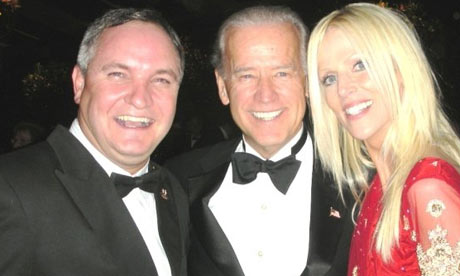
This sure wasn’t about being part of the hottest party at the White House al fresco dinner. You’ve already read about the couple who gate-crashed. It raises questions about security. The US creates this thing about how it must save itself from those monsters, and here two people, Tareq and Michaele Salahi, manage to not only be a part of the party but also pose for pictures with vice president Joe Biden, White House chief of staff Rahm Emanuel, three uniformed Marines and CEO of PepsiCo, Indra Nooyi.

I understand it is assumed that those who are there have been invited and it is polite to take pictures. I’d be curious to know how they introduced themselves. If they did not, then it means that big ticket events are just another ruse for schmoozing. These guys had a reason, being celebrity wannabes who put up the photographs on Facebook. That is when the security agencies noticed the goof-up. Does it mean that now government agencies will have to depend on networking sites to get their information? Have we come to this sorry pass when citizens won’t know about the real risk potential until someone gloats about it on their ‘walls’?

Reports have said in a rather cavalier fashion that the couple did not get close to the President and weren’t a threat. They are saying this after it happened. What if they were a threat? Oh, of course, they look clean, they don’t fit a stereotype.

Therefore, the whole bogey is still about getting very, very scared only about certain types.
- - -
Certain types brings us to a question. Why would a year-old story resurface again providing no new information? This is about the hoax call made by the alleged killer of Daniel Pearl who pretended to be leaders of India and Pakistan and “heightened tension between the two countries following the Mumbai attacks”. The calls were made to Indian external affairs minister Pranab Mukherjee, Pakistani President Asif Ali Zardari and Chief of Army Staff General Ashfaq Pervez Kayani.

“Omar Saeed Sheikh was the hoax caller. It was he who threatened the civilian and military leaderships of Pakistan over telephone. And he did so from inside Hyderabad Jail.”


I know that officials are corrupt and it is no big deal for criminals to procure phones inside prisons. Underworld dons in India continue to conduct business from the confines of their jails and even contest elections!

Shaikh’s wife gave him the information about the Mumbai carnage and when all the Lashkar-e-Taiba terrorists were killed, he made a call, first to Pranab Mukherjee, posing as Zardari. Anyhow, when he was told they’d get back to him, he called up Zardari and Kayani.

The question is: how did he have the numbers of these high-powered leaders? Anyone who has heard Pranab Mukherjee speak will never forget it for the rest of their life, especially people who have to deal with him. I understand that terrorists are getting smarter, turning into linguists, but mimics too?

Can they just pick up the phone and talk to presidents and army chiefs and threaten them? I mean, how would Pranabda get aggressive? Would he call up to say, “Asheef boy, harm tomar log ka oopaar vaar kaarega” (Asif bhai we will wage war against you)? And “Koyoni shaab, kaun-troll koro apna army ko nahin to homora army tomar aadmi ko phinish kor lega” (Kayani saab, control your army or our army will finish your army)?

This Shaikh guy was released by us in the exchange during the Indian Airlines hostage crisis in 1999. They say he used a British SIM card. Isn’t this a bit unusual that such powerful men would assume that their counterpart in another country is calling them up from a number of a third country? What was the exact content of the threats?

The reports do not mention that. They managed to trace the source of the call and are “baffled by his cheekiness”. Baffled? Where is their security?

Who is being taken for a ride here? The political leaders? The army? Or the people? It is the people. This drama that is costing a precious paises to the Indian exchequer and making a mockery of the judiciary in both countries is going to be a long-lasting soap opera. Kasab will be our new Kashmir issue.

The most amusing part was a report in Rediff that said, “Sheikh was brought up and educated in the UK, and briefly attended the London School of Economics before dropping out to pursue a career in jihad.”

Now jihad has become a career and not a passion or a misguided decision by men of god?

19.9.09

The Great Indian Rope Trick

Arrogance and Austerity
The Great Indian Rope Trick
by Farzana Versey
Counterpunch, September 18-20, 2009

The soles of his feet were cracked like the soil in barren fields. He sat idly and drank khus sherbet. There weren’t any files spread before him. He was doing no work, only shaking his legs in that nervous frenzied manner of people in power who have to sit with others.

This was in the executive class on a private airline. It was before the Congress party told its ministers that they had to go on an austerity drive and travel economy. Agriculture Minister Sharad Pawar reacted by saying there would be no space to do any work.

Why has there been such a black and white reaction to this move? Was it because two ministers started staying at luxury hotels while their government bungalows were being ‘done up’? S.M.Krishna and former UN man Shashi Tharoor claim they did not use the tax-payer’s money; the latter in his now patented fashion is throwing the “I am paying the bills from my own savings after a lifetime of international work” line.

His little tweets have made him into a five-star martyr to become a part of knee-jerk legend. In one he said he would definitely travel in ‘cattle class out of solidarity with all our holy cows’. Naturally, those who think life revolves around conveying their daily stories in small doses find it, and him, cute. The arrogance of this kind of Indian politician mirrors the same feudal mentality that upstart urbanites accuse the country bumpkins of.

The primary reason is that our society follows the “Dilli Chalo” (onward to Delhi) credo to sanctify the power of central leadership and fake cohesiveness. Our slogans have moved from “Jai Jawaan, Jai Kisaan” (Hail the solider and the farmer) to “Garibi hatao” (Banish poverty) to “India Shining”. While India was shining, farmers were committing suicide as they are now. Getting ministers to give 20 percent of their wages for drought-affected regions is simplistic. The salaries of ministers are not known to be high. They earn more through perks – for fuel, phones, travel. There is also the larger issue of corruption. Granting licences for large projects to certain firms is part of the money-making deal that keeps the political machinery lubricated.

The current move is not about hypocrisy but hyperbole. And who better fits the slot of abstinence than the father of the nation? Lalu Prasad Yadav said, “Mahatma Gandhi always preferred to travel in third class compartments... and remained frugal throughout his life.”

If there is anyone who made poverty look like a million bucks, then it was Gandhi. The land of nabobs became the land of the half-naked fakir. The Birlas played host to him not because he drank goat’s milk but because he said, “India must protect her primary industries even as a mother protects her children against the whole world without being hostile to it.”

This is the brand of selective socialism that is being replayed today, not the fashionable Nehruvian model which was about how to do a Lenin by wearing mink. It is corporatisation of spiritualism. Anyone with a begging bowl of empty dreams can head a start-up venture of couture abstemiousness.

The idea of droughts and famines do not merely fan such high thinking among politicians but intellectuals, too. Remember Amartya Sen’s facile belief that, “… famines have never afflicted any country that is independent, that goes to elections, that has opposition parties to voice criticisms, that permits newspapers to report freely and to question government policies without extensive censorship”?

Simply speaking, we would be talking about socially and economically wealthy societies. Forget famines. What about other problems that beset a country like India? We have democracy, why then does Prof. Sen subscribe to state intervention? He had concurred that the role of the state even in matters of nutrition, health, education, social insurance was connected with the outcome of economic processes, which must empower people to become economic agents in their own right.

Here was a clear case of making both sides happy without giving a thought to the fact that state intervention can never empower people; it only results in dependency if not degradation. Perhaps, that suits the purpose. As he once stated, “Buddha was asking himself what kind of life is that (of illness, old age, mortality)? These are problems we all face. For many of us it is also the impetus for our work.”

T
he concern about rural India’s suffering arises only when it affects the middle class and the rich. Food, a basic need, is in short supply. An India that is now being sold Quaker Oats by an organisation of heart cure is willing to exaggerate its misery. Where are our irrigation plants? What happens to the families of farmers? How many people are moving to other towns and cities? Have these aspects been considered? Sonia Gandhi takes a flight with the plebs. As a symbol it might work, but only for a limited audience.

Once the flight touches ground, there will be a fleet of security vehicles. The person in the street does not care. It will, however, result in more corruption. The corporate sector that has thrived due to political munificence will be happy to help. They will not go quietly and do something in the villages where they have set up factories; they already think they have done the country a huge favour by providing employment opportunities. Labour is cheap. Instead, they will provide facilities to ministers, and since many of their kind have got into the fray it will be easy. They talk the same language and suffer from the same gilt-edged greed.

Does anyone talk about austerity for them when they are in fact sponging on the shareholder’s money? Was there any talk about austerity when villagers were driven out of the leftist state to facilitate factories to produce a low-cost car for the city dweller – a car that would clearly point out the difference between the rich and the ones who would never get there?

We condescendingly let Lalu, our rustic politician, join the cavalcade of management geeks to give lectures at Harvard and Wharton. The gallery applauds as they would when they watch a comic act or an acrobat. He senses that. Years of having been marginalised have taught him lessons in hypocrisy, stereotypes, and expectations. He plays their game. He too starts quoting Gandhi even as he made money from kickbacks from cow food. How much more hick town can anyone get?

Sleepy Communism has joined ranks, clinking glasses of Old Monk and belting out the angst of foreign rebellion in the voices of Ginsberg and Che, driving kitsch up the Warhol wall. Poor India has today become a parody of its own poverty.

- - -
(An abridged version appears in The News International, September 19)