4.12.11

Sunday ka Funda

“The function of leadership is to produce more leaders, not more followers.”

- Ralph Nader 


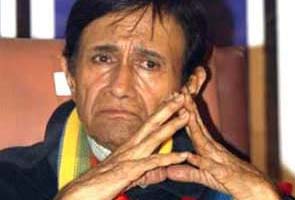
Dil abhi bhara nahin: Dev Anand


Evergreen, evergreen…how many times has one heard and read the word to describe Dev Anand. When he died last night at the age of 88, still brimming with ideas, this would only make the evergreen tag squeeze in more adamantly.

No one noticed that his hair looked awkward, his skin sagged, his scarves and jackets sought to cover rather than make a statement as they had done earlier, and his lips quivered when he spoke. He had grown old, but was holding on to a shaky pillar to build foundations that would not last. His later films lacked panache, they flopped. He said it did not matter and would go on to his next project.


Did it really not matter? This was a man who was completely a people’s person – from his stylised acting to his flashy clothes, he wanted to be noticed and accepted. But he too fell for the evergreen image that was built around him.

A few months ago on a talk show he spoke about how even today there are girls who would be quite willing to get close to him. He was not gloating, and it is entirely possible that aspiring starlets would want to use him as a stepping stone. Yet, it was a sad moment. Sad to watch him regurgitate a fantasy, even if it was real.

His reality was often a fantasy. Some have called it optimism.

I first watched one of his old films on our building terrace. There was a projector and a bedsheet served as the screen. The movie was Hum Dono. We got two Dev Anands. Imagine seeing these delicious black and white images from what seemed a distant past under a starlit sky. Already a film junkie, these moments became part of my non-formal education. It helped when the family would recount their first exposure to the particular film. Or how my mother on her first English film outing, a Gregory Peck movie, was so angry that the Hollywood star was “copying hamara Dev Anand”. The fact that it was quite the opposite did not make a difference to her.

That Dev Anand overdid it was an intrinsic aspect of his persona. He hammed, but delightfully. He made you believe that he was like this. And you know what? He probably was. His body was perpetually leaning towards some unknown person or a far-away place. His neck performed acrobatics. He was like a tableau – every part of him, every expression, a stand-alone performance put together on one stage: himself.

As an actor, he would perhaps qualify as the first real urbane urban character of post-Partition India. He even pronounced his name in a posh manner: Dev-er-nun. He took to Bombay and portrayed it in such an uninhibited manner. Think of Taxi Driver where even the streets looked chic in the dark. He was a man who loved beauty. I would not call him an aesthete; his idea of pulchritude was of polish and varnish. Not quite superficial, but most certainly overt. He did show criminal characters and even portrayed them, but they were charmers. He showed poverty, but no real dirt. This was not his scene.

As director he took greater control, and he stuck to his urban concerns. Again, he did not delve too deeply, although Hare Rama Hare Krishna is indeed a landmark film. When he played the Professor Higgins part in Man Pasand, it did seem like reality for once. He had created quite a few female actors – Zeenat Aman and Tina Munim being the most prominent.

Again, in recent interviews he talked about how upset he was when Zeenat Aman chose Raj Kapoor. For him it was not about a role, but some sort of betrayal. His affair with Suraiya is a fascinating example of how he would go against type when he wanted something. It is said that she would sneak out and they would meet quietly, away from the prying eyes of her conservative mother. The man who one would imagine shrugging such inconveniences off – “Har fikr ko dhuein mein udaata chalaa gaya” (I smoked away all worries) – seemed to understand the delicacy of such shackles, as in his beloved singing “Chhod do aanchal zamaana kya kahega” (Let go off me, what will people think?), but not without a riposte: “Inn adaaon ka zamaana bhi hai deewana, deewaana kya kahega” (this world too is crazy about just such tantalising excuses, so what’s a crazy man to do).

It was clear that he was a romantic, but pragmatically so. Not one of the Alps types, he wooed women through the haze of cigarette smoke or a curl of his lower lip. The music in his films was essential, not merely to take the story forward but to help us stop and look at what else he could do. It was in the song sequences that he shone best and was a natural at.

There are several, but I want to stay with these two.

The romance:


and

The optimistic angst:

Teri duniya mein jeene se, tau behetar hai ke mar jaayein
Wohi aansoon, wohi aahein, wohi gham hai, kidhar jaayein

(It is better to die than live in this world
With the same tears, the same sighs, the same sorrows trailing where does one go)

Just watch him. Does it look like he would want to give up? He is addressing god, but his demeanour is challenging. And the child’s musical interlude – innocence? Hope?


Post Script: I cannot end without mentioning that sometime towards the end of 2000 I got a hand-written note from him saying that he enjoyed my columns. I wanted to cry because those were days of my tears. I could not meet him, but the words of one of his songs from Hum Dono, the first film of his that I had seen under a starlit sky on a bedsheet screen, echoed how I felt.

Kabhi khud pe, kabhi haalat pe rona aaya
Baat nikli tau har eik baat pe rona aaya

(I sometimes weep over myself and sometimes over what’s happening to me
And when I speak about such sorrows, I weep for those sorrows too)

1.12.11

Of Kashmiri Kids and Obama's NATO


Just the other day, they were telling us how bad the situation is in Mumbai. How do you solve this problem? Bring a group of Kashmiri kids. Here is what happens:

Even though many would prefer the serenity of the valleys of Kashmir, for this bunch of Kashmiri students currently touring Mumbai, the hustle-bustle and traffic jams of the city are more appealing. “It feels so good and comforting to walk into a city where people are not living in constant fear,” said Shabbir Ahmed, a 16-year-old student from Khadi, Kashmir.

This boy’s father or uncle or grandfather is probably in Mumbai selling handicrafts. And not because he wants to feel safe, but because the jobs have dried up in Kashmir.

Are such initiatives worth it? This has been arranged by the 23 RR Battalion of the Indian Army. Major Gurudev Jajot said:

“Our aim is to wipe out this stigma of isolation that they face and to motivate them to dream high.”

In what way is it a stigma? There are people living in many remote villages in our country. They are isolated too. By emphasising on the stigma associated with Kashmiris, it only makes it more evident and real. It is nice that children from different places interact, but not with such an agenda in mind.

Does a Kashmiri not dream high? And even if s/he does not, there can be several factors. Again, how many high dreamers are there in Chhatisgarh or even Chunabatti in Mumbai?

- - -


I do hope Pakistan has sent a Thank You note to Barack Obama for not saying sorry for the NATO strike that killed 24 Pakistani soldiers. It exposes his arrogance.

Some administration aides also worried that if Mr. Obama were to overrule the military and apologize to Pakistan, such a step could become fodder for his Republican opponents in the presidential campaign, according to several officials who declined to be named because they were not authorized to speak publicly.

The military units are sent by the US civilian administration. A democratically-elected leader can overrule the military, just as he can recall them. That is what has been done all along, so why the protocol now? If he is only looking at electoral gains, then he would benefit from the apology because Pakistan will be eager to accept it due to their tacit understanding.

Cameron Munter, the United States ambassador to Pakistan, would have liked it to fix the US-Pak situation, but others disagreed:

Defense Department officials balked. While they did not deny some American culpability in the episode, they said expressions of remorse offered by senior department officials and Secretary of State Hillary Rodham Clinton were enough, at least until the completion of a United States military investigation establishing what went wrong.
Wonderful. Even if the Americans and the Pakistanis give different explanations, the fact is that these soldiers were killed, and not by the militants. Where are the investigations when the Americans get trigger-happy? Will there be an inquiry into whether they were defending themselves? Against whom? The militants or the soldiers?

If the top defense guys do not know what their troops were upto, then Pakistan could use them to stand guard outside Habib Bank or something in Karachi.

Who moved my 'journalistic space'? The Age of Twitter Set-ups

Why the hell is ‘journalistic space’* being taken over by micro-blogging? Why is it that when one person breaks wind there, a whole bunch of people queue up outside the loo?

Hmm…I had just finished my morning adulations, and ignoring the Toffee-nose of India (TOI), I went to the stapled sister. I like Mumbai Mirror. I like mirrors. Now, in the midst of all the light frothy gossipy stuff it mentioned a “corruscating review” about a recently-published “social Bible”. It did not specify whether it was the Nobu or the Antillia version.

What follows here is a reaction to the responses to the riposte to the review and the rejoinders to the remnants that remain of the righteous rumblings.

Since those who do not read my blog are not acquainted with those who do not read everything else, I will have to introduce the characters that are not there and what they did not do.

An author Soul Setter, henceforth referred to as Setter because I want to sound like a Goan, wrote a book, a social Bible, if you must, called 'Getting To the Top of ITC’s Everest in a Chartered Plane: Ten Rules for Being Moses'. The Setter has friends and clients. That is his business – to make clients feel like friends and friends become clients.

It is simple enough. Learn to get all the Gifts of the Magi without being Christ. Or, if the atheists prefer, how to lay eggs without being a hen.

A lot of people might have bought Setter’s book because they were friends and clients and wanted to read about how they were making people.

Then, what is the problem? Setter is popular among the television channels and is always on panel discussions. He is a marketing guy and many of the big companies would like to see him talk about the state of the nation while he is selling their soap suds and hotels.

According to my sources – okay page 2 of the paper – the Setter read that “corruscating review” and went into “an indignant, inelegant splutter”. Fine, the couple of examples I read weren’t exactly nice, but then wasn’t the review “corruscating”? Setter was blinded. Hurt. Setter could not control. Setter blurted out: “So @me-churma (name changed) reviewed my book for a magazine no one reads. Am not surprised! He is supposedly an unemployed economist for an unread mag!”

What followed is truly weird. A news magazine that we read for taped conversations, excerpts from the editor’s book (oh, no, will leave that for now), and four-page essays by Oliver Twist asking for more Mao jumped into the buzz. It went full-throttle into an excavation expedition and besides Shivaji’s personally autographed copy of Adil Shah's memoirs, they found tweets from the time of the Cripps Mission. Standing apart were those about the Setter controversy. It turns out that a month before the “corruscating review” appeared, Setter had praised the magazine – let us call it Craven – addressing its senior editor with the shining words: “and by the way I love the way your magazine CRAVEN is doing in the journalistic space*…super stuff…” (italics mine)

This should tell us that Setter is a bit displaced. He needs to shout, as he has done by typing the name of the mag in all-caps. However, I do not see any disparity in the two comments. He loves (or loved) the magazine in a confined space to which he supposedly has access (remember the chartered plane and all?). He is telling us that not everyone has that access. “No one reads” clearly means he is not No One; he is Someone. He is also hoping it goes unread. This is Setter Subconscious. The personal attack on the reviewer is because he assumed a slight directed towards him.

I have not read the book (extracts, yes), but did go through the review. It seemed like the reviewer went into the deep dark woods to figure out a bonsai plant.

The problem for people like us is that everyday we find little bon mots, and not all by bon vivants, which Setter claims to be, and we often do not know the context. Recently I came upon some exchange between the Diva and other divas about maids. Suddenly, out of nowhere, another best-sailing author’s name cropped up. Let us call him Chattan Bang. It transpires that he was being sarcastically awarded something for watching films with his maids.

Now, Chattan really likes films and his latest watch is The Dirty Picture: “The movie breaks so many new grounds, and opens the door for Indian biopics.”

If it is breaking so many new grounds, where will there be place for doors?

He is so taken up that he even gets patriotic: “Few Indians make me proud of being Indian. Vidya Balan is one. She isn't just an actor, she is an artist. Superb performance.”

I am told the boobs and midriff prosthetics are not made in India.

Then, this: “If a dog keeps on barking your name, he makes you famous. The dog, however, remains a dog.”

And the bark remains a bark, no?

Unless you have a dog named Google, like Setter does, who can find the doggie doo even in coruscating darkness.

29.11.11

Sycophants and Slaps

Now the lawyers and judges are fighting. If judges are sycophants, then lawyers are born to be sycophants. It is their brief, for when they represent a client, they are doing chamchagiri for that client. Even in cases of crime and terrorist acts against the state, the prosecution lawyer is supposed to argue on behalf of his client, whether or not s/he is right.

Upholding of truth is based on facts. Facts are based on evidence. Evidence comes from what the cops, the witnesses, and the intelligence agencies see and say. What they see and say need not be equally true and it can and does change. So, they are all sycophants to such altered perceptions and circumstances.

Lawyers ask for adjournments to stall the evidence, to buy time or because they really need to get some more information, or their client cannot depose. They are legally entitled to do so. This means that the judiciary is a sycophant of the rulebooks. Cases go on. Lawyers change; judges change; even criminals change when dead men they had killed turn up alive one fine day, sometimes after years.

 All this sycophancy talk is because senior advocate Ram Jethmalani said:

“Why do you (judges) adjourn when they (lawyers) ask for it? You also have become sycophants to maintain relations.”

Justice P B Majmudar of the Bombay High Court reacted sharply:

“What sort of nonsense statements are being made from a public platform?...Lawyers are making public statements which affect the image of the judiciary. Senior advocates are tarnishing the image of judges by saying such things in public. It affects the public profile of the whole institution. There should be some restraint (on lawyers making statements). From new entrants in the profession to advocates on the verge of retirement, everyone is indulging in it.”

I undersand protocol, but just a flip-side query: If the judge asks the lawyer to quicken the pace, despite the seriousness of the case, and the lawyer acquiesces, then would s/he be sycophants of the judge?

 - - - 


Okay, I missed the tamasha over the tamacha (slap). Every angle has been analysed, I assume. I have read a few, very few. So, here is a small snippet from a report:

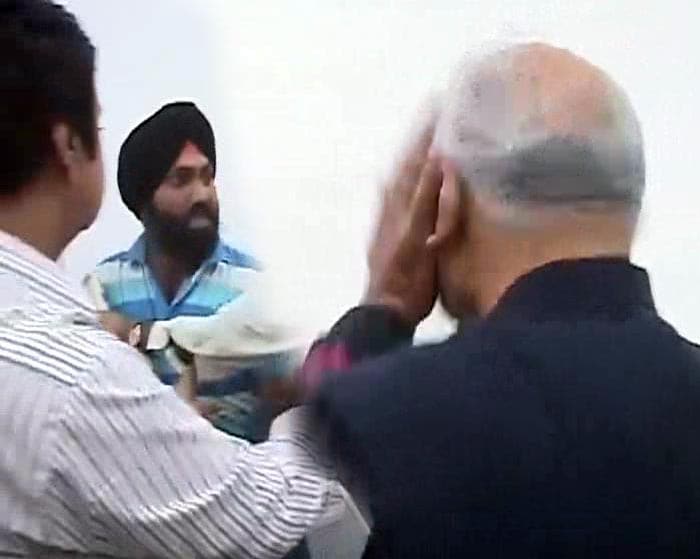
Union Agriculture Minister Sharad Pawar was today slapped by a man at the New Delhi Municipal Corporation (NDMC) centre in New Delhi. The incident occurred while the minister was leaving the premises after attending a literary function.  
The attacker, identified as Harvinder Singh, reportedly blamed Mr Pawar for rising prices of essential commodities. “This is my answer to corrupt politicians,” shouted the attacker as he took out his kirpan (small knife) and threatened to kill politicians. 

When informed about this, Anna Hazare said, “What, only one slap?”

Then the NCP guys went on a rampage to protest – the slap, Anna’s comment and generally because they wanted some action.

So, here are my completely superficial thoughts: 

1. Why do municipal corporations host literary functions and invite agriculture ministers?

2. Aren’t we up to our necks with this corruption thing? Some commentators spoke about ‘disaffection’ of the public. In that case it has nothing to do with corruption. Other politicians have got the shoe treatment; if such disaffection is going to be so pat, then assassinations can also be explained away.

3. Then there are those who think the slap was undignified. Whoa. Slippers are thrown inside Parliament too. What Harvinder Singh did is the equivalent of heckling at rock concerts – everyone wants paisa vasool stuff. If Sharad Pawar sent them sacks of sugar from his fiefdom, they’d be quite happy.

4. Then there are those who think he was so cool in forgiving (he did not, his daughter did) while his goons went about breaking things. This is not cool. This is political smarts. He would have been cool had he stopped the rampage. Mr. Pawar is in no position to be magnanimous given who he is known to be cosy with.

5. Then there are those who say Anna Hazare should not have said what he did, it is not Gandhian. This is funny. Gandhi was around sitting with his charkha, weaving khadi, when all those violent episodes took place and his supporters got the bad end of the stick, quite literally.

Anyhow, Anna and Pawar are two sides of the same bad coin. They are raking it in from the rural/agriculture sector in terms of cash or kind, but appealing to the urban groups, well aware that this is how they can get that spit and polish.

- - -

End note: The turncoat moment in 26/11 anniversary two-bits when celebrity page 3 regulars who had been right up there in colour-coordinated scarves and tunics pushing the ‘enough is enough’ agenda diss “celebrities” and think about the ‘others’, and pat themselves for having refused to appear on TV shows this year. Wow, missed ya babes. What were they doing barfing at the sensitive time when it mattered most? Or is three years later not good enough to get them international mileage?

26.11.11

Killing the news or the messenger?

Is it about a story? A journalist gets arrested for being involved in the murder of another journalist. Such real facilitation of killings is not commonplace, or at least not known.

But, then, news needs to be fresh and to update it anything goes. Even another story.

When senior crime reporter J. Dey was murdered by the underworld gang, there were several theories. Few probably thought that someone from the same profession, in this case Jigna Vora, would play such a crucial role. The latest report says:

Crime branch officers told special judge SM Modak they suspect that Vora had sent information on Dey to gangster Chhota Rajan, the main accused in the case. MCOCA carries a minimum punishment of five years in jail or a maximum of death sentence. If the MCOCA charge against Vora were to be dropped, she would still face charges of murder and criminal conspiracy under the Indian Penal Code that can attract the death sentence, another officer said. 
Vora is accused of sending pictures of Dey’s motorcycle, details of his whereabouts, his office and home addresses to Rajan.

Soon after the murder, I had given the example of a reporter acquintance getting into trouble and written in Who kills investigative reporters?:

Sources. That's the tricky word. The sources don't drop from the sky or just saunter in. They need to be cultivated. The beat is not kind, nor the hunt for scoops equal. 
The underworld is a vile world but not too different from extremist groups - separatist or political establishment. My piece on Pakistani journalist Shahzad's murder tried to explore some factors.
I would also ask one contrarian question: If giving information amounts to actual murder, then must not police informants also be seen as encounter killers?

Regarding the Dey case, one truly wonders what happens to the ethics that the media constantly talks about. Before they sit to once again judge, let them re-examine the incidents where other sorts of sniping are par for the course – passing on rival or wrong information; planting sources to check out the sources; making threatening calls; posing as imposters. Of course, this does happen, and all for the spoils of the big story that will be stale after a day.