Showing posts with label science. Show all posts

26.7.15

Sunday ka Funda


I don't like this tree, a hybrid tree that bears forty different kinds of fruit and flowers in varied colours.

This "sculpture by grafting", the brainchild of art professor Sam Van Aken of Syracuse University, might be a great scientific experiment and good as curiosity or art installation that it initially was, but a workable green option?

There is something about orchards with trees bearing one sort of fruit; it feels like communion, familiarity, and also to an extent hierarchy when one picks the good ones. The birds too know where to come for what they seek.

A huge tree with different varieties appears to compress nature. It is also demeaning in a way for spoiled for choice, one may either make the wrong move or the one not intended, or just walk away awestruck.

Trees are designed to be resilient, not to multitask. And some of us like our trees and people to just do one thing at a time.

As the Zen teacher told his pupil, “When drinking tea, just drink tea.”

7.10.14

Holy cows and cartoons

India loves cows, the temple variety not the ones left with festering wounds to forage in garbage dumps. The new government is serious about cow protection. As I said, we love cows, some worship them.

So, when a cow knocks on the door of an elite space club should it be considered insulting? According to the Indian worldview, the cow should have the right to be there, was in fact born to be there. Why, then, did some demand an apology from the New York Times for this cartoon in response to the Mars Orbiter Mission?


Do we consider the farmer and the beast any less when compared with our space missions? If so, then this is cause for serious concern. India is largely a rural country and agriculture continues to be its mainstay. How does it convey the image of a backward society when this is what feeds us as well as a few importing countries?

The farmer is not being obsequious about entering the elite club; he is assertive. The cow too is rather saucy and sanguine. It is the westerners reading the news who seem to be worried and shocked. They look backward because they have not come out of their cocoons to keep in touch with the world to see how far others have progressed, far enough for India to be the only one to succeed in its Mars Mission at the first attempt.

We anoint a scientific operation with a Sanskritised, almost mythified, name like Mangalyaan, we pretty much treat it as some sort of divine intervention, and then we project our insecurities on others. Strangely, I hear that Malayalis objected to it most on social media because many of ISRO’s scientists are Malayali. What does this tell us about our parochialism? It is natural to feel proud of one’s own, but let us not see a slight where there seems to be none.

The farmer and the cow are as much images of India as the camel and the bedouin are of the Middle East, in fact more so. It does not mean we have nothing else. If anything, this is a paean to the India of the majority – the villager. It is true that the farmer did not send the mission into space but scientists may come from rural backgrounds. Have we forgotten the euphoria upon the success of the mission? The most telling picture was of women scientists with flowers in their hair jubilating.


If we have a problem with the cartoon, then why not with this impression of what is Indian womanhood from a certain perspective? That too is a stereotype, where the lab-coat is seen as elite privilege.

After being pressurised, the newspaper apologised. Andrew Rosenthal, editorial page editor, said:

“The intent of the cartoonist, Heng Kim Song, was to highlight how space exploration is no longer the exclusive domain of rich, Western countries. Mr Heng, who is based in Singapore, uses images and text - often in a provocative way - to make observations about international affairs. We apologise to readers who were offended by the choice of images in this cartoon.” He further added that the cartoonist “was in no way trying to impugn India, its government or its citizens”.

India is too vast; the people are too many and disparate. That leaves the government. This mission did not happen overnight after Narendra Modi came to power, so it is not the success of the present government at all. But I see this more as NYT trying to still play host to the PM after his NRI-slavering visit. The Indian authorities might see in this censorship of a kind an opportunity to use as precedent whenever we are faced with some truth even if it is not, or should not be, inconvenient.

We’ve got the apology from NYT (and it is always great to see NYT apologise, for different reasons), but are we going to hide the farmers from us? Will cows be placed on pedestals behind walls? Why can’t we own up to what is ours?

7.8.12

It's a caaarrrrr: Why did Pakistan over-react to wheels on water?

What made Pakistan react so vociferously to a water car? I find it interesting that despite it there was almost no talk of how they had been embarrassed before the world, quite unlike our media did when we had a major power grid failure.

It is a nation that thrives on a healthy dose of superstition, although how an engineering experiment, whatever be its merits, can qualify as superstition beats me. Most discoveries have taken place with only hypothesis. Now that we do have some knowledge, does it mean the denial of other probabilities? If science can land on the moon, in a deliciously ironical reversal it is the religious who think this is bunkum. No different from ‘rational’ superstition. And now we are getting to Mars.

Agha Waqar Ahmad believes he can make a car run on water. 

Barely had the chatter started and TV channels were discussing it than there was an outcry against it. Let us assume that this car just cannot work and it only made for some interesting TV, probably brought tears to the eyes of a few, how did it shake up the scientific community? Did people line up to try it out? Were the petrol stations and diesel pumps rendered redundant by any group of people? This was not even a bathtub moment. Yet, a respected physicist like Dr. Pervez Hoodbhoy held forth in an Op-ed piece titled, ‘The Water Car Fraud’. A scientist responding to a fraud is like a cordon bleu chef dissing street food.

Here is what he wrote:

“At first, it sounded like a joke: a self-styled engineer, trained in Khairpur’s polytechnic institute, claims to have invented a ‘water kit’ enabling any car to run on water alone. It didn’t matter that the rest of world couldn’t extract energy from water; he had done it. He promised a new Pakistan with limitless energy, no need for petrol or gas, and no more loadshedding. For an energy starved nation, it is a vision of paradise.”

Why can Pakistan not do what the rest of the world cannot? Mr Agha Waqar had made no promises. There was some jubilation, and typically Hoodbhoy pointed out names of some religious figures and a few ministers.

Someone rightly pointed out that there was a case in India about a man who had made similar claims about herbs. I know that a couple of respected business houses had run some elementary tests and there was even talk of a patent. It fell through because of lack of sustainability and, obviously, commercial viability.

I do not know anything about thermodynamics, and have no interest in water cars, but Prof. Hoodbhoy overstates:

“Scientific frauds exist in other countries, but what explains their spectacular success in Pakistan? Answer: our leaders are lost in the dark, fumbling desperately for a miracle; our media is chasing spectacle, not truth; and our great scientists care more about being important than about evidence. It is easy for them all to get away with this.”

How many scientific frauds have succeeded in Pakistan? It is true that politicians will make merry, but not because they believe in the experiment but it helps divert a nation’s attention. This is done the world over – some do it by conquering other nations, or by creating paranoia. The media has given more than enough space to respected people like him as well as satirists who would fail to deliver a line without such inspiration. As for the great scientists, one assumes their greatness has been verified in a laboratory. How have all of them got away with it? What will they get from it?

And just for argument's sake, is it not possible that some big lobby does not want small players? 

And how many Pakistanis have access to regular water, forget own cars? If a case is being made for such ‘issues’, then opposing something fake makes no sense at all.

The mind boggles at how a little water can cause a storm.

- - -

I posted a comment on the piece, half in jest; it landed up on the letters page:

This is an insult to your nation. I do not mean this lovely little dream machine, but an Op-ed to say that you cannot dream. It isn't as though people were tanking up with baltis and piping it in their cars. One man with a sense of drama does not mean that the Hondas would die a slow death.

The media, at least this time, sold a harmless story and did not sponge on some blood.

Water is an important symbol. In India, we have many such 'miracles' - water spouting from deities/shrines. People worship at water sources that are polluted. If only we had someone with a wet dream too, we'd save on petrol to visit these miracle sites!

Someone read it and sent a reply to me here. I reproduce it in full because it reveals just what people choose to pick on:

madam,

I just read your comment on express tribune about water car fraud.

You have your opinion about that issue, but dragging others religion aka Hinduism in to the issue and making fun of it in a Pakistani website shows how perverted your mind is..

The water fraud issue is a matter of science and the religion is a matter of faith. Its their faith that tells them to take a dip in a holy river even though it is polluted. You may not agree with their faith but do not insult them.

As a matter of faith, Islam also has many un-natural and unbelievable beliefs that mention about 72 virgins,caliphate... blah blah.... . Should i also need to act as a flag marcher on blogs and websites and insult it? Answer is Absolutely no...

Our country is based on secular principles that tells us to respect other faiths even though u do not believe others faith. That's how our country survived for the last 65 years and still continue even though it consists of people from different ethnicity, religions, castes.. etc.

So please refrain from insulting other faiths of the country. If you do not agree with me you have various countries ( i hope u know those countries) to live and propagate ur views where those views are encouraged officially.

Sorry if am being harsh to you but truth hurts...

To call this truth should hurt more.

26.5.12

Heads you win?


As though the brain is not complex enough, it rattles us with its ability to turn the tables on us.

We have heard of cases of leading scientists, philosophers, writers who were considered failures. This only proves that academic prowess is not a good yardstick to judge the ability to create and be innovative.

However, how do we explain the sudden genius of a man who is beaten up?

I first read about Jason Padgett, a school dropout, a while ago. Outside a karaoke bar, a few muggers assaulted him. The kicks on his head caused severe concussions. The results were remarkable and shocking:

Now, wherever Padegtt looks, he sees mathematical formulae and turns them into stunning, intricate diagrams he can draw by hand. He is the only person in the world known to the skill, which experts say, was caused by his head injury.

Not only is he a maths genius but according to neuroscience tests also an "acquired savant":

Savant syndrome is the development of a particular skill, that can be mathematical, spatial, or autistic, that develop to an extreme degree that sort of makes a person superhuman.

Is Padgett's genius 'mindful'? It is said that due to injury a certain part of the brain is overcompensating. Does this not occur in instances of physical disabilities, where the visually impaired have a sharpened sense of smell and hearing? Or those with motor dissonance?

Some people lose their memory after such accidents. I wonder if this too is a loss that resulted in a gain. Does it mean Padgett has lost his memory of being a failure?

If we use this example, then is genius limited to certain areas? Are we confusing skill for genius? What if the formulae he sees suddenly tranform into incoherent patterns that might make complete sense to him but not to others immediately?

Isn't artistry of greater value when there is consciousness?

That would be heady.

22.2.12

The Dolphin Person


I have nothing against dolphins. In fact, I find them delightful. However, the scientific understanding of them as individuals, raises a few questions.

The Centre for Ethics and Business at Loyola Marymount University in Los Angeles has come up with a ten-point charter for “life, liberty and wellbeing”, among others.

A group of scientists and ethicists argues there is sufficient evidence of the marine mammals' intelligence, self-awareness and complex behaviour to enshrine their rights in legislation. Under the declaration of rights for cetaceans, a term that includes dolphins, whales and porpoises, the animals would be protected as "non-human persons" and have a legally enforceable right to life.

Is intelligence the only yardstick to project an ethical perception of rights? This would put to test many humans – the physically handicapped, the mentally challenged, those who behave differently from what is the norm, and those who might not quite fathom the complex nature of abstract thought. There are parts of the world where people still live on basic necessities and follow rudimentary rules of social intercourse.

"Dolphins are non-human persons. A person needs to be an individual. And if individuals count, then the deliberate killing of individuals of this sort is ethically the equivalent of deliberately killing a human being. The captivity of beings of this sort, particularly in conditions that would not allow for a decent life, is ethically unacceptable, and commercial whaling is ethically unacceptable.”

The scientists quoted examples of how dolphins know to work on the reward principle. Early experiments conducted on rats have shown similar behaviour. Dogs, as in the Pavlov experiment, expressed their reaction through salivation. There is an understanding where survival makes animals and humans behave in a certain manner.

So, is such ethical treatment based on a human paradigm the right and only one? Protecting a species is fine. But is it really necessary to ‘dignify’ it on the basis of being a ‘person’. This, strangely enough, contradicts the effort to not treat human beings as superior. Then, why elevate only some species to that level?

Animal rights activists might want all animals to be protected. The movement against zoos, cages, slaughter, meat-eating has been active and often vocal. They too use the human in a trapped situation to emphasise the point about rights. It does not quite work because there is a tendency to glamorise and bring out the beast in the person behind the cage or dressed in fur. It sexes up the message.

The dolphin lobby is using a parallel argument by saying that they are ‘non-human persons’ and therefore as good as individuals.

I can see that there is a pecking order here, and wonder just how a species will seek to gain the sanctified position of being human. It really isn’t the best thing to be when the record of human rights is abysmal and the ethics of how certain being are treated as opposed to others affords it less ethical validity than an elephant squashing an ant unknowingly.

29.12.11

Why Can't Science Let Us Be?


If you don’t wear stilettos and still get orgasms, then pat your back. You are the last hope of science. It’s funny that ‘science-ologists’ think such theories need to be debunked. The “year’s worst abuses against science” by celebrity offenders is the annual list that is part of the Sense About Science (SAS) campaign.

The organisation’s managing director Tracey Brown sets the tone for the attempt:

"It's tempting to dismiss celebrity comments on science and health, but their views travel far and wide and, once uttered, a celebrity cancer prevention idea or environmental claim is hard to reverse. At a time when celebrities dominate the public realm, the pressure for sound science and evidence must keep pace."

By making an issue of it, SAS is in fact giving it celebrity endorsement. Why are famous people asked to put their lot behind prominent medical causes like HIV and cancer? Don’t they often become a reason for treacle-inducing stories rather than gain any merit based on a factual analysis or research? Most celebrities perform at rock concerts and charity balls for these issues. How does it reach the real target audience when they are cocooned in their gowns and dinner jackets parroting what one version of the sponsor group tells them?

If scientific endeavour reaches a dead-end because of rumours or what someone personally believes, then it does not speak too well about science. A small group of people who are completely besotted by what celebrities say does not constitute the population of the world. None of the views they have listed can cause any damage.

Here are a few and my take:


  • TV personality Nicole Polizzi: "I don't really like the beach. I hate sharks, and the water's all whale sperm. That's why the ocean's salty."


People do not like the beach for several reasons; some do fear sharks; sperm – or semen at least – might be considered salty, although human and whale sperm could well be different. And don’t we say that even a drop makes an ocean. So there.


  • American singer-songwriter Suzi Quatro: "I used to get a lot of sore throats and then one of my sisters told me that all illnesses start in the colon. I started taking a daily colon cleanser powder mixed with fresh juice every morning and it made an enormous difference."


How is this harmful? Anything done in excess is bad, but I suspect the keepers of science are also the keepers of the pharmaceutical industry and the medical fraternity, and how they’d like to replace the powder-juice combo with a nice little capsule.


  • Kate Middleton, the Duchess of Cambridge, said that spending more time with horses had made her less allergic to them.


That is her experience. It is not like the whole of Britain or monarchists are going to line up at the stables to get rid of their horsy allergies, which they would be imagining about anyway.


  • Pippa Middleton: “It (cold water rinse) closes the pores and gives it a lift and shine... it really works.”


SAS tells us that hair does not have pores. All salons insist on washing off conditioner with cold water so that it does not become limp. How will it affect the hair to get a cold rinse?


  • Simon Cowell was ticked off for saying that he found vitamin injections “calming”.


Doctors use such placebos routinely, and many people are addicted to vitamin supplements.


  • Heiress Miss Ecclestone said her secret to prevent falling ill: “I have acupuncture to boost my immune system every month or so.”


Alternative medicine has been practised for centuries. She is using acupuncture as a preventive measure and not a cure.

  • Gwyneth Paltrow believes that a detox diet helped her liver and gave her “mental clarity”.


So? Don’t we harp on psychosomatic illnesses? Are people not uncomfortable if they are too full of themselves, so to speak? Getting rid of some of the elements might in fact make a person think clearly or at least not be so preoccupied with what is within.


  • Christian Louboutin, a French footwear designer, was taken with something a fellow party guest told him about shoes: "She said that what is sexual in a high heel is the arch of the foot, because it is exactly the position of a woman's foot when she orgasms. So putting your foot in a heel, you are putting yourself in a possibly orgasmic situation.”


An anthropologist or a psychologist would have the good sense to see it as body language or how illusions and analogies work.

Instead, they got a consultant in sexual medicine to ‘debunk’ this myth. Kevan Wylie, (“responded drily”, as the report states, which makes one wonder):

"A woman's foot may be in this position during orgasm, but that does not mean that putting her foot into this position under other circumstances will result in orgasm.”

The woman is not suggesting that, just as men do not get an erection if they hold a gun. She is fantasising.. The shoe industry uses such fantasies, too, as do other advertised brands. Why do some people find stilettos sexy and others think wedges are? Why do some like pumps while others prefer those mean leather boots?

I wish I had thought about this arched footwear…the image is wonderful.

The science saviours can go work on their test tubes. I am thinking of little needles poking into me and a small shot of calming vitamins as I get under the shower to wet my hair with freezing water that will leave it shining and bouncy. I shall then go the riding club and inhale deeply as I get astride a horse. We reach the beach and I walk on my toes on the sand and ever so hesitatingly dip my feet in the ocean. The fear of sharks lends an edgy feeling as I cup my hands and gather a bit of salty water.

19.5.11

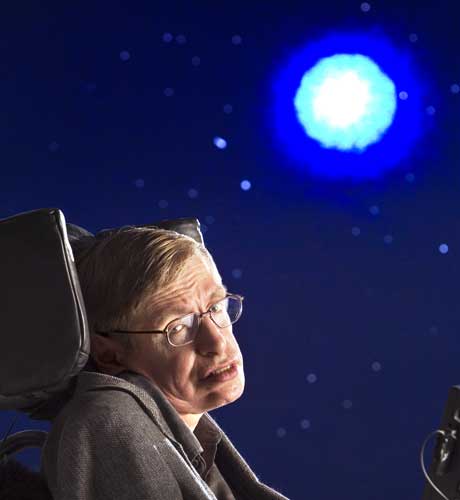
So, Prof. Hawking, how about hell?

Stephen Hawking says something quite ordinary and there is a reaction. The battle between science and religion is old and makes little sense. Although a non-religious person, I really don’t get excited about monkeys or the Big Bang theory. Does that mean there is a teeny-weeny bit of hope that I might be ready for some Edenesque idea or whatever the counterparts? To make it simple, I do not rule out possibilities, which is a scientific attitude.
In fact, most seekers who go to religion do so as an experiment. The main problem I have with Hawking is the statement that has been doing the rounds:

“I regard the brain as a computer which will stop working when its components fail. There is no heaven or afterlife for broken down computers; that is a fairy story for people afraid of the dark.”

This is facile in the extreme. While the brain may be likened to a computer, what about the software? There are several of those and they can be loaded whenever we want as per our requirements. The failure of the computer is technical, not philosophical or psychological. A brain-dead person, or one who suffers cardiac failure for that matter, is the end of life. It does not end the possibilities for the living.

Hawking’s problem is to see religion as a fairytale. It isn’t. Outside of organised religion, there are very many stories, and I have no idea how he concludes that these stories are for those who are afraid of the dark. By saying so, he assumes that death is dark and not as much of a happenstance as his scientific beliefs are trying desperately to convey. I wonder what he has to say about science fiction. It is hypothetical, it creates larger than life heroes with ‘god-like’ abilities. The scientist himself is considered some sort of miracle because he has survived despite a debilitating disease. Of course, it is science that makes him accessible to the world, but when he is applauded for his willpower, what is the scientific basis for it? Where does the urge to live against odds come from?

I am most certainly not alluding to a belief system, but to the philosophical dimensions beyond a computerised brain. It might be a wicked idea to posit the gravitational aspect of Newton’s discovery with the enticement of a serpent. It could have been an orange. Why did it have to be an apple?

It would be interesting to add here that almost all ‘religious’ fairytales are up for scrutiny on a regular basis and hypothetical questions are asked of them. It is true that the vast majority is made up of blind believers, but are there watertight compartments about scientific theories? Have they not been debunked or proven wrong?

I wonder why there has been no mention of hell, which comes as a package deal with heaven. Stephen Hawking should know that the devil is in the details.

14.1.11

Suck face

I am tired of kissing. First it was kissing as an art, now it is a science. Can people not just be left alone to do with their mouths what they wish to do?

How many of you have ever looked at the Kama Sutra for tips? I doubt it. Every glossy worth its smooth skin has covered this subject and I would in the past get terribly amused. To be honest, wouldn't you rather have a butterfly in your mouth than someone’s tongue fluttering inside in what is clearly a studied exercise?

This, however, is a subject that excites the intellectual. Sheril Kirshenbaum, a scientist at the University of Texas, has written a book The Science of Kissing: What Our Lips Are Telling Us. Did George Bush mean that? Anyhow, she has laid bare the whole shebang about how kissing evolved, why people kiss, why some kisses work and others don’t, why people have a phobia of kissing and others don’t, why it is okay in some societies and not so in others. You get the drift.

I understand all these are important aspects of any activity. Do you know the manner in which you clip your toenails can tell you a lot about your past life? You don’t? Neither do I, but I am sure it can be explored. The point is that most of the material is available, and that is how I found out stuff, and it does not even work as relaxed beachside reading. Like, are you aware about something called the ‘hickey kiss’ when all it means is that you get a blue mark that looks like some editing details in galley proofs of newspapers? Oh, ok, it is supposed to be more animalistic, an out-of-control body experience. Then there are all those different areas where a kiss can be administered, and the motives are quite clear. Does anyone need to figure out what a cheek peck and a foot lick really mean?

Way back in the 1930s there was a manual called The Art of Kissing that spoke among other things of the Vacuum Kiss. The man must position himself as he knows and then when his lips are where they should be he must get on to the task of "sucking inward as though you were trying to draw out the innards of an orange".

I have eaten oranges and as far as I know they don’t have innards. Unless someone means to defrock the fruit and then blow into it or rather from it; sounds more like a conch shell thing. Oranges have slices and the sucking of them is messier than empty or vacuum-like.

The part I dislike about the scientific study, though, is that it says you are more likely to remember your first kiss than losing your virginity. Kirshenbaum, in fact, believes that you can remember 90 per cent of the details of that smooch. I beg to differ and I will provide a counter-scientific theory. While the kiss may have some special memory, it could well have been unmemorable.

How many of you have managed to find a prince by kissing a toad? Or have experienced the kiss of the spider woman? As for virginity, it is culture specific and may matter a whole lot in some societies and not so much in others, and there is also the gender factor – men are less likely to be affected by the loss of virginity than are women, although I believe that men will remember it more clearly because it was a boy becoming man thing. Girls become women when they start menstruating and reading Maupassant after throwing off Mills & Boon. Virginity has a lot to do with giving up oneself and I do not mean to the horse you are riding or the energetic aerobics at the gym that may cause the ruptured hymen.

It has a lot to do with oneself for women and for the conquest by men. Therefore, it is unscientific to believe a kiss will be remembered more.

These theories do start a debate. Did you know that the ‘soul kiss’ is called so because the soul passes through the breath of one mouth to the other? I thought that was the job of resuscitation and the soul kiss, which is how the French got famous, although they call it the English kiss (maybe because you end up with a stiff upper lip), was to cure tonsillitis. But then I am not Woodward and Bernstein and know precious little about Deep Throat.

7.9.10

Relief from belief

Stephen Hawking is baulking at the wrong evolutionary tree. He may choose gravity over God to rationalise the creation of the universe, but how does one explain away religion? Faith cannot be exclusive of creation, and it has provisions in it for the idea of destruction as well. Elemental and human factors come together to prop up holiness ...

Society gives no breathing space to those who do not believe in anything of a sacramental nature.

--> Full column at Express Tribune:

http://tribune.com.pk/story/47277/relief-from-belief/

6.5.10

Faisal, Farah and Lie Detecting

Everyone is going on about who this Faisal Shahzad is. As though they are supposed to know.

His neighbor has given some information: "He was quiet. He would wear all black and jog at night. He said he didn't like the sunlight."

He bought fireworks but according to the shopkeeper, those would not harm a watermelon. However, had he got them in the blackmarket it might have been different. I guess he is the stingy sort.

My question is: Why did the US and its agencies say immediately after the Times Square bomb scare that they did not suspect any Islamist group? How did this superpower with all the arsenal at its disposal make this pronouncement? And what changed? A guy who is a Pakistani and says he was trained in Waziristan. This sounds just too convenient, especially after Mehsud comes back from the dead and declares that the Taliban will attack the US. This fits in. Of course, they are still not taking it at face value for they don’t have to worry about the Taliban at all. They are thinking other nations. Or other cities.

Do remember that US intelligence had warned India of attacks in its major cities and our security and sniffer dogs went all paranoid. Either they were misled or they misled.

I wish that instead of a hotdog cart owner who was the one to smell the bomb it was a kebab seller. That would have been nicer.

- - -


The truth serum is on its way out. The Supreme Court wants investigations to be based on techniques other than narco analysis and brain mapping.

While it is true that such information gathered through lie detection techniques is inadmissible as evidence, it might have helped in putting the cops on a specific track.

Is it inhuman, given the health risks? I’d imagine it is better than keeping undertrials in prisons for years.

Former IPS officer YP Singh made a pertinent point:

“The test helped reveal vital details. Now, the use of third-degree could increase. Professional investigators are essential to conduct probes minus scientific tools. But such professionalism is no longer left in the Mumbai police force. Narco-analysis was increasingly used as it was easier.’’

Will doing away with it make the police force more vigilant to the actual collecting of data and vital circumstantial evidence? I am wary. Think about the cases where clues have not been collected or have disappeared.

We might recall how disturbed our Balasaheb Thackeray was when a Naxalite under the narco influence said that the Shiv Sena had funded them. Wonder what the SS chief would have to say had the accusation been made after a few pints of warm beer, that he had a special fondness for at one time.

- - -

Oh, here’s a story about how a Muslim woman is fighting her way into the fight club. Jordanian Farah Malhassa is a body builder. She says:

“Everyone is against me. No one understands why I want to become an international star in figure body-building.”

For six years she has been working out, managed to get all those tattoos, is now ready to go to Canada for an international competition, so there must be at least some support. I wish she would not create such a negative picture, since she is sitting in Amman and managing all this.

I think I understand her family disapproving and wondering why she wanted to “deform my body and make myself look ugly”. This is the general perception. We do have fixed ideas about the male and the female body. A man who is not of strong build or his manner not masculine enough is considered effeminate. Women who do not possess the right body type – differing in cultures (interestingly, this applies mainly to the female) – are made to become aware of it.

Farah might like muscles, but not all women do. Sure, she ought to have a choice and she has made it. Some of us just course through life training with the weight of our follies. And they come in different sizes.

30.4.10

What's up, robot?

Would you like your doctor to be a machine? I am wary about the first ever heart rhythm operation performed by a remote-controlled robot.

Dr Andre Ng, cardiologist at Leicester’s Glenfield Hospital, sat outside the operation theatre as his 70-year-old patient’s vital organ was manipulated to get his irregular rhythm back to normal. The doctor felt in “complete control” and could see and speak to the staff who were with the patient.

As a report says:

The main advantage is that the doctor doesn’t have to wear heavy radiation shields such as lead aprons, which are normally required in the operating room because X-rays are used to see inside the patient.

“Because I was sitting down in a relaxed, not having to wear a heavy lead coat, it was actually a pleasurable experience.”

I have read reports earlier about how patients prefer robot medics to unfamiliar doctors. That is different. It is more like scouring the web for information.

Science has progressed, but is technical progress enough? Doctors anyway use high-tech equipment; laser surgery has made it possible for a small incision to extract huge tumours. I do not understand the need to remove the person from the process.

It might well be asked that the patient is under sedation so s/he would not be aware of the doctor’s presence or absence. True. Yet, we need to ask a few questions:

Is the patient told prior to the surgery that it would be a robotic operation?

If something goes wrong, and our dear doctor is sitting relaxed outside, then who will rectify the situation, who will shoulder the blame? How long will it take the doc to wear his fancy superman suit and get into the OT? And if this is touted as a remote operation, then what is the big deal about other staff being inside? It only proves that human assistance will be crucial at all times.

I am seriously concerned about the possibility of this being done in cities far removed. The manner in which medical science is seen and acted upon by different cultures differs. How will a doctor in the UK liaise with the team in, say, India? What about the ego problems between the two? Again, who will accept blame for any goof-ups?

It is bad enough the way ‘specialisation’ has been promoted, but this truly is taking it too far. If robots must be used, it could be to teach doctors, to be used as guinea pigs for experiments, not to become the masters.

Has anyone given a thought to the psychological ramifications? How will the patient be affected before and after?

I understand that robots have been trained in bedside manners too in other cases. This really amounts to making the patient feel like a machine. I like my doctors with a warm touch and a smile, not some automaton advise me in a disjointed voice that I need a pill. He wouldn’t know if I just need to chill, would he?

2.4.10

The Real Face?

Be prepared! Sounds like a dire warning, especially if what is to be unveiled is a 3-D image of Jesus Christ according to digital technology.

Computer artists – and I shall let that term go – have used information available from the 14-foot long Shroud of Turin, the only available evidence that had blood. dirt and stains. History Channel is to air ‘The Real Face of Jesus’ that used the impression they got from the linen on the body of Christ.

"The shroud wasn't hanging on the wall - it was wrapping a corpse. The face is hidden in there. By imitating those distortions we could take the image and put it back into shape and figure out what the face looked like. It gave us a blueprint," said Ray Downing from the computer imaging company.

Is it important to know what the man looked like? Christianity, like most faith systems, crosses cultures and borders. People like to imbue their god-figures, as they do their legends, with a dose of the local culture. It is true that thus far Christ has been portrayed in the Caucasian mould despite not being from the region. This is part of the way religions grow and are taken over by the superior races.

However, we cannot discount that paintings and sculptures by artists too took liberty when portraying such images. Was it artistic license or a personal fervor? Unless it was within the confines of the church, would such images be dictated to by those in charge of a version of the faith?

Christ has most often been shown on the Cross in popular culture because that is what he symbolised. It then begs the question whether his potency remained as symbol or does humanising him have greater value?

Would this digital face really be seen as the true face? It is scientifically fascinating and therefore ironical that when there are doubts about the Shroud itself, we have a community of rationalists trying to recreate a face based on it.
As a non-religious person who understands the idea of belief, I think that faith in anything depends not on a figure but on one’s own sense of connecting. If you believe in the power of the ocean, then you will not alter your opinion based on changing tides. Images are like tides.

And portraits do convey more about what the artist thinks than what the subject was.

- - -

The Real Face of Christ

29.3.10

Memory

I remember best when I am in a state of turmoil. Then why are scientists saying that stronger and more lasting memories are likely to be formed when a person is in repose and the memory-related neurons in the brain do a little tango with certain brain waves?

I differ here, even if it goes against all scientific logic. Synchronisation requires harmony and often the management of material. Now suppose you recall every little detail of a turbulent experience, how do you sort it out? If it is sorted out, then it ceases to be a memory. Or turbulent. It loses its character and transforms into a linear ‘wave’ in the mind.

What perhaps a relaxed mind can do is memorise. Memorisation is not about memories. Memories are intangible and nostalgia makes you ache for the jerky ride.

Memories are apples bitten into that have left teeth marks; they are ripped open gift packages where the satin is frayed; they are stains that won’t go away and scars that don't fade; they are losses that you don’t count because you could not count on them when they were gains; they are moments that left with the wind and dust that settled in its trail.

Scientists may optimise the state of the brain and believe that relaxation brings about new information and improves memory. But all new information will be memory.

Will they be able to ask us to relax and remember the times we wish to forget?

- - -

Memory – Barbra Streisand

26.1.10

Survival, Sacrament and the Marketplace

Making Haiti
Survival, Sacrament and the Marketplace

by Farzana Versey
Countercurrents, January 25, 2010

“I survived by drinking Coca-Cola. I drank Coca-Cola every day, and I ate some little tiny things,” he said. Wismond Exantus’s tale of survival conveys a larger lesson about charity franchising. As someone who worked in the grocery store in Port-au-Prince, where he was found after 11 days, his recollection of Coca Cola as opposed to “little tiny things” indicates that the miracle his brother spoke about could have something to do partly with this beverage and the conglomerate idea it stands for.

There are other ideas. His rescue took place as mourners wept outside the shattered cathedral for the funeral of the bishop; his family could not go to the place to save him because of looters, so they approached the rescue team. The looters are home-grown vultures; the saviours are outsiders.

We’ve been through the Pat Robertson viewpoint. Unfortunately, outside of his limited evangelism exists a larger one that sponges on similar thoughts. It is a ready market for do-gooders who may not express their religious fervour in such black and white terms, but the glorification of being blessed works just as well.

“I am a person who has been blessed,” said Jeremy Johnson, a Utah-based millionaire. “To sit back and relax and send a little money or whatever, it just made me feel ungrateful.”

Ungrateful about what? He was not responsible for the earthquake or for the delay in supplies reaching. He bought helicopters to fly essentials. In Jimani, which he has made his headquarter just across the Haiti border, he has set up a tent. Reports describe him with reverence for managing a “bare-bones operation”, dressed in frayed jeans (is this mandatory uniform or designer empathy?) where he sweats it out with only a small refrigerator providing energy drinks.

Strangely enough, his how to be a millionaire story is rife with fraudulent practices, but this, we are told, has not interfered with his altruistic work. He had earlier “provided a home for boys pushed out of a Utah polygamist sect”. And now he is in Haiti where, according to the Utah governor, people rushed to the helicopters for food and it became “really dangerous”. Therefore, Jeremy is a hero because he not only saves people, but saves dangerous people and those who belong to sects that are not morally up to much.

It is not surprising that he is working with Maison des Enfants de Dieu — Children of the House of God — orphanage to send these children to adoptive families. He has already managed 21 visas and transported them to the United States.

Apparently, bureaucracy was not an issue, although it is for his aid effort where he sees boxes of food on the tarmac. “As a result I even stole. There is a lot left to be done,” he said. This is precious, considering that the local looters were considered selfish and almost vicious.

Johnson is not a celebrity, so his compassion is not entirely driven by charity tourism. It is more about personal gratification: “My life is going to change from this, there is no doubt.” He is already planning the next move and has his shopping list of people who need to be set right.

Haiti, having overthrown the imperial yoke, has to allow itself into a numbing social colonialism and aid slavery. Seen as a tribal society it will now be refereed and guided by the superior Red Crosses. A while ago, I read this delicious comment by model Naomi Campbell when she was asked why she chose to raise funds for the UK flood and not for Africa: “I do Third World. I have been doing Third World since 1994.” One wonders about the expiry date of such vanity of the conscience.

Thirty-seven per cent of Europe’s population was destroyed by the bubonic plaque; ancient cities have been buried by volcanic eruptions. We have had El Salvador, Mexico, Burma, Bangladesh, Pakistan, India, Indonesia — all victims of natural disasters, not to forget Hurricane Katrina and the fires in California.

These calamities have scientific reasons and imbuing them with fatalism makes a mockery of the spirit of enquiry that ought to look into the dangers manifest in our abuse of the environment. Such wimpy sentiments are merely geared to sneak out of political responsibility. Or sneak in political power through the backdoor.

15.1.10

Pat Robertson and the Eclipse

A doomsday quick-fix prophet on TV last night was holding forth on how the solar eclipse would muck up our lives based on our zodiac signs. After he had told us just how bad it would get, a godman sitting next to him asked us to place a pot and add things in it according to the level of muckery, recite some verses a given number of times and then maybe we would be saved.

It was appalling to watch this on prime time. Would children, who ought to look on such phenomena with a sense of wonder, be instilled with information? I would deem this x-rated because it affects the mind. Instead of seeing it as a natural happening and seeing it through at least some scientific prism, they are fed this rubbish.

There are two aspects to this:

  1. We keep away genuine interest and believe everything in nature can have dire consequences.
  2. The way it is projected, only one belief system was being promoted. I do not know whether Muslims and Christians have strong superstitions about these matters. There are ‘practical’ things I recall, which may or may not have any scientific basis. It is disturbing to see religion being pushed in this manner.

This brings me to Pat Robertson’s ‘Haiti deserved the earthquake because of its pact with the devil’. He obviously does not know about quakes in Los Angeles and how buildings are specifically designed to avoid tremors.

It is disgusting to see an island that was occupied by force by the United States, had several coups, became a slave to the French, and survived it all despite still dealing with debilitating poverty as some victim of voodoo.

Commentators have talked about racist overtones. Haiti, unlike good little black slaves, threw off imperialist shackles. If it was doomed, it was going to be on its own terms. Now the world, especially the big superpowers, cannot stand the idea of such obstinate self-respect on the part of people who are not supposed to be anything but dust underfoot. No ready theories are available, so the best one to pull out is the one with god. God has got to be White, so Haiti is in cahoots with the devil.

The logical question would be: If god is kind and all that, then why would s/he cause this destruction? If the devil is a real opponent of god, then why would the devil let it happen without putting up a brave fight?

What about natural disasters elsewhere? What about man-made calamities that we bring upon our fellow citizens, not to speak about other nations? What god or devil pacts are these about?

Meanwhile, Haiti’s hospitals have been destroyed and thousands are dying. It is an ongoing tragedy that needs to be addressed. Pop evangelism won’t get Haiti anywhere.

It would be easy to dismiss Pat Robertson, but he is not the problem. He is reflecting a problem that we have in some measure as societies on the brink of mental instability. You and I may not buy his thesis immediately, but it will register as something that someone believes. And this man has a huge following. He is dangerous because he thinks he is on god’s side.

At least the eclipse has the good sense to get off the sun after a while.

13.11.07

Leave Lakshmi Alone

Maverick: Leave Lakshmi Alone
by Farzana Versey
The Asian Age, Op-ed, Nov. 13, 2007

Who is Lakshmi? No. The right question would be: What is Lakshmi? She is an item number. Born with eight limbs, the two-year-old has just undergone a successful surgery that has given her two legs and two arms, like normal people.

We are noticing our doctors with newfound respect, as we must. This is a time to celebrate.

It is also a time to ask whether Lakshmi’s miracle surgery will cure our society of looking at physical disability differently.

I am scared that this little girl will become a mere 'case study'.

With Lakshmi getting prime-time space, Indians will adopt her, pray for her health and we will be transformed into this wonderful village of sentimental people. Where are our emotions and sentiments when children walk around like zombies with bloated hungry stomachs, who die before they are born, who have their limbs cut off, incidentally by helpful doctors to facilitate the beggar racket?

There is a tele-serial on air now called Amber Dhara. It is about conjoined twins and is a heart-warming story about their trials. The problem is the pressure on triumph. Why do we put such a premium on success? One is not suggesting that those who are not born with their body parts in a certain way ought not to dream. But does not success for them turn into a pantomime, playing to the gallery? Aren’t they too seen as animals in a zoo when they go about transforming mud into gold? Do we realise that forget respect, even acceptance for them comes only after they realise those dreams when millions of so-called normal people can go about as failures?

Let us not see isolated examples as the norm. It is Lakshmi’s good fortune she could make the journey to a reputed hospital. How many of our wonderful doctors would go to the villages and tend to many such children who die from ordinary diseases? Isn’t there a romanticisation regarding the strangeness of this child’s body? Isn’t her display against basic norms of decency?

If it is to applaud our skilled surgeons, then can we not do so whenever they perform a difficult operation on a less unusual case? For, how many hydra-limbed kids are there in our country or even the world?

Lakshmi may end up being given a cheque by the government, blessings will be sent by politicians. When will they do something basic like have proper railings, special traffic signals and ramps for the disabled?

I cringe when I see Lakshmi’s old clips on TV, laughing, unaware that she is as good or bad as a circus artiste. Don’t drown us with images of X-Rays and the delicate nature of the surgery. Of how 36 doctors worked on her. These feel-good stories push all the dirt under the carpet.

For a while I used to teach at an institute for the blind. Yes, the institute uses the word blind, so let us not get silly about political correctness. I realised how ignorant I was. The first day I tried playing 'concerned citizen'. Adjusting the microphone I started talking. I heard a voice loud and clear, "Ma’am, we are blind, not deaf!"

I got the message. Slowly, I was brought down to earth. "What are your qualifications?" one asked. And he was right. He was more educated. His disadvantage was that he was not educated in English, and he could not see.

They also made me realise that a chi-chi non-regional accent was not going to help them. "Ma’am, you speak like English lady. This won’t help us, we will become telephone operators in some government office."

I dropped the idea of telling them how to enunciate and where to emphasise syllables. I felt no pity, but it hurt me to think that if they could argue and discuss major world events and have opinions, then why were they denied what I got as a matter of course?

These are fairly self-sufficient people. There is the larger world where I have seen moments of despair. K was a music teacher whose services were suspended because he was alleged to be homosexual and was exploiting the other blind students at the hostel.

A former colleague of his was shocked, "They discovered his homosexuality after 22 years?" I was told that this accusation is often used as a trump card to harass them if they do not toe the official line, which might include little things like not touching the walls and soiling them. They argue, "We cannot see, so sometimes we do take the support of walls. What can we do about it?"

Compare this with the attitude towards the famous disabled. Firdaus Kanga, who suffers from a debilitating neurological condition that has paralysed most of his body, is gay. He wrote about his experiences in his first book and his second. I had sounded a note of caution at the time, saying that of all those who were praising his work how many were doing it out of sympathy and how many due to its literary merit? And would he himself be able to come out of the trap and go beyond his handicap?

Not everyone has that choice. Lakshmi is not public property. She will have a private life and not as charmed a one as she is now getting. Therefore, must we use a personal tribulation as "time-pass" and in turn transform an unlikely candidate into a heroine? We are just vultures trying to satiate our miracle mania.