Showing posts with label philosophy. Show all posts

21.6.13

Sartre was born today...was? is?


I said I was an Existentialist without quite knowing what it meant. Between the crevices of poetry and philosophy, my life was worming its way. I hid my growing teenage form behind big books – shy, afraid, unsure. Among those saviours was Jean-Paul Sartre.

I admit the initial fascination was for the great love story. Simone de Beauvoir seemed to be the perfect foil. It excited me to know that people could have open relationships. Later, I realised that such freedom does not prevent the tumult, the feeling of being tied down, of role-playing.

What Sartre gave me was intangible. An acceptance of nothingness. Confidence about angst.

But, was it just so pat?

“Anything, anything would be better than this agony of mind, this creeping pain that gnaws and fumbles and caresses one and never hurts quite enough.”

I recently told someone, “What pain is pain if it does not stay alive?” This is not self-destructive. The mind that keeps one agonising is what keeps one awake.

There are many views about Sartre, some accusing him of not being true to his own ideas. I prefer seeing it as ideas overtaking. He was not quite perfect, and would probably find the thought of perfection reprehensible. I am not providing a detailed essay on his works. I confess that at some point I outgrew them. He is indeed the pop star of philosophy – to my mind a strange mix of Woody Allen, T.S.Eliot and a brooding Marlon Brando.

I don’t want to go into a detailed discussion on Existentialism. I would have to agonise over it, for I am dealing with ennui. Sartre would comprehend this!

There is another quote I’d like to examine:

“Life has no meaning the moment you lose the illusion of being eternal.”

This is so complete. If I were to deconstruct it, then he has captured the very essence of existence. Survivalists may not wish to even go there. The moment we think of life as an open-and-shut case with death as the destination, then we are rather obvious pragmatists. And fatalists, too. The eternal does not exist in real terms, therefore one has to imagine it. Life cannot be defined, but it has meaning and value only if we know that it is a continuum.

And he said it best:

“That God does not exist, I cannot deny, That my whole being cries out for God I cannot forget.”

Illusions. Eternal.

© Farzana Versey

19.5.11

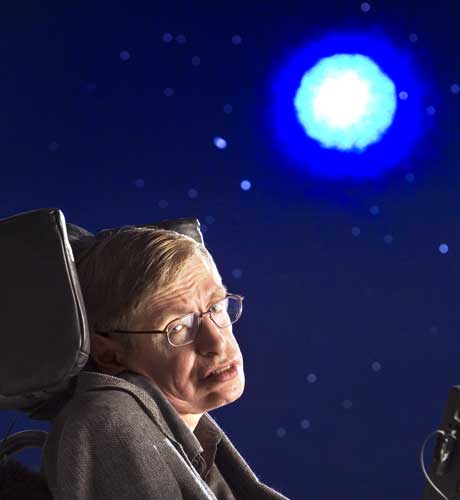
So, Prof. Hawking, how about hell?

Stephen Hawking says something quite ordinary and there is a reaction. The battle between science and religion is old and makes little sense. Although a non-religious person, I really don’t get excited about monkeys or the Big Bang theory. Does that mean there is a teeny-weeny bit of hope that I might be ready for some Edenesque idea or whatever the counterparts? To make it simple, I do not rule out possibilities, which is a scientific attitude.
In fact, most seekers who go to religion do so as an experiment. The main problem I have with Hawking is the statement that has been doing the rounds:

“I regard the brain as a computer which will stop working when its components fail. There is no heaven or afterlife for broken down computers; that is a fairy story for people afraid of the dark.”

This is facile in the extreme. While the brain may be likened to a computer, what about the software? There are several of those and they can be loaded whenever we want as per our requirements. The failure of the computer is technical, not philosophical or psychological. A brain-dead person, or one who suffers cardiac failure for that matter, is the end of life. It does not end the possibilities for the living.

Hawking’s problem is to see religion as a fairytale. It isn’t. Outside of organised religion, there are very many stories, and I have no idea how he concludes that these stories are for those who are afraid of the dark. By saying so, he assumes that death is dark and not as much of a happenstance as his scientific beliefs are trying desperately to convey. I wonder what he has to say about science fiction. It is hypothetical, it creates larger than life heroes with ‘god-like’ abilities. The scientist himself is considered some sort of miracle because he has survived despite a debilitating disease. Of course, it is science that makes him accessible to the world, but when he is applauded for his willpower, what is the scientific basis for it? Where does the urge to live against odds come from?

I am most certainly not alluding to a belief system, but to the philosophical dimensions beyond a computerised brain. It might be a wicked idea to posit the gravitational aspect of Newton’s discovery with the enticement of a serpent. It could have been an orange. Why did it have to be an apple?

It would be interesting to add here that almost all ‘religious’ fairytales are up for scrutiny on a regular basis and hypothetical questions are asked of them. It is true that the vast majority is made up of blind believers, but are there watertight compartments about scientific theories? Have they not been debunked or proven wrong?

I wonder why there has been no mention of hell, which comes as a package deal with heaven. Stephen Hawking should know that the devil is in the details.

13.3.11

Sunday ka Funda

“The inherent vice of capitalism is the unequal sharing of blessings; the inherent virtue of socialism is the equal sharing of miseries.”

- Winston Churchill

And then there is Slavoj Žižek who wallows in the fact that:

"Now they say I am the most dangerous philosopher in the West. But I don’t care.”

The New Republic had not said dangerous but despicable.

Watch him in action. He appears to be neither:


8.11.09

Sunday ka Funda

Rumi was sitting next to a pond intellectualizing over his numerous religious books - his precious possessions – when Shams Tabrez ‘happened’ to pass by, stopped and asked him, ‘what is this?’ Rumi, without looking up, egoistically said, ‘leave me alone!’ Tabrez then repeated, ‘what is this?’ Then Rumi looked up and said, ‘can’t you see I’m busy; besides, this is a knowledge of which you know nothing about!’

Tabrez then went and picked up the most valuable one of Rumi’s books and tossed it right into the waterpond, which, of course, infuriated Rumi. Rumi screamed, ‘you crazy man! look what you’ve done; my prize possession is ruined!’

Upon hearing that, Tabrez immediately reached into the pond, fetched-out the book and handed it to Rumi – completely whole and dry! Rumi, in total amazement and wonder, asked, ‘what is this?’ – to which Shams Tabrez replied, ‘this is a knowledge of which you know nothing about.’

- - -

“Outwardly, you are equal to a particle. Inwardly, you are equal to a hundred suns” -Shams Tabrez