Showing posts with label roles. Show all posts

26.7.15

Breastfeeding in Parliament


A woman breastfeeding her child can be a rather sublime sight, that is if she is not stared at. But does sublimity or subtlety even matter when the mother in the act ends up as an "internet hero"? 

Victoria Donda Pérez is an Argentinian MP. She decided to breastfeed her 8-month-old daughter in Parliament, when the session was on. 

Working women have praised her; her critics say it falsely conveys that women can have it all when that is not true.

Was she aware that her pictures were taken and would be in the media?  Assuming she is okay with it, I am not one bit impressed by Ms. Pérez's act on grounds of prudence as well as feminism. 

Breastfeeding is a natural activity as are many others, some of which we might not even have much control over. We control them in a public space anyway. I am not comparing sneezing, breaking wind or picking the nose to nursing, but surely there could not have been such urgency to feed the baby. If anything, this comes across as terribly unprofessional. 

This is not an issue about women's rights over their bodies; it is just that such rights as exercised in this manner convey that the woman has no choice. Even if we excuse the politician for elitism, the larger question is: is the woman a mother on the job? This just sends out the message about the feminised woman as the only one who can have any power, or acceptance.

Why are women applauding the "balancing act"? It isn't news that only a woman can bear a child and nurse babies. But such validation of 'balance' also unburdens the father of responsibility, and he will be the first one to call her superwoman.

Such a public act in a work place (as opposed to a park or even the office canteen) only consolidates the stereotyped role of a mother that deny her the option to make a studied choice — which could be fixed feeding hours at the office creche or collecting the milk for use at intervals. 

Suppose this was not in Parliament, but a regular office conference. Would the response be the same? Unlikely. It only means that in some ways this is sought to be made into a political statement. 

And it is no surprise at all that she has been nicknamed "Dipusex" (sexy MP). It takes a simple, natural activity to make a woman into a fantasy object. Women object to such labels on other occasions when they want to be recognised for their work or talent alone. How is it different this time? Is Ms. Pérez not being reduced to a pair of breasts, even if they are of a mother's? 

The Oedipal implications are too obvious. 

PS: In India, women from the labour class do breastfeed at the workplace on construction sites or in small industries. That is because the child is with them all the time. 

4.1.14

The Pontiff's Closet


What do you think about Pope Francis being chosen Best Dressed Man of 2013 by Esquire? When the magazine says, "Pope Francis's sartorial decisions have subtly signaled a new era (and for many, renewed hope) for the Catholic Church", it is jumping the gun. As religious head, he has certainly proven to be immensely likeable. He is discussed for his symbolic gestures, and they might not alter perceptions but do send out signals about a modernistic way of looking at social mores.

However, I believe that a best dressed tag does not quite reward these gestures, much less comprehend the nuances that might get lost and possibly lose track of what is being symbolised.

Mark-Evan Blackman, assistant professor of menswear design at FIT, has been quoted as saying:

"His mode of dressing really does reflect the mindset behind it. I remember when John Paul II was buried in those opulent bright red shoes. When the current pope was elected and chose not to wear the red shoes I thought that was very reflective of his approach to being a person functioning in a role."


Every position comes with a set role, and the only dissonance possible is in terms of interpretation. That does not alter the inherent nature of the role. For true believers, the red shoes were not an impediment to their faith, just as the discarding of them will not be.

Ann Pellegrini, Associate Professor of Performance Studies & Religious Studies at New York University, goes over-the-top:

"The humility of his garments offers a way to visibly display his theological and material concerns for the poor. This Holy Roman emperor really does have new clothes."


While it is true that the Pope has been "approachable" and "humble" — though such a station is supposed to be about humility and subservience to god, is it not? — a reality check is needed here.

I am not a Catholic, or a practising believer in any organised faith system, but being surrounded by several streams of theological thought it is obvious to me that devotees, especially those unfortunate enough to be poor and homeless, do look up to pomp and splendour. It is their means of escapism. And, dare I say, hope.

Unlike the well-heeled and the educated, they do not marvel at church spires and stained glass windows, nor do they appreciate the fine filigree work of the Islamic architecture in mosques, nor the fine motifs in Hindu, Jain, and Buddhist temples. But, the sheen of the altar, the sanctum, the idols does affect them. The brighter these are, the more dewy-eyed they get. This is not about materialism, but to experience what they do not possess. It is an egalitarian moment for them, for it renews their faith due to its obviousness. They seek no evidence of the power of an aura beyond what is evident, even as some of us might rationalise.

In fact, Esquire is doing just that. Yet, quite ironically, it is performing papal sort of duties by anointing the Pope with a grand gesture that contradicts the purported purpose of rewarding him: austerity.

© Farzana Versey

30.10.12

Mind It

Still from 'Life of Pi'

"He wants to see the actor's mind in a shot." Actress Tabu said this about Ang Lee who has directed her in 'Life of Pi'.

It was so beautifully put, but what does it really mean? Is the actor's mind reflecting the character or her/himself? Or, is one superimposed on the other? 

Can one see a thought? If so, then the actor contemplating the motives and behaviour of the character would be methodical rather than spontaneous. Is thought not instinct?

You might suggest that premeditated thought cannot be instinctual. But, is there no lapse between thought and action?

Say, we play several roles in life; some we 'perform' because we are directed to - by precedent, norms, or for specific reasons. Is our failure to do so adequately a failure of thought or of action?

Think about some disabilities where the mind is hampered by lack of motor movement. These are unfortunate natural or accident-induced circumstances. However, even those of us who are not so restricted find that we cannot always act out our thoughts. Our thoughts are dependent as much on the manner in which they are received as on how they are conveyed. So, do they remain our thoughts anymore?

If the other person could see our 'mind in the shot', going by Ang Lee's expectation, then would we necessarily be understood? How often do we tear our hair in frustration that what we seek to convey has either been misinterpreted or whooshed past without even a moment of being acknowledged?

Can you read my thoughts? Routine question. But are you reading your own thoughts while trying to decipher another's?

Recently, someone sent a message in response to a call I made. It said, "I wanted to thank the thought." Was my act removed from my thought? Or, does the thought hold greater validity? Had I not acted upon the thought, would a person know? Can there be more than one thought for our actions and many ways to act based on one thought? 

If you can see a mind, then you are probably seeing not just what is but what might have been and can be. Mind or minds?
(c)Farzana Versey

9.12.11

Harvard Pottering with Swamy

You are probably applauding Harvard University because it has decided to junk Prof. Subramaniam Swamy’s courses in next year’s summer session for the views he expressed in a piece where he, according to the report:
 …recommended demolishing hundreds of mosques and suggested that only Muslims in India who “acknowledge that their ancestors were Hindus” should be allowed to vote.

I think the Janata Party president’s role is different from the man teaching Quantitative Methods in Economics and Business and Economic Development in India and East Asia. His political views cannot and should not interfere in his academic role, and by the same token he ought not to be jusged by his stand in his other role.

If the university is trying to make a point, then it should not permit guest lectures by Bill Clinton, George Bush, Tony Blair and several others for different reasons.

There is the huge question about how much a person’s political views matter in his non-political work. I have often said it is impossible for me to like Naipaul’s writing anymore because I find his politics loathsome. In this case, he is ‘coming home’, so to speak. He is addressing the issues he feels about and I do not agree with, and there will be an opposite reaction from others. In an assignment where the topic is entirely different, I do not see the validity of such protocol.

Harvard is probably looking for an excuse to draw attention to the fissures in Indian, and subcontinental, politics. The West has courses on terrorism. India does not. Pakistan does not. Sri Lanka does not. Bangladesh does not. Nepal does not. That should tell us something.

As regards the good professor, one must always keep the salt shaker handy for Swamy’s stupidity.


27.5.11

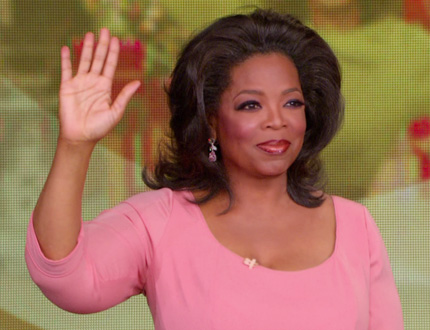
Oprah's Divine Comedy: Winfrey the Pooh


Winfrey the Pooh 
Oprah’s Divine Comedy
by Farzana Versey
Counterpunch, May 27-29 


They were discussing thighs. The woman was wearing a blue garish printed veil, the uncovered face revealed a touch of kohl in her dark eyes. She was telling her host that what Moroccan men are most attracted to in women are thighs – they like them thick. The Oprah Winfrey show was now not a secret watch in parts of the Arab world; she was hosting it there. As the young woman held forth, Oprah went on a relentless examination of a part of the female anatomy. It was obvious she thought she was breaking some barrier when thighs, men, women and ideas about pulchritude have existed since the existence of civilisation.

Oprah is about breaking imagined barriers.

She has bid farewell to the show after 25 years. What sustained it for this long? Much of what was revealed is what we hear in everyday life, what we experience and what we don’t. Yet, using these same ideas she created an alterative universe. However real the reality in her shows was it was reality amplified by auto-suggestion.

A more comprehensive reading would suggest that the show could be divided into three main ideas.


Cornucopia:

Excessiveness was an important part of the exercise. Laughter and tears were loud and flowing. There would be distended stomachs, bruises more purple than prose. As in Roman feasts, where people went on an eating binge and then vomited to start feasting again, true stories were retched out. Humorist Josh Billings’ take is apt here: “As scarce as truth is, the supply has always been in excess of the demand.”

Without the abundance, there would have been a need for the core. Oprah was about the circuitous route; the essence lay in the maze.

Her personality lent itself rather well to such profligacy, from her girth to the big hair, the big heart, the large camaraderie. But, her projection of little people in fact showed up their littleness. Their foibles and warts were huge as compared to their personalities. They were here in the Confession Box. The studio had an almost-church like atmosphere where the host played priest and choir girl by turns, until the Moses-like denouement.

She did pretty outlandish things, was outspoken, and dressed the part. It camouflaged the traditionalist inside her. It made her craving for infallibility as self-conscious as her vulnerability: “Though I am grateful for the blessings of wealth, it hasn’t changed who I am. My feet are still on the ground. I’m just wearing better shoes.”

And those better shoes came from many a soiled feet that entered the hallowed show. She appeared to tell them that they could do it, but would they have that opportunity?


Dystopia:

Misery was flaunted on the red carpet and posed for the cameras – its couture more discussed than its merits. People on the Oprah show seemed to regurgitate the deviant without owning them. There was a disconnect between the teller and the telling. Even if none of it was stage-managed, one could decipher an element of training, of being ushered into a hall of shame in hushed whispers. It is not difficult for people to sense what is expected. While for the ordinary person this seemed like a purging of evil, an exorcism, celebrities were given to believe that this would humanise them.


There was no mirror more qualified than Oprah. At the grand finale she said: “But I’m truly amazed that I, who started out in rural Mississippi in 1954, when the vision for a black girl was limited to being either a maid or a teacher in a segregated school, could end up here. It is no coincidence that a lonely little girl who felt not a lot of love, even though my parents and grandparents did the best they could – it is no coincidence that I grew up to feel genuine kindness, affection, validation and trust from millions of you all over the world. From you whose names I will never know, I learned what love is. You and this show have been the great love of my life.”

This is true, but most of the recognition talks about her blackness: the first black billionaire, the greatest black philanthropist, the richest African-American of the 20th century. Has black society altered and has the perception about blacks changed? The ‘teacher-segregated school’ is also what the Oprah Winfrey show is about. There was this bubble of sorrow and with every pinprick of a query it would burst. The sorrow would not disappear because it wasn’t there in the first place. The internalisation was left untouched. The balm and the gauze were for this bubble that settled like dew. The show worked as well as faith-healing, people limping back to normal and basking in the warmth of the arc lights and then out in the cold holding on to their crutches. Art had imitated life, but not limited it.

The simulation analogy can be best explained in the totalitarian philosophy as expounded by George Orwell: “It not only forbids you to express – even to think – certain thoughts, but it dictates what you shall think, it creates an ideology for you, it tries to govern your emotional life as well as setting up a code of conduct. And as far as possible it isolates you from the outside world, it shuts you up in an artificial universe in which you have not standards of comparison.”

Oprah had set herself up as a role model, when the millions who were with her were like the Beatles acolytes were for John Lennon. He was one of them but he remained Lennon. She employed the classic Lennon anthem as her modus operandi: Imagine.


Utopia:

Is imagining about hope or about despair? Had there been happy stories, then the Oprah show would have wound up long ago. It is important to ask here whether the hates/loves/desires that dare not take their name have brought about any change. Iconoclasm is a much-abused term. The populist need not be iconoclastic. A show may be a hit, but what kind of impact does it have, has it altered the way people think, feel?

One cannot state that, “Oh, this was just a TV show.” It was not. It became a cult, and cults have some responsibility. Oprah did what she could, but it was the Big O, a few seconds of happy numbness. She treated her staff well, she took her audience on holidays. These are freebies. The stereotype of the Mamma. The world is full of varied ideas and varied behaviour, so it is disconcerting that she did not push the envelope, except when stuffing it with a few dollar bills to assuage guilt and express gratitude.


In fact, archetypes were trussed up and embarrassingly displayed. The brazen wore little and the demure played their part. The obsession with the body only consolidated set views even if they were to debunk them. Alternative sexuality was given the worst possible treatment when she invited an ‘Indian prince’ who is out of the closet. He came in regal finery that he has no right to as a representative of India, which has done away with royalty. The gall of having someone in a position of power, however titular, to convey the views of the gay community was such an Oprah thing to do. You cannot just be a misery maven, you’ve got to lay it thick and be king.

She had a banquet but offered fast food. This was part of the show’s attraction. The host knew what she was doing, even if some of it was subliminal. A broken soul, broken self-worth, fighting for convictions – these brought fear, a persecution complex and arrogance. The arrogance of humility: “What we’re all striving for is authenticity, a spirit-to-spirit connection.”

A spiritual connection does not look for authenticity, which is tied to the strings of dynamic facts and changing alliances within the mainstream. You cannot talk about the facetiousness of fame when you are a product of such evanescent celebrity. It is not the legitimisation that makes for icons but the potential of returning to their ruthless roots. Winfrey did attempt that, but by default, by just blowing up the cocoon a bit more. She reached the world and out at the world, yet her confinement was narrower than it appears. “There is one expanding horror in American life,” believed Norman Mailer, that cogent chronicler of the American’s internal dilemma. “It is that our long odyssey toward liberty, democracy and freedom-for-all may be achieved in such a way that utopia remains forever closed, and we live in freedom and hell, debased of style, not individual from one another, void of courage, our fear rationalized away.”

Such fears on the show were stamped and sealed like factory-produced wares. The potency was in the reaction to the pinch and the pitch. She took the ready-made material and gave it a new language and identity. Pop analysis tends to label such people revolutionaries when all they do is to recreate. To continue with it for a quarter of a century is commendable, but not impossible. That is why Oprah Winfrey will be remembered as a fine juggler, not a magician.

23.11.10

The PM's Babagiri


The Prime Minister of India has every right to believe in whatever he chooses to in his personal capacity. This does not have to be flaunted. He was at Puttarpathi ostensibly for the convocation ceremony at the Sri Satyasai Institute of Higher Learning; it coincided with the Baba’s birthday. As the patron of the institute, Sri Sathya Sai Baba ought to have greeted the PM and such pictures would have been taken by the photographers. What we see here is the holy man sitting on his throne and the PM standing quietly like a bhakt or, worse, one of the assistants.

The caption in the TOI uses the phrase, ‘SAI SARANAM GACHHAMI’. It is used for the Buddha and in this instance would mean ‘I take refuge in the Sai’. I should hope this is tongue-on-cheek, but given the record of certain powerful media houses and their penchant for ‘speaking trees’ and ‘sacred spaces’, it might be quite literal.

This is an insult to the nation. He was invited as a public servant, not as Manmohan Singh, private citizen. I assume he is aware that there had been cases against Sathya Sai Baba. But then, the PM isn’t untainted either, is he?

I guess we should be happy that we at least do not have a picture of him touching the godman’s feet (which he could have done, as many politicians did) or carried his footwear.

6.11.09

Nannies and Parents

See that little baby in the arms of a beggar? See those eyes looking blankly? He has been sedated. He has been rented out. He could be your child.

This is a real case and it happened in Bangalore, the city touted as the IT capital of India.

A seven-month-old baby of a working couple who relied on their ayah—recruited from an employment agency, and hence thought to be above board—was used for beggary. The unscrupulous nanny would pack off the tiny tot with beggars for Rs 100 a day, while she settled down to a quiet afternoon in front of the TV set.


Begging is big business here and in some cities doctors help amputate limbs to make the emotional blackmail more potent. Children are often kidnapped. These are usually from poor families.

This time an educated couple is in the forefront. The mother who worked for a multinational company returned home to find her son missing. The nanny audaciously told her that he too was out on work. For three weeks this had been going on. Several questions need to be raised about the work culture and careerism. I don’t see why a woman has to give up everything once a baby is born, but biologically a child needs the mother more at this stage. As long as women are the only ones who can reproduce – and for now we will leave out the experiments of pregnant men – then there is some responsibility to be shouldered. The father can attend to other chores, if a woman feels she does not want to be left with role-playing, but her duty is towards the baby. A man does not produce milk.

This lady had obviously weaned the infant away, but there are other dimensions. Why do cities that boast of getting ahead in life not have basic facilities? Can offices not have special baby rooms if they have rooms that lie vacant for weeks until there is some special conference? Why are there not enough crèches run by accredited organisations that will take responsibility?

Nuclear families are important because it helps new families grow up. However, I am sure a parent of the parents or a relative would be happy to help. Since there is a lot of movement to other cities, it is possible that no family members is around. I am afraid this won’t appeal to a one-track feminist mind but I think the woman can take a few months off or work from home. In this information age where you rarely meet people, it is not a far-fetched idea. When the child is slightly older the father can swap roles to make things on par, if it is of such importance, though I wonder how women who cannot trust men with their kitchens, would trust them with a baby…

This couple is moving abroad, and it must have been planned earlier. They are not filing a police case and want to remain anonymous. I can understand their hesitation. But one nanny losing a job from one organisation won’t solve the issue. I dread to think what would happen had the child been a girl. This is not to say that a boy cannot be abused sexually. A girl is just so much more vulnerable.

A seven-month old has been the victim not only of a greedy nanny but of the new social mores that have canonised go-getting. The couple too is a victim. We all are and the only way out is to out our rusting new ideas.