Showing posts with label romance. Show all posts

22.10.12

Many-layered women and memories: Yash Chopra's lamhe


How often have some of us quoted the lines, “Main aur meri tanhai aksar baatein kiya karte hai” (my loneliness and I often talk to each other) and “Kabhi-kabhi mere dil mein khayal aata hai” (sometimes, my heart thinks these thoughts)…they encapsulated the cinema of Yash Chopra and of many of our own lost and found memories.

He has been called the King of Romance, and perhaps rightly so, but I’d not limit him to that. There are two ways of seeing a movie – the way in which it is projected and the emotional chord that touches us. I do like the sight of large expanses of tulips and love expressed in song right in the middle of these flowers, but it is in the tight close-ups, the speaking eyes, the quivering lips, the short lines and longer monologues that we may find something more to relate to.

Yash Chopra was most certainly not making candyfloss, and I am not saying so because he is no more. I cannot think of a single weak woman in any of his directorial ventures. Even in Deewaar, made famous also by that one line “Mere paas ma hai” in the conflict between the two brothers, between good and evil, it is so obvious that the mother figure had nurtured the good. The son was not making the choice; she had made him capable enough to have her close to him. And in the death scene, when the bad son lies in her lap, he does not need any god. His retribution is complete.

It also quite blatantly showed a non-traditional woman, despite smoking and living with the man, as someone in control of her life. There did not appear to be any judgement passed on her, nor did it look like the guy was doing her a favour and making a good woman of her.


In Kabhi Kabhi too there was the ‘other’ man/woman. Imagine a situation where a woman on her wedding night sings a song based on the poetry of the man she was in love with. Here was readymade material for a tear-jerker. Instead, she chooses to move on and build a beautiful and happy life. The man, now the other, also happens to be the other to his own wife, who when taunted with her past (and a daughter from that relationship), chooses to confront him about his double standards and makes ready to leave rather than live with the hypocrisy.

In Trishool, the ‘encounter’ scene between father and abandoned son relied on just one truly cutting sentence, when the younger man tells the older one, “Aap mere najaaiz baap ho" (You are my illegitimate father).

Yash Chopra did deal with 'irregular' relationships within the ambit of mainstream cinema. That is why it was difficult to hail him for these qualities and instead many chose to stick to the romantic genre, which can actually mean so many things.

Take Daag. Much of the film was relegated to the indoors, in the dark. A man with two wives, reuniting with his old love and having to stealthily convey it, “Mere dil mein aaj kya hai, tu kahe tau main bataa doon, teri zulf phir sawaroon, teri maang phir sajaa doon…mujhe devta banaakar teri chaahaton ne pooja, mera pyaar keh raha hai main tujhe khuda bana doon”. Trapped in circumstances, all he can do is ask her if she will permit him to express his feelings. The stream of worship-godliness is woven into this narrative.

With Lamhe, he broke so many shackles. A girl falls in love with the man who was in love with her mother. Of course, she does not know it, and her mother did not know about his feelings either, since she was in love with someone else who she married.  Here too, the young woman is strong-willed, expressive and even when she discovers the truth, she makes him realise that he loved an idea, a thought. Those moments – lamhe – were lost.

I find it strange that this is seen as the Elektra Complex (in fact, it is mistakenly referred to as the Oedipal Complex). Freud is a good way to study anything, but the girl grows up without even seeing the man, who is her guardian. She is also in love with an idea, expressed with birthday gifts that she leaves unopened. It is that heartbeat of meeting him when she is old enough and sees a man, a male, who she first had a vague idea about and who became real enough to fantasise about.

Yash Chopra’s last film as director was Veer Zaara. It is perhaps one of the finest ‘messages’ in terms of communalism, Indo-Pak relationship, prisoners (real and caged by love), and nostalgia. However, he did not stop at the pining. He gave it a fitting ending. Yes, I did wonder why the Pakistani woman came to India and lived her life as she would if she had married him. The answer lies in every moment he spends in chains behind the prison walls, incarcerated without trial, aware that he was protecting her honour. This sounded old world, to an extent even regressive. How important is such honour? But this was early years after Partition; it had to do with families, reputations. It had to do with love that had to be silenced.

Greying, but still running about and active, she does not regret the life she chose. She built a new life, without any monument, without fanfare. We know of it only towards the end when he is free, aided by a strong and empathetic woman lawyer. We know if it when he holds up one of her anklets from those many years ago, not as shiny anymore, that he had kept as remembrance.

 “Main pal do pal ka shaayar hoon
Pal do pal meri kahaani hai
Pal do pal meri hasti hai
Pal do pal meri jawaani hai.”

Sahir Ludhianvi conveyed this best in the Kabhi Kabhi song - My poetry, my life, my identity, my youth are but for a moment or two…only those who create lasting impressions understand the value of such evanescence. 

PS: I have not named the characters deliberately, for as I implied in the beginning it could be you, it could be me.  

18.7.12

Zindagi ka safar: Rajesh Khanna

He did not have screaming fans, yet the frenzy was unparalleled. Is unparalleled. Rajesh Khanna was not the first superstar. He was the only real one Hindi cinema has produced. He was not a durbari or a durbar. He knew the value of keeping that little distance. 

He had no muscles, no abs. He had a pimply skin. He was not tall. He did not have a great voice. Yet. It is that yet...that undefinable aura that made every strand of his hair worthy of emulation. His 'guru' shirts started a trend. Many actors have trends to their credit, so I'd say this was just an occupational bonus in his case. 

To even suggest that Amitabh Bachchan and he were rivals is disingenuous. Bachchan's formula had method - from the angry man to the drunken scenes to the comedic moments. Khanna's acting, even though heavily stylised, did not seem to have any plan. Bachchan may be seen as a pitashri; Khanna was a combination of Arjuna and Duryodhana, and Krishna too. There was an element of narcissism. Which is why the women married his photograph, applied the dust his car passed over as sindoor in the parting of their hair. I have witnessed one kissing his car, her obeisance so complete. They were all Meera; he their unattainable lord, an image, an idol. 

It is, therefore, interesting that he married the teenager who used to stand outside the gate of his bungalow Aashirwaad. Of course, Dimple Kapadia had shot to fame with her debut in 'Bobby', but she gave it all up for the idol. Like all such alliances, it was tumultuous. Rajesh Khanna could not be anything else but Rajesh Khanna. The famous chamchas surrounded him, people who fed his ego and led him to believe that his life was not his own. 

Yet. It is that 'yet' that takes us to how the couple, though separated, continued to be together in many ways. Neither compromised or faked happiness. 

The reason for this personal look is because his stardom cannot be parodied. It lacked affectation, and was intrinsic. The persona and the person became one. 

There are too many roles, too many films to remember. I would not box him into the “romantic hero” category. What about the 'Patch Adams' like cook in 'Bawarchi'? Or the criminal in 'Raaz'? While in and as 'Anand' he made the life of a cancer-stricken patient live after death, for me his character in 'Amar Prem' epitomises true love. Here, he was so much like Devdas - trapped in an unhappy marriage, he finds solace and companionship with a courtesan. The sensuality is unspoken, despite her profession. They do not romance; they share. No dream sequences. Nothing. 

It is a love that endures, and the physical distance means little as they meet again when the hair's turned grey and the gait has slowed down. He still hated tears. 

Rajesh Khanna. Now in another world. 

And the perennial questions of life that his character asks:

"yeh kya hua, kaise hua, kab hua, kyon hua, jab hua, tab hua
O chhodo, yeh na socho..."


(Why did this happen, when, what, it had its time...think not about these now...)

4.12.11

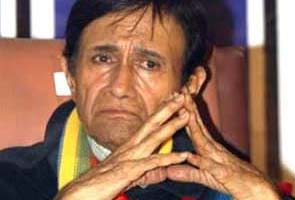
Dil abhi bhara nahin: Dev Anand


Evergreen, evergreen…how many times has one heard and read the word to describe Dev Anand. When he died last night at the age of 88, still brimming with ideas, this would only make the evergreen tag squeeze in more adamantly.

No one noticed that his hair looked awkward, his skin sagged, his scarves and jackets sought to cover rather than make a statement as they had done earlier, and his lips quivered when he spoke. He had grown old, but was holding on to a shaky pillar to build foundations that would not last. His later films lacked panache, they flopped. He said it did not matter and would go on to his next project.


Did it really not matter? This was a man who was completely a people’s person – from his stylised acting to his flashy clothes, he wanted to be noticed and accepted. But he too fell for the evergreen image that was built around him.

A few months ago on a talk show he spoke about how even today there are girls who would be quite willing to get close to him. He was not gloating, and it is entirely possible that aspiring starlets would want to use him as a stepping stone. Yet, it was a sad moment. Sad to watch him regurgitate a fantasy, even if it was real.

His reality was often a fantasy. Some have called it optimism.

I first watched one of his old films on our building terrace. There was a projector and a bedsheet served as the screen. The movie was Hum Dono. We got two Dev Anands. Imagine seeing these delicious black and white images from what seemed a distant past under a starlit sky. Already a film junkie, these moments became part of my non-formal education. It helped when the family would recount their first exposure to the particular film. Or how my mother on her first English film outing, a Gregory Peck movie, was so angry that the Hollywood star was “copying hamara Dev Anand”. The fact that it was quite the opposite did not make a difference to her.

That Dev Anand overdid it was an intrinsic aspect of his persona. He hammed, but delightfully. He made you believe that he was like this. And you know what? He probably was. His body was perpetually leaning towards some unknown person or a far-away place. His neck performed acrobatics. He was like a tableau – every part of him, every expression, a stand-alone performance put together on one stage: himself.

As an actor, he would perhaps qualify as the first real urbane urban character of post-Partition India. He even pronounced his name in a posh manner: Dev-er-nun. He took to Bombay and portrayed it in such an uninhibited manner. Think of Taxi Driver where even the streets looked chic in the dark. He was a man who loved beauty. I would not call him an aesthete; his idea of pulchritude was of polish and varnish. Not quite superficial, but most certainly overt. He did show criminal characters and even portrayed them, but they were charmers. He showed poverty, but no real dirt. This was not his scene.

As director he took greater control, and he stuck to his urban concerns. Again, he did not delve too deeply, although Hare Rama Hare Krishna is indeed a landmark film. When he played the Professor Higgins part in Man Pasand, it did seem like reality for once. He had created quite a few female actors – Zeenat Aman and Tina Munim being the most prominent.

Again, in recent interviews he talked about how upset he was when Zeenat Aman chose Raj Kapoor. For him it was not about a role, but some sort of betrayal. His affair with Suraiya is a fascinating example of how he would go against type when he wanted something. It is said that she would sneak out and they would meet quietly, away from the prying eyes of her conservative mother. The man who one would imagine shrugging such inconveniences off – “Har fikr ko dhuein mein udaata chalaa gaya” (I smoked away all worries) – seemed to understand the delicacy of such shackles, as in his beloved singing “Chhod do aanchal zamaana kya kahega” (Let go off me, what will people think?), but not without a riposte: “Inn adaaon ka zamaana bhi hai deewana, deewaana kya kahega” (this world too is crazy about just such tantalising excuses, so what’s a crazy man to do).

It was clear that he was a romantic, but pragmatically so. Not one of the Alps types, he wooed women through the haze of cigarette smoke or a curl of his lower lip. The music in his films was essential, not merely to take the story forward but to help us stop and look at what else he could do. It was in the song sequences that he shone best and was a natural at.

There are several, but I want to stay with these two.

The romance:


and

The optimistic angst:

Teri duniya mein jeene se, tau behetar hai ke mar jaayein
Wohi aansoon, wohi aahein, wohi gham hai, kidhar jaayein

(It is better to die than live in this world
With the same tears, the same sighs, the same sorrows trailing where does one go)

Just watch him. Does it look like he would want to give up? He is addressing god, but his demeanour is challenging. And the child’s musical interlude – innocence? Hope?


Post Script: I cannot end without mentioning that sometime towards the end of 2000 I got a hand-written note from him saying that he enjoyed my columns. I wanted to cry because those were days of my tears. I could not meet him, but the words of one of his songs from Hum Dono, the first film of his that I had seen under a starlit sky on a bedsheet screen, echoed how I felt.

Kabhi khud pe, kabhi haalat pe rona aaya
Baat nikli tau har eik baat pe rona aaya

(I sometimes weep over myself and sometimes over what’s happening to me
And when I speak about such sorrows, I weep for those sorrows too)

30.4.09

Romance

I was told this music was used in the Korean noir film A Bitter Sweet Life…which life is, isn’t it?

So bitter that you are forced to eat some sugar; so sweet that you squeeze the juice of a flower hard that the last petal left is dry and bitter. It is still a life… Each of us is born to matter to someone, at the very least.

Romance - Yuhki Kuramoto