3.11.11

Whose campaign is it, anyway?


Silent observers when a ghastly crime occurs and 25,000 supporters for the victims once it becomes news. What does this tell us? Citizens’ awakening is an important aspect of civil society, but are individual cases of ‘no tolerance’ enough?

The news: At Amboli in Mumbai on October 20 after a night out a group of youngsters were in the street having their post-dinner paan. Some goons tried to molest one of the girls. After a verbal tiff, they returned with more men wielding sticks and knives. Keenan Santos and Reuben Fernandes, the men in the group, were assaulted in the most horrendous manner. Keenan died soon after reaching the hospital; Reuben survived a little longer. These two young men are dead. Their friends had tried getting through to 100, but no cops turned up. And no one helped them – restaurant staff, hawkers, passersby.

This news has been reported from the day after the incident. The campaign group is doing its best. However, I do hope they stay away from the ‘conscience-pricking’ lot. Let it not turn into a media event, although it is in danger of becoming one now that it has gone ‘viral’ on social networking sites. I understand the reach, but the idea being pushed is to have a “Jessica-like fast-track justice”. The Jessica Lall case dragged on for years because the culprit was influential and the people protecting him were too. There are still unresolved cases, including that of Aarushi and many unknown numbers.

To what extent is citizen journalism a viable alternative? Can it ensure that cops are on duty, that the emergency helplines are available, that goons don’t stalk the streets for prey, and most important of all that people who are around assist those who are being assaulted?

Think about it. It is easy for us sitting at our keyboards to talk about how the hawkers and those in the restaurant should have come forward, but how many of us would have done so when you see a bunch of guys molest a girl who is with her male friends and there is an argument, after which they have the gumption to return with weapons? It is not just fear of the consequences of intervention, but of having to give statements to the cops, attend court hearings, always be on tenterhooks that the criminals or their friends could trace us and make life miserable.

Would we, who are now talking about a campaign and candlelight vigil, ever go and help a female hawker?

What those who are fighting the case – and do not call it a cause because it will immediately become just another ‘rally’ing point  – should ensure the safety of the friends. Then, get the police to act. The culprits have been identified and confessed. There is talk of stricter laws. Of course. But can a law prevent people from indulging in such acts?

Indeed, as they say, this could happen to anyone. It is not a question of ‘could’. It has.

Posters and support groups need to push for access to emergency numbers besides 100, and the presence of police chowkies or at least cops at night every few kilometres where there is social activity going on. These culprits do not have clout, fortunately.

That is the reason I say: avoid the Jessica Lall reference. Her killer, who is now serving life imprisonment, has sought parole from the Delhi High Court to attend his brother’s wedding. What is shocking is that on earlier occasions when he was granted parole he would visit discotheques and violate the other conditions. Apparently, only a one-year conduct of the convict is taken into account for granting him leave. I do not see how convicts, unless they are dreaded criminals, would get away with misbehaviour inside the jail premises. Their conduct would out of necessity be quite unremarkable, and harmless within the confines of prison walls.

Should a person serving a life term be granted parole at all for anything, except perhaps a tragedy in the family? Can you picture this guy dancing at his brother’s wedding? I would imagine that his friends, or even onlookers, would take photographs on their cellphones and post them on some networking site, which will immediately be grabbed by the media to show us the ugly face of justice. Why do they not say anything before? After all, the Jessica Lall case was touted as a media victory.

- - -

Just the other day, there was a protest against the immolation of Tibetans and the brutal Chinese regime on the eve of the G20 Summit to pressurise various government heads to raise the issue. It is a subject that gets mileage, but no concrete action is taken.

Before the rally, an email was circulated. It said, among other things:

We, the Delhi Chapter of Students for a Free Tibet, with a bulk number of members and Indian supporters are organizing a protest action tomorrow. The action will involve street theater, flash mob, and photo opportunity. If you're interested in covering it, please get in touch with the organizers directly. They can fill you in on more details.

"Photo opportunity"? This is what always worries me.

Citizens, however concerned they are, play into the hands of some establishment or the other. It could be the government, the police, the courts, the media and the ‘watchdogs’, who just wait and watch.

RIP Keenan, Reuben, Jessica, Aarushi, Shivani,Tibetans, and the thousands that go unreported and unsupported.

2.11.11

Authors and Mummies


Forget a chair named after you at a tony university. Several dead bodies can soon claim to have been at your place if you have the honour to win the online poll for the best crime writer. Ten authors have signed up for the ‘Million for a Morgue’ campaign. Those who get the most votes will have a morgue named after them. Dundee's Centre for Anatomy and Human Identification (CAHID) in Scotland needs £2m; it has contributed half the amount. The rest will come from the vote, where each voter chips in £1. This is to facilitate a special embalming facility for research.

I assume the writers have decided to participate out of a genuine need for academic excellence in the field of such scientific endeavour. One of them has probably done it out of gratitude. Val McDermid often tapped Prof. Sue Black of the Centre for her own research. As she recalls:

"I remember asking her what a body would look like once it had been in a peat bog for 200 years. There was a moment's silence on the phone and then she said: 'A leather bag with a face on'. And that was perfect because that gave me an image I could put in my book."

We can take this further and have restaurants, stadia, bats and balls, strip clubs, even a specific love-making position named after authors. I can’t wait.

It raises the question about what could motivate readers to vote. Would it be like any popular poll where you choose your favourite crime writer? Or, since the purpose is not a secret, will the person contributing the money be interested in the Centre’s plans and therefore keep this in mind and choose an author whose work is the most macabre and deadly?

What if after winning the author has second thoughts about the naming? Would that not amount to letting down the readers who voted? Do writers crave fame and not mind such an honour? But, are not death and murder the territories they stalk in their literary endeavour?

However, it might be a good idea if the morgue is named after a character from a thriller. Better still, it could just be called ‘Crime Writers’ Mummies’.

1.11.11

7 Billion Mutinies Now: The Fight For Women

Imagine a situation where a few years from now she could be married and forced to become the shared booty between brothers because she survived

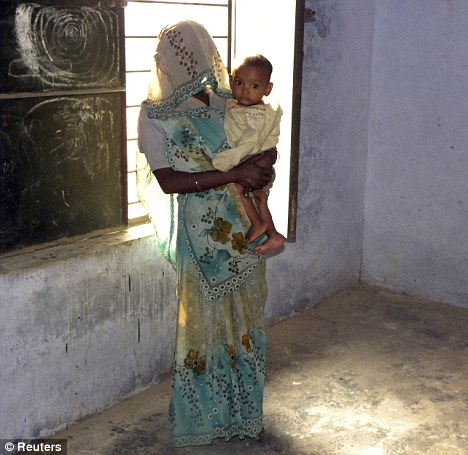
Phul Kumari with her son

Across the globe, the seven billionth addition to the human population has been welcomed symbolically. Baby deaths, another vital statistic, can be pushed aside.

Numbers are nice. They give us an idea about just how insignificant we are and how each of us has to wage a battle. The seven billionth girl in India was born in Lucknow – the symbolism here is of the girl child. There are photographs and nice family moments.

Imagine a situation where a few years from now she could be married and forced to become the shared booty between brothers because she survived. Nobody poked a coat hanger in her mother’s womb to kill her. No one poisoned her milk or just threw her in the dustbin. The tragedy of her life is her survival.

What I mention about shared booty is a shocking report that somehow did not cause a flutter in the mainstream Indian media. My inbox that is usually flooded with information about female circumcision in some African country or how women in Saudi Arabia have to fight the authorities to be able to drive did not have a word about this news. We Indians are concerned about how the world treats women when we are among the worst criminals.

Baghpat does not figure in the maps we understand. It is a small village in North India, two hours away from the capital New Delhi and 500 kms from the 7 billionth baby girl. The report mentions the story of a woman, now in her 40s, who had come like any other bride to her new home. Munni did not know what awaited her. In her words:

"My husband and his parents said I had to share myself with his brothers. They took me whenever they wanted – day or night. When I resisted, they beat me with anything at hand. Sometimes they threw me out and made me sleep outside or they poured kerosene over me and burned me."

She has three sons from her husband and his two siblings. She would not be able to tell who is whose father. She filed no police complaint. She had no choice; some would say her position is better because others are kidnapped and raped or sold to brothels.

The British Medical Journal quotes the astounding figure of 12 million deaths of female children in three decades. Voluntary agencies mention the sex ratio. In Baghpat for every 1000 men there are 858 women; nationally the ratio is 1000 men for 940 women.

This is a far more delicate problem than rape and human trafficking, for it is kept within the family. In Haryana, brides are imported from the vastly different cultural southern state of Kerala. It would be a good example of breaking regional barriers, but many of the women are bartered.

We also need to look beyond the skewed sex ratio, because in some ways it ends up sounding like a justification even as we deplore it. We also have mythology to rely on. In the Mahabharata, the Pandavas – the good guys of the epic – all marry Draupadi. The reason? They are obedient sons. Their mother Kunti always told them that they should share whatever they get. After Arjuna successfully wins Draupadi in a swayamwar, upon their return they tell their mother they have brought alms and she repeats her advice. One can look upon this as less literal than it is because it is mythology. However, later these brothers do put their wife at stake in a game of dice.

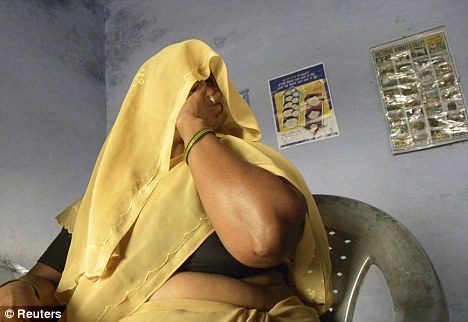
Munni, the victim, is shamed; the shameless get away

Munni of Baghpat does not have a kingdom she can claim to belong to or a Krishna she can seek succour from. There must be many such women who are not only shared by the brothers but also sold or loaned to the desperate bachelor population.

Such a sense of camaraderie and community living was not uncommon in tribal societies. In fact, there were matrilineal societies too, but power was vested in the hands of the woman and lineage also passed through her. It did not give rise to any questions about fatherhood. Women had control over choice of mate and property.

If the Baghpat type situation were reversed and women indulged in this sort of polyandry in today’s times, it would most certainly be unacceptable. For all our talk of women’s empowerment, even offbeat cinema sees a woman’s sexuality as the masculinisation of her. Or, an error.

In UP, too, the fact that Munni is not even granted respect and treated as a sex object should alert us to the fact that the sex ratio figures could well turn into a ruse for polygamous relationships. Where men do not need to pay for sex and can get women to work in the farms and at home to cater to their every need, it might alter the dynamics of gender relationships and parenting. One is bound to sneer at what appears to be an urban concern, but gender relations are not only about seminar discussions. It is about how they affect people of two sexes.

If the men are following the patriarchal format and want to propagate their lineage, why are they not concerned about who the father is? Is there any guarantee that they are not going out with other women to satisfy their sexual urges? What about the issue of diseases? Education of women is a priority as the agencies there rightly point out, but will it ensure that the woman gets out of this circle? They obviously have little control over the gender of their offspring and what happens to it. Since it is the men who seem to ‘suffer’ due to lack of women, should they not be educated and informed about the long-term consequences of snuffing out the life of the girl child?

Munni’s story is incomplete without pondering over a few concerns. She has three sons. Did she have any daughters that she had to get rid of? Had the daughters been allowed to live, would their own fathers have exploited them for no one would know who the natural parent is?

By now, we have gone much beyond the seven billionth figure and if a girl has survived in some backward village, her fate is sealed – sold and delivered. It could be to a client or it could be one husband too many.

(C) Farzana Versey

Also published in Countercurrents

Coronation Skit: Saif Gets Co-opted


Just suppose Saif Ali Khan had refused to be anointed the new Nawab of Pataudi and instead gone to the district and nearby villages, spoken to the people and said that he would continue with the work in the charitable hospitals: would there have been turmoil? The people there vote for politicians; it is the government that provides the basic infrastructure, the roads, the health plans, the schools, the water, the electricity.

Saif had said that this business of royalty is not applicable anymore; India is a democracy. He should have stood his ground. We do still have these princes around, especially in Rajasthan, transforming their palaces into fancy luxurious hotels while playing on public sentiment. Some enter the political fray and while in Parliament they are the epitome of modernity, what with their western education, but once they reach home turf they are quite willing to be addressed as “Your Lordship”. They get married mostly within the clan or with other royal blood and we still see these princesses, graceful rajkumaris, in special editions of glossy magazines. Even if these royals are running restaurants or designing high street clothes or, of course, promoting the gay cause dressed in pink feathers on their turbans, they still get this halo treatment.

Many bring out their antiques and heritage garments in the name of promoting tradition. This is self-promotion. Not one of them has the courage to shun the pomp and pageantry. To make it seem that it is the junta that wants to keep the symbolism alive is only a small part of the picture. Does the junta, often quite conservative, have a say when these rajahs and nawaabs indulge in their extra-curricular activities? Is the junta allowed to voice an opinion when there are fights over wealth in these regal families? Who represents the junta to anoint the princes? The panchayat? It is a political body. So, these men are just ensuring a constituency.

Since Saif had clear opinions about Indian democracy, he should have not gone ahead with the pagdi (turban) ceremony. It is too soon after his father Mansur Ali Khan Pataudi’s death, anyway. If this is a democracy and he was not ruling, why the hurry to fill the space?

Someone tied a turban and he now has a title. It means nothing, he believes. It would be a fine initiative if he stepped up and said that he had respected the views of the people (if indeed there were such views) and now as their prince they must respect his and follow the government directive. Many of these princes talk about how they are upholding both tradition and modern values, when all they are doing is ensuring that Godiva chocolates are placed at bed-turndown time in the rooms that have an odd ode to culture with a miniature painting or ‘theme’-based furniture and upholstery.

And the media that goes on about the new India, the India that has come out of the stereotype, has been covering this ‘small’event with television interviews on the coronation. If you want the rights of a democracy, then do not make a farce of what it does not stand for only because you get to see blue blood. Of course, the channels will also benefit by getting the ads of the 'prince' endorsing a vest.

Democracy is, I suppose, a fleece market. 

31.10.11

Aiyyo, India Tussi Bharat Ratna Ho!

Of course, India is one country. Diverse, yes, but unified. You’ve got to be joking. Just one day’s news will tell you that not only do we have such strong borders within our country but we also react in a manner that would make an outsider seem less alien.


Let me start with the film of the moment ‘Ra.One’. I have not watched it yet. Now, besides all the criticism about flimsy storyline, SFX not up to nuff, nothing like Hollywood, listless performances, what I found a bit curious was one long article in the TOI about the portrayal of Shahrukh Khan’s non-superman character as a Shekhar Subramaniam. The writer of the piece, a Tamilian, “cringed” because,

“It was somehow difficult to imagine the man whose name has always been Khan or Malhotra pulling off this new surname or doing his signature wide-arm gesture in a veshti and baniyan or even preparing crisp paper dosas for that matter. No, I don’t hate SRK; he’s indisputably the master of spontaneous wit and Yashraj romances.”

Here is someone complaining about stereotypes and indulging in it. What is a Malhotra or a Khan? Why does she imagine all Tamilians wear veshti-baniyan all the time? As a Malhotra, has anyone seen him eat pakoras?

The criticism would have been fine if the nitpicking were not as puerile as this:

“The curly hair, usually a Malayalee trait, I can take. Even Subramaniam’s inability to make iidlis or his soft spot for Lord Balaji (whose largest fan base lies in Andhra Pradesh by the way) is excused. But, under no circumstances, and ‘you can take it in writing’ (now this is a line any Appa would be more prone to using), would a Tamil father quote V Shantaram. Thiruvalluvar, yes. Valampuri John even. But a veteran Maharashtrian film director?”

Do all Mallus have curly hair? Lord Balaji is pretty universal in those parts, and yes, I mean the whole South, which is not Madrasi. As for quoting V. Shantaram, aiyyo, Rajini saar is originally from Maharashtra and he rules the Tamil industry. In fact, what is the cribbing about caricature? Every Rajinikant character is a caricature, often of himself. Pointing out the subtle variations within the South is not educative but only emphasises the disparities and the archetypes. It is important if the issue being discussed were of import; here we are talking about the non-hero avatar of a superhero.

One scene has got quite a few people into a Maggi mass. The good Tamilian writer explains that an appa “is not someone with a natural taste for noodles and wouldn’t ever substitute rice in curd rice with noodles. Is that so hard to get?”

Yes. Because, some appas can be eccentric. Here we go on and on about fusion cuisine and someone does it in the privacy of his home and it becomes a matter of grave social concern. What if he had poured rasam over the noodles? Or, was there a problem because he eats with his hands (not just fingers)? Have you not been to any traditional home or even small restaurants? Balling the rice after adding the sambaar/rasam/curd is pretty common. There have been occasion when such images are poked fun at, but if you can take a joke then it should not be a problem. The Chinese and Japanese even in fancy restaurants have their soup straight from the bowl. Americans will stuff triple-decker burgers in their mouths, mayo, ketchup and all. North Indians will eat their gol-gappas with the jal jeera dribbling down their chins. Same goes for most chaat in other parts of the country.

As for the accents, Bollywood is not here to make realistic cinema. Watch the old films, see how comedian Mehmood portrayed the Tam-Brahm in ‘Padosan’, watch those lungi dances…and we have film stars from the South who spoke in Hindi as Malhotras but never did get rid of their accent. No one spoke about nuance and how they managed to stay at the top.

It is interesting that there is no word about Shahrukh’s character being lean. Why? Does the Tamilian appa not like himself to be a little robust round the tummy, by and large?

And here is this whirly-gig that “even the most accented Tamilian father does not have a problem pronouncing ‘keys’, no matter where he’s looking for them (in this case, a woman’s bosom)”. Well, maybe he had just travelled from Medrass and hopped across the Tamil border into Kerlah? If he can acquire curly hair, according to the writer, then he can indeed look for kiss in the oman’s boosum (keys in the woman’s bosom)?

The writer goes all moralistic about upbringing of Tamilians. Hello, how many of them have wives in several corners of the house? Ex-CM Karunanidhi might be able to help.

PS: I do not like SRK and my next recipe will most certainly include noodles with curd, since I have already been eating tomato bhaat (pronounced bath by Tamilians) with curd and papaddam.

- - -

From the South, we move north. Metallica decided at the last minute it would not perform at the Gurgaon venue – something to do with security. Dilliwallas were angry. Rightly so. But Dilliwallas are always angry, so angry that if they cannot break a signal, which is their birthright, then they just get on to the footpath. Of course, this was not a Delhi-only event, but there are some places that bring out the worst in you. And Delhi most certainly is.

It does have people from other parts of the country, but it is a strange mix of ‘ji huzoori’ and ‘civil disobedience’. Unlike Mumbai that does not make you into a uniform kind of Mumbaikar, Delhi does it unless you really strive to retain your individuality. The worst possible thing is that the Dilliwallas are probably not too happy that Noida pulled off the first Indian Formula One, pretty much without glitches. No one has as yet come out with CWG like scandals, and this in the land of Mayawati.

It is truly silly when people ask what will happen to that land now that the races are over. What happens to Jantar Mantar and Humayun’s tomb and Ferozeshah Kotla Maidan? The first two have symbolic-historical value, but after that picture of a stray dog at the spot before the races, perhaps it can be used to get our police sniffer dogs some exercise; it can be used as a jogging track; there can be music performances. Anything. Maybe even Team Anna can play a cricket match against the various factions that crop up within it every other day.

The cribbing continues, including how it is just a glamorous event. Sure, it is. But those with memories will remember that the respected news magazine, India Today, back in the old days had done a photo shoot of the makeover of athlete P.T.Usha. Think before you cast stones.

I have two cribs about the event, though.


  • Why did Sachin Tendulkar flag the winner Sebastian Vettel? One of the participating teams was Ferrari and we might recall that he sold his Ferrari, a gift.

  • I love Lady Gaga but an Indian band or a group of our best could have been chosen. After all, it was the Indian Grand Prix.


- - -

We move to Mumbai. Shiv Sena chief Bal Thackeray wants Amitabh Bachchan to get the Bharat Ratna.

"Amitabh Bachchan is the last 'Shahenshah' (emperor) of Bollywood. In many countries of the world, the people don't know who is the president or prime minister of the country, but they know Bachchan. He is a real jewel of India who has brought laurels to the country...Bachchan truly deserves the Bharat Ratna.”

We do not know if Balasaheb plans to take away titles and we cannot have another shahenshah years from today. Mr. Bachchan does deserve this honour. But, why this sudden interest? Because, recently a North Indian MP had asserted himself and there was a war of words. So, the SS decided they could use the man who represents the North best. Moreover, he is now the brand ambassador of our beloved Modi’s Gujarat.

Let me jog your memory, again. In 2008, Mrs. Bachchan, Jayaji, a fine politician from the Samajwadi Party, had said at a function when the ‘speak and eat in Marathi’ call was at its peak:

“Hum toh Hindi mein bolna pasand karenge. Hum toh UPwalle hain. Mumbaiwalle humein maaf karein.” (I would like to speak in Hindi since I am an UPite. Mumbaikars please forgive me.)

Smart woman that she was, she forgot that she is a Bengali married to a UPite; she was marketing UP then. At the time, Sena spokesperson Sanjay Raut had said,

“Why should anybody undermine the Marathi language in Maharashtra? Moreover, there is no need for her to promote Hindi in Mumbai. It would serve the purpose better if she campaigns for the language in southern states.”

So, Balasaheb is not only suffering from convenient amnesia, he is pushing the Bachchan agenda by bringing in the friction with the Congress as the reason that Mr.B has been denied the honour. Why has he kept silent for so long? Had he got it during his friendship period, then the accusations would be of favouritism.

Talking of Mr. Bachchan and his show 'Kaun Banega Crorepati', I think it is quite communal, in that it finds a Muslim and the queries are about naqab and some Urdu stuff; the Hindus get their queries from mythology, which is in surfeit, incidentally. Always has been.

- - -

It is, therefore, wonderful that the Mumbai High Court did not pussy-foot when it came to a mandal that claimed it was a temple and asked for it to be removed without touching the deity. Justice P.B.Majumdar stated:

“People are interested in building places of worship. But God is never interested in huge worship places. He is satisfied with a small place also. If you really have the love for God, pray to God. He can give you more.”

True. There should be a moratoriam across the country on new places of worship. We have more than enough of every religion and sect, not to speak of those in honour of film stars.

Mosques, temples and churches are anyway not about god, but about the devotees’ need to find god. A haystack should do. A pin here and there might confirm the best suspicions.

30.10.11

Sunday ka Funda

See I remember we were driving, driving in your car
The speed so fast I felt like I was drunk
City lights lay out before us
And your arm felt nice wrapped 'round my shoulder

And I had a feeling that I belonged,
I had a feeling I could be someone, be someone, be someone

You got a fast car


28.10.11

Words/Sperm Count

Writers who think blogging is a waste of words are like men who don't masturbate for fear of wasting their sperm or making them weak.

~F