Showing posts with label deepika padukone. Show all posts

14.1.20

Chhapaak - The Sound of Destruction

-->


A few days before Chhapaak, the film on acid attack survivor Laxmi Agarwal, hit the screens, Deepika Padukone who plays the protagonist joined the students of JNU University in their protest against the government. This was viewed as a PR exercise, an extension of the film’s promotion. The politics over this act has left for little room to understand the more vital queries regarding whether cinema succeeds in replicating real life and to what extent it should without compromising on the merit and necessity that art demands.

PR is often necessary for any work, and more so a film that is not populist and deals with a sombre subject. Besides, on almost every promotional event, Laxmi has been present alongside Deepika and has received much respect.

However, the laudatory comments on Deepika’s brave act have overshadowed the bravery of Laxmi as well as those even further down the pecking order. In fact, is bravery the right word at all? Many films have been made on heroes of our freedom struggle – are the actors considered brave for doing so?

The media as well as social media got divided into the RW dismissing the film because the actor was present at a place they have political issues with and the liberal fraternity that couldn’t stop raving about it.

The Uttarakhand government has decided to give a monthly pension of upto Rs.10,000 to acid attack survivors. While this is welcome, the crux of acid availability and legal laxity in dealing with attackers remains. Laxmi was attacked in 2005. Her attacker Naeem Khan got bail and even got married. Later, he was given a mere seven years in jail. She filed a PIL to ban the sale of acid, but it did not lead to a complete ban.


Her life was ruined forever. Yes, forever. Because while she has risen to become a motivational speaker, a TV anchor, an activist, and the subject of a film, she is still viewed as an oddity. One young female actor even used the word “cringing”, and it was meant as a compliment.

Laxmi said in an interview, “Although a trained beautician, my face became a hurdle after the acid attack. When I went looking for a job, they said that customers would get scared of my looks. I applied at a call centre and told them no one would be seeing my face. But they replied that to get a job, I need to have a face to begin with.”

The fact is that even the film on her life does not carry her face. So, what really did the film achieve? With all its good intent, performances and projection, it was an underwhelming experience for me. There are many positive aspects, but those also work against it.

Director Meghna Gulzar does not sensationalise any bit. There is no gaze of pity. This is great. However, at points it becomes so legalistic and technical that it overshadows the emotive aspects. That scream of Malti (Laxmi renamed in the film) before the mirror when she first sees herself after the attack by Basheer Khan (Naeem in real life) is real, but we don’t feel the core of her trauma. She seems unmoved in court in the presence of her attacker too.

While it was important to focus on the main character and not give too much attention to the attacker, this non-demonisation leaves him looking like a wishy-washy bystander and not the epitome of evil that he was. There is also not much said about the patriarchal notion of ownership of a woman.

The title Chhapaak refers to the sound of acid being flung. It really is the sound of destruction, and in a movie that speaks about rising about it, mending one's life, I wonder how apt it is. 

Malti has generous friends, lawyers and doctors, which is heartening. But there is no attempt at looking at the lesser privilege of the other victims who also work at the NGO. In fact, she does not show enough empathy towards one of them when she mentions the surgeries she needs to have, whereas Malti herself has managed to get herself seven.


There are beautiful moments of Malti’s joy over small victories and her general optimism. It posits beautifully against the NGO founder Amol’s cynicism. Their love story is one of hope.

The film begins with a reference to the protests following Nirbhaya’s rape and the lack of media interest in acid attacks. Amol says, “Rape ke aage acid attack ki kya pohunch (What say does an acid attack case have when compared to rape)?” It would’ve been a good observation on hierarchy of victims except that Malti herself is the subject of a film and he says at a later stage that Malti was now a celebrity.

Irony often defeats the message.

8.2.18

Power, Piffle and Padmaavat


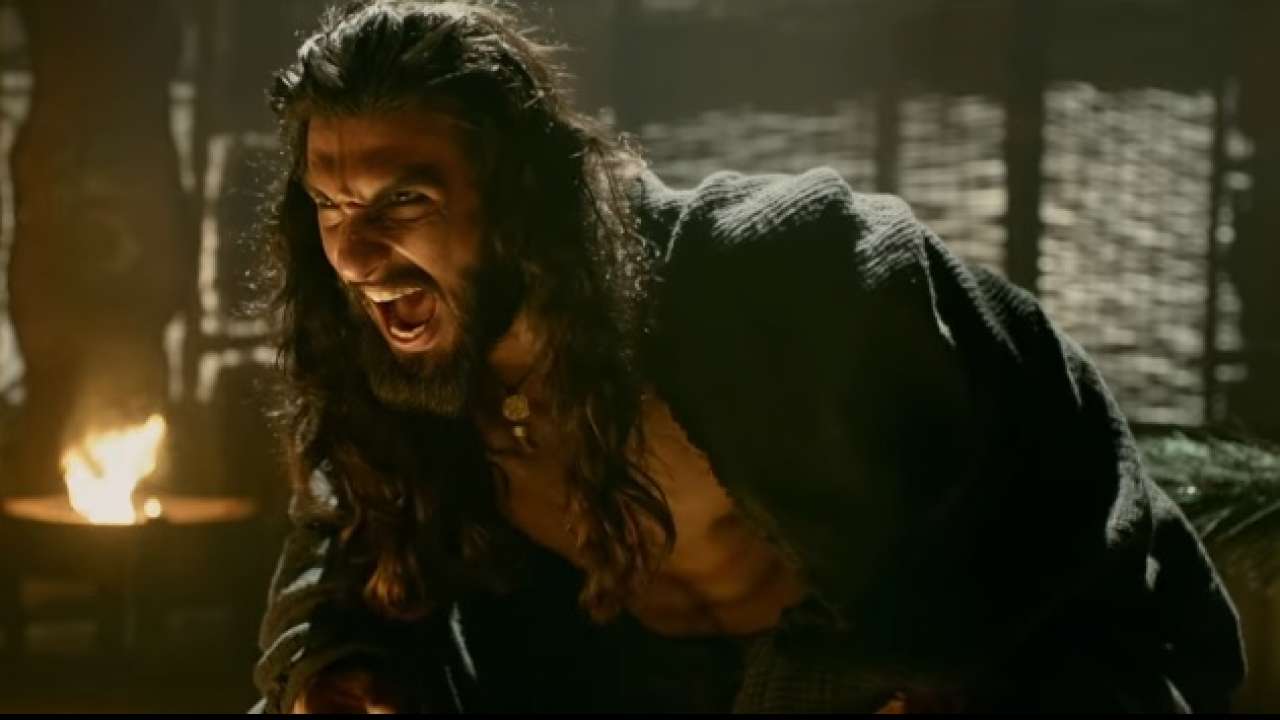
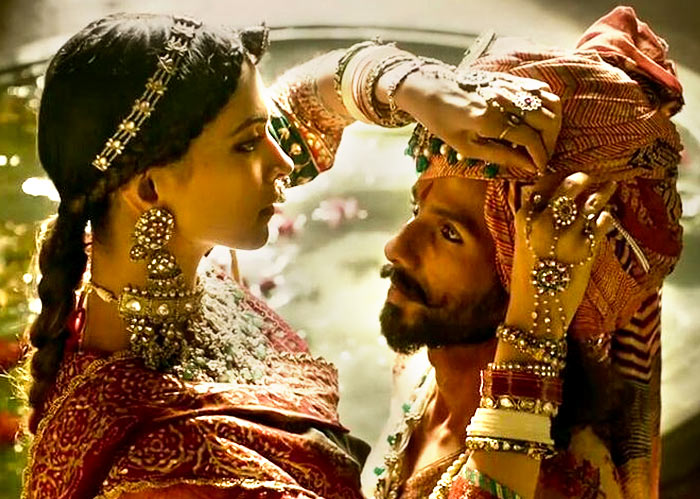
The problem with a film that has been in the news and resulted in violent protests is that it gets a pedestal, and the resultant pigeon droppings, before you have even watched it. There is baggage as you enter the auditorium. You are already emotionally tuned into it – whether it be its message or its very existence as triumph over opposition. (The Karni Sena, a sort of watchdog organisation that burned the sets and demanded the head of the actors, claiming that the portrayal of Padmaavati, their hero who did not bow down to Allaudin Khilji, would be an insult to Rajputs.)

Despite all the intellectual titillation provided by an open letter where an actor claimed that she felt reduced to a vagina after watching Padmaavat (more on that later), the film did not reduce or elevate me to anything.  

I sat through it, not squirming as much as feeling detached. There was no emotional connect, as character after character piled on bravado and bluster in the automated manner of updated robots.

Director Sanjay Leela Bhansali has taken to making epic-type films that beneath their grandeur manage to camouflage the caricatures his characters come across as. For a movie that spouted honour, it struck one as a weakling constantly seeking affirmation.

The primary criticism of Padmaavat has been from the feminist point of view, and because one actor Swara Bhasker has decided to reduce the whole female population of India to genitals while smartly trying to win brownies by flattering the director with terms like “brilliant auteur” as well as the online coteries by adding mandatory references to “today’s India”, I’ll address a few points:

Why exactly was she reduced to a vagina?
 “Yes, women have vaginas, but they have more to them as well. So their whole life need not be focused on the vagina, and controlling it, protecting it, maintaining it’s purity. (Maybe in the 13th century that was the case, but in the 21st century we do not need to subscribe to these limiting ideas. We certainly do not need to glorify them.)”


You’ve got to be an obstetrician if that is all you see. This is ridiculous, whether the reference is to the film or to reality. Khilji has heard about Padmaavati’s beauty and wants to acquire her because “har nayaab cheez par hamara haq hai” (he has claims over every beautiful thing). His actions, at least according to this film, do not show him to be an aesthete and I’m afraid he does not appear to be terribly interested in the vagina either. His lust is essentially about jerking off the excess pressure of immense power he imagines he has.

You can’t find the jauhar scene glorified and not have a problem with the glorification of a queen who conveniently married a married man and let the first wife get side-lined.

You cannot rant about being reduced to a vagina and not notice that this first wife was not only dehumanised, but desexualised as well. Padmaavati too spends more time trussing up her husband’s turban than any expression of amour.


You cannot have a problem with women choosing to end their lives instead of falling prey to the enemy and not flinch when men routinely speak of embracing death fighting the same enemy. What is so valorous about the latter? That they don’t have a vagina? So who is being reductive?

You can’t talk about Nirbhaya, the Delhi gangrape victim’s brave fight against her assaulters and not see Padmaavati fighting a similar threat. For all we know, had Khilji made it anywhere close to her she, a warrior herself, would have put up a good fight. All women do, unless they are muffled, shackled or rendered immobile. And people should just stop using rape and Dalit girls for their posh little consciences.
“I felt like all the ‘minor’ achievements that women and women’s movements have made over the years– like the right to vote, the right to own property, the right to education, equal pay for equal work…all of it was pointless; because we were back to basics.”

There is so much hyperbole here that it sounds like she is cloning Bhansali. Nobody, and certainly not rape victims, feels reduced to a vagina. They suffer from trauma not because their vagina was violated but because they were. I wish people would stop demoting the strides in law and social justice regarding women only to use it to make the self-righteous point that they, as opposed to the rest, care.

Even more appalling is the belief that cinema ought not to portray what may have happened without taking a moral position on it.  

“I understand that Jauhar and Sati are a part of our social history…but then so were the lynchings of blacks by murderous white mobs in the 19th century in the US – sensational, shocking dramatic social occurrences. Does that mean one should make a film about it with no perspective on racism? Or, without a comment on racial hatred?”


Political correctness and vacuous op-eds are killing reportage and delineation. The creator would certainly be free to explore the material as s/he wishes, but that does not necessarily amount to an opinion. It is choosing what part of the landscape to focus on. Many do-gooder films that overtly comment do not flinch from sensationalising the evils they depict. Patina is not perspective. Just as binaries are no plausible response to cardboard portrayals.

***

Swara Bhasker posted a video where she told Bhansali that she had taken up for his film during the protests. I watched more than that one clip. On the casting couch of which she was a potential victim, she refuses to name the man because he is not as important as her now. The message being that if your perpetrator is someone lower in the hierarchy, what’s the point? No eyeballs to grab.
She also puts the onus of the casting couch on women. She says, and this is pretty much her quote, that a man asking you to sleep with him is offering a bribe; you have the choice to refuse it. Women must say No. There will be consequences. But women shouldn’t be in a position where their ambitions become their greatest disadvantage.

To think that people like this are seen as the sensible and brave voices on social media. Oh, but they would be. Social media props up blather because it can’t handle complexities.


4.4.15

Voices and Choices


She was articulate, but helpless too. "My having a love child is a scandal, but X as a celebrity is considered bold," she said.

This was her cathartic moment. I was meeting her for a theme-based feature story; at some point she just let out her frustration. I gently told her that the famous often become gossip items, even as they might feel emotions similar to anybody else.

"I am not talking about them, or even X, but how society sees it. They may gossip, but she is still invited to the big parties she always was, she continues with her work and, why, she has more work today. She is not shunned. I am."

X was a well-known person who had a child out of wedlock. The father was an even more famous person. They were, and are, what constitutes the beautiful people of high society. The woman sitting before me (let us call her M) was stunning, but did not belong among the beautiful people. She was a professional, had a fairly visible social profile, but was not a celebrity. And she had a child without marriage. For that one aspect, her whole life became subject to scrutiny.

She had exercised her choice. So had X. In fact, hers was the braver decision because she made a private choice and did not cling on to the man because their terms of engagement had been clear. X, on the other hand, had a public deal and the child was subsequently made into a bait. Yet, both these women had decided what to do with their lives. Why was the response to their choices then so different? M and X had similar friends. What made people react differently to the two women?

All this happened several years ago. I was thinking about it after the Vogue-sponsored empowerment video 'My Choice' became a huge talking point.

Women's empowerment seems to be treated like a marketing gimmick these days. It does not surprise me that some people think it has enabled a debate on feminism. This Swarovski version of feminism does suit certain sections of society because the people featured in it either mirror them or are what (or where) they'd like to be.

There has been much discussion already, both for and against. What bothers me most, besides the jejune script, is the emphasis on the body. I find it distasteful not because the body is something to be shirked, but because it has to be accepted as a normal part of one's being. The mass media objectifies it not only for brand endorsement, but also the self-conscious attempts at 'celebrating' it. We can celebrate a sculpture, not human flesh.

Unfortunately, the social media is incapable of grasping nuance, so those who critiqued the video were seen as the flip side of the rightwing coin. Some Hindutva groups did indeed question it but on moral grounds or how it was the result of western influence.

Criticism is not as uniform as praise. People have issues with a subject for more varied reasons than when they appreciate something. For me, the emphasis on choice makes it seem like it is an abnormality. There are several self-contradictory statements too.


You are my choice. I am not your privilege. The bindi on my forehead. The ring on my finger. Adding your surname to mine. They’re ornaments. They can be replaced.

Fine. But why have them at all? And who are these ornaments for? Him, right? So, she will replace one set of ornaments for another, but it will be an adornment for him, whoever he is.

My choice. To be a size zero or a size fifty.


And to show a pregnant woman as a large size? Besides, it is not always a choice. Some women (and men) become obese and then suffer from debilitating ailments; some lose weight rapidly and suffer too (I won't even go to malnutrition).

My choice. To come home when I want. My songs. Your noise. My odour. Your anarchy. Your sins. My virtues.


Why do her songs become his noise? Is that what she wants? Or is it what he tells her, or she imagines he would tell her? What is she asserting? How does her odour become his anarchy? I mean, give it a break! Would her deodorant then be his discipline? If his sins become her virtues, then are her virtues his sins? This is so much poppycock. As regards asserting that she will come home when she wants, it sounds less like empowerment and more about a teenager raising hell over curfew timings.

My choice. To have sex before marriage, to have sex outside of marriage. To have no sex.

The response to this has been the most widespread. Some have said it is licentious, others have stated that men should then claim similar choices. That is the reason I think it is problematic: this seemingly bold pronouncement would free men to not only do their own thing even when they are in a committed relationship but also use it to bully their partner when they might wrongly suspect her. How two adults choose to conduct their relationship is a private matter and intensely personal. Some people choose fidelity too, but the moment it becomes a pulpit statement it comes across as moralising.

As for celibacy, Mahatma Gandhi chose it; his wife Kasturba did not. She accepted it later. Would this be her choice?

It would be unfair to pick on Deepika Padukone for she is only a medium here. But, given that this is largely Bollywood, how come she or even the director did not think it fit to show women demanding more, if not (why not, though?) equal pay? The entertainment industry for all its liberal values refuses to see women as being financial assets on par with their male counterparts.

It is everybody's right to have an opinion and voice it. What is rather troubling about such promotional concern is that it is not meant for lasting impact. Go viral, bask in it for a few days and then move on to the next cause, preferably about women. Because, whether it is a woman's body or her spirit, there are infinite possibilities to exploit her.

Yes, she is infinite. However, her spirit does get caged when she is made to mouth bad clichƩs.

15.9.14

The Cleavage Chiaroscuro


What happens when a Bollywood actor decides to speak out against objectification? The reactions are simplistic and extreme.

The Times of India tweeted a link to its web gallery, with one picture that had the caption: "OMG: Deepika Padukone's cleavage show."

She responded with: "YES! I am a Woman. I have breasts AND a cleavage! You got a problem!!??"

TOI, rather flippantly, told her that it was meant as a compliment, adding: "You look so great that we want to make sure everyone knew! :)"

Deepika: "Don't talk about Woman's Empowerment when YOU don't know how to RESPECT Women!" and "Supposedly India's 'LEADING' newspaper and this is 'NEWS'!!??"


One thing needs to be clarified — this is not news and was not sold as such. It was by the entertainment department and the link was to a web gallery.

Was TOI being disrespectful? Yes. Specifically to her and generally to its readers. The assumption is that people are intent upon looking only at certain aspects of a person they might admire as a performer or even a looker or, worse, people cannot see what is there and need to be guided with verbal cues.

This is infantilising besides objectification. What exactly does a "show" conjure? That it is a performance, a display. Deepika is being accused of exhibitionism.

As happens often, the story is not so much about what was said but how it snowballed. The actor has featured in Times of India's other publications, often on the cover. It is a mutually-acceptable relationship, even beneficial. TOI has often passed off pulp as news.

The point is: are we and should we consider the cleavage of anybody as pulp? Would that not amount to a denial of gender dynamics, of the body, of identity? While Ms. Padukone herself was clear about what she has and how she expects respect, has the response followed this template?

Lyricist Swanand Kirkire came up with this: "Behind every cleavage there is a heart, a voice, thanks... for showing us your true beauty & this is a compliment." If he had to pay tribute to her heart by mentioning its location, then he should have mentioned the rib cage.

The general tenor of "she is more than a cleavage" is patronising, apart from missing the point: A woman can show cleavage, but it does not give anybody the right to point at it. Just as one might object to catcalls, which again are considered compliments by some.

And why does a woman need to have more that is in the realm of the abstract? She may possess many qualities that need not be for public consumption or its intensity may be reserved for personal interactions only.

In fact, one fallout is men who are standing with her want to express solidarity by posting pictures of their moobs (man boobs). This means little, for male actors have no issues about being known for their six-pack abs and muscles. If anything, their bodies convey a single-minded commitment to achieve a look required for a role, if not for the image of star power.

A woman actor who does work on her body is seen as an aberration that needs to get back to her original shape soon, even if the original shape follows a standard idea of perfection.

Returning to the online battle, not for a moment did the thought of Ms. Padukone's just-released film 'Finding Fanny' cross my head. She does not need publicity, although the mainstream media that is reporting on this are referring to her as the FF star.

One radio jockey, Malishka, resorted to hyperbole saying that Deepika "makes history today not just coz of #FindingFanny but coz of the stand she took".

It raises an uncomfortable question: If responding to a newspaper means creating history, are we to assume that there is silent acceptance otherwise? The reiteration of "about time" reveals a scenario where nobody speaks up.

I am particularly concerned that even now the sounds are merely echoes of one who is a top line actor. It is fairly routine for those not as well-known, especially those who are referred to as item girls, like Rakhi Sawant or Poonam Pandey, to be dismissed as drama queens if they do raise their voice. I doubt if they would get any support. So, this is also about class and the pecking order.

The Deepika episode gives an opportunity to some to become legitimised, even as they continue with their ogling. Director Anubhav Sinha said, "It is the high camera angle not a low neckline. What is low is the standard of journalism. Downright SICK!!!"

What exactly was actor Ayushmann Khurana trying to say with this, "Dear yellow journalism, a star showed you that some of you are green"? How puerile to suggest that this is about envy. The puerile seems to prevail, just as it becomes obvious that a little flash makes a bunch of people sweat and indulge in mass catharsis. Not many would wish the rub a big media house the wrong way, and they just do not have the time of inclination for more than a castaway statement.

If all these stars are truly concerned, they should speak out more often. It is only real war that will get them results and bring about a change in attitude.

© Farzana Versey