22.1.11

The 'Stained' case

I am against capital punishment, so the Supreme Court's verdict of a life sentence to Dara Singh and his accomplice Mahendra Hembram felt right. 12 years ago they had killed the Australian missionary Graham Staines and his two young sons, 10-year-old Philip and Timothy, six.

However, I do not like the tone of the judgement:

The bench said the Orissa HC was justified in awarding a life term to Singh and Hembram as the crime was committed in passion, to teach Staines a lesson for his alleged attempts to convert tribals.

“Though Graham Staines and his two minor sons were burnt to death while they were sleeping inside a station wagon in Manoharpur, the intention was to teach a lesson to Graham Staines about his religious activities, namely, converting poor tribals to Christianity,” it said.

“All these aspects have been correctly appreciated by the high court and modified the sentence of death into life imprisonment with which we concur,” the bench said.

It seems like this action-reaction theory has gained ground in almost every sphere. I mean, will we condone anything done as an act of passion?
While condemning killings in the name of religion, the bench also expressed its disapproval of conversion. “It is undisputed that there is no justification for interfering in someone’s belief by way of ‘use of force’, provocation, conversion, incitement or upon a flawed premise that one religion is better than the other,” it said.
Is the highest judiciary in this land talking about brutal killing in terms of teaching a lesson? For religious activities? For conversions?

Has there been any evidence produced about forced conversions? Why are they not tried? Is it prudent for a judge to discuss whether anyone thinks their religion is better than another? Is that why conversions take place anyway? Wasn’t there talk earlier about tribals being bought or given sops?

If the judiciary is concerned about these matters, then nip them in the bud and deal with the issues faced by tribals.

- - -


Updated January 24:

Received a mail from one of our friends here raising a point. Reproducing it and my reply to clarify things:

This is about your blogpost on the Staines judgement. While mostly in agreement with your blogpost this particular last line ("If the judiciary is concerned about these matters, then nip them in the bud and deal with the issues faced by tribals.") in the post left me a bit down.

"Real-Politik" apart, our Constitution guarantees freedom to choose religion. The court's congurent remarks in judgement may actually end up setting a precedent of courts being in judgement about citizen's freedom of choice in religious matters.
Interestingly enough , a section of press has started campaign to get the remarks expunged from Court's judgement. Read through more at : http://www.hindu.com/2011/01/23/stories/2011012357870100.htm


My reply:

I obviously did not mean to convey that the judiciary should intervene in a matter of choice, but I was just pushing the case for the courts to look into the real issues faced by tribals. 'Nip them in the bud' is if there are complaints of force used. It really is challenging the system that assumes such things.

Anyhow, thanks for pointing it out because I can see that it can be misconstrued, and will update it.

21.1.11

Gujarat at the UN, Shiv Sena at Unity

Is it right for an issue that has to do with Indian court cases to be taken to an international organisation? In principle I do not agree. But, the fact is we cannot put strictures on stapled visas to China and who is talking to whom in the North East and Kashmir.

Of course, these are issues of insurgency movements. Gujarat is not. This is the reason why the Supreme Court pulled up activist Teesta Setalvad for reporting to the Geneva-based UN Human Rights Council about 10 serious Gujarat riot case proceedings monitored by the highest court. I’d like to counter-question some of the posers by Justices D K Jain, P Sathasivam and Aftab Alam:

“It shows you (Teesta) do not have confidence in us. We are monitoring the cases and are here to hear your grievances. Yet, you write to the UN body. Can the international body provide protection to witnesses?”

Does this mean that the witnesses need to be protected? Has the court provided for such protection?

“Can they guide us how to proceed with the cases?”

No. But there is a charter of human rights that have to be followed. It is not to guide the courts; it is to take up the issue of victims.

“You are reporting the day-today proceedings in the Supreme Court and trial courts to that organization as also what the joint commissioner of police does. Is the international body a disciplinary authority for the police?”

No. It can only prepare a report based on the police’s acts of omission and commission.

However, Setalvad ought not to report every detail. There is also the issue of an international organisation getting involved for its own agenda. It is also prudent to ask whether the victims gave the go-ahead. Such cases are delicate in nature and they and their families have to live in the state and deal with people and the authorities on a daily basis.

In the interest of transparency she should also make the communication with the international organisaiton public. One assumes she has shared it with the court by now.

As I had said earlier: This is about Gujarat, not Teesta.

- - -

On Sunday, the 23rd, Shiv Sena chief Bal Thackeray will celebrate his 84th birthday. The party has decided to mark this occasion as ‘Hindu Ekata’ (unity) day.

This has nothing to do with Hindus or unity, but wih the BMC elections and, as reports say, to embarrass the Congress for bringing up the issue of Hindu terrorism.

The Shiv Sena has the gall to now claim that the saffron coour of its flag is about a blend of various communities and castes as it was during the Bhakti movement.

Perhaps this doha (couplet) by Kabir, the bhakti poet and sage, might be a good birthday gift for Balasaheb:


Bura Jo Dekhan Main Chala, Bura Na Milya Koye
Jo Mann Khoja Apna, To Mujhse Bura Naa Koye

My rough translation:

I sought the wicked ones, but found none
And when I looked within myself, I found none more evil than me

19.1.11

A Deobandi as Modi's Brand Ambassador


Before you raise your eyebrows, do see things beyond the obvious. The new Darul Uloom vice-chancellor, Maulana Ghulam Mohammed Vastanvi, has given his stamp of approval to Gujarat chief minister Narendra Modi. Shocked? Don’t be. They both essentially perpetuate the same schema of religion as the subterranean text. Both have worked wonderfully at brainwashing people – one with the carrot of ‘Gujarati pride’, the other with the stick of fatwas that make faith into some watertight compartment.

Maulana Vastanvi is from Surat and an educated man. It has been reported that he introduced modern subjects like medicine and engineering in the local Darul-run institutions. One does not quite understand how these subjects become modern when even madrassas use technology these days. This is the superficial aspect that draws attention, quite forgetting how several religions steeped in rituals and superstitions do not permit true scientific inquiry and even resist certain medical intrusion. This includes the Darul Uloom.


Let us not forget its disgusting record of fatwas in the Imrana case or objecting to women working or the clothes people wear. The latest in the list is a fatwa issued this month that prohibits the practice of prophecy by Muslims. It cites the Shariah and warns that if a follower of the faith indulges in soothsaying, his prayers for 40 days become unacceptable.

Will the Deoband then ban all the caretakers at various shrines who after the prayers have been said, offering made and money deposited in the donation box swoosh a peacock feather over the devotee’s head and prophesise that all wishes will be fulfilled? What about the various pirs who advertise their powers to predict the future and the past? What about Islamic scholars that give their interpretations of Islam and further divide the community? What about the Deoband itself that issues these edicts? It may now say that it is only advice based on queries raised, but that is precisely what soothsayers do.

If they genuinely believe that the Quran is the last word, then they should refer the questioner to the Holy Book. Why is the Deoband permitting itself to act as a go-between?

This brings us to the modernisation by Maulana Vastanvi. It is relegated to the well-off. According to him there is “no discrimination against the minorities in the state as far as development is concerned…Development has taken place in Gujarat and we hope it will continue. I ask Muslims to study well. The government is ready to offer jobs (to them), but for that, they need good education.”

While education is always a desirable goal, why are there only government jobs on offer? Is this some autocratic system where the state decides even what employment opportunities are available to the minorities in the private sector? What is the educated population of Hindus, Christians, Sikhs? Who will fill up the Class IV government quota? I am not in any way suggesting that menial jobs should be an aspiration, but these too qualify as work. There are professions that require unskilled workers – what about those? The sword of education is made to hang on the necks of people precisely to demolish their self-esteem. Literacy does not guarantee the ability to fight for your rights. The system will not permit it.


Narendra Modi has streamlined the system so well that it is made to seem like the final destination, when education is a journey. How educated were the rioters of 2002? What degrees did the cops who went on a rampage hold? Were all the victims uneducated? In fact, some were educated rather well and had to pay the price for the possibility that they would not keep silent.

The Maulana does not see this. He is speaking the language of the elite, and an institution like the Darul Uloom is elitist, in that it lives within its cocoon and every once in a while comes out to pronounce edicts in a rather feudal manner. One does not want the Deoband or any group to take over the task of bringing a politician or a political establishment to book, but when a person takes over such an organisation he has to be responsible. Maulana Vastanvi says, instead, “The issue is almost eight years old now and we should move forward. Rioting anywhere – in Gujarat or in any other part of the world – is bad for humanity and should never happen. The Gujarat riots were a blemish for India and all culprits should be punished.”


The riots were not a blemish for India but for its bigoted politician who is the hero of this same modern India that the cleric is endorsing. He has gone to the extent of saying, “There are not as many problems in Gujarat as has been projected…As far as relief work for the riots is concerned, it has been carried out very well by the government and people of Gujarat.”

He seems oblivious to the cries of people still seeking justice…justice based on evidence. So, who is the uneducated one here?

Maulana Vastanvi and Narendra Modi may want Muslims to move on, and a few have because they could afford to. There are many who cannot. Some do not wish to because if they let their voices be muffled, then together with those few hundred bodies their souls too will get buried. One can be reasonably certain that a mall mausoleum will be built over it. Modi will flash it as one more victory for economic progress and the Maulana will flaunt a shadow puppet modern Muslim. He might like to check out what the Deoband has to say about malls, though.

- - -

Published in Countercurrents, January 19

16.1.11

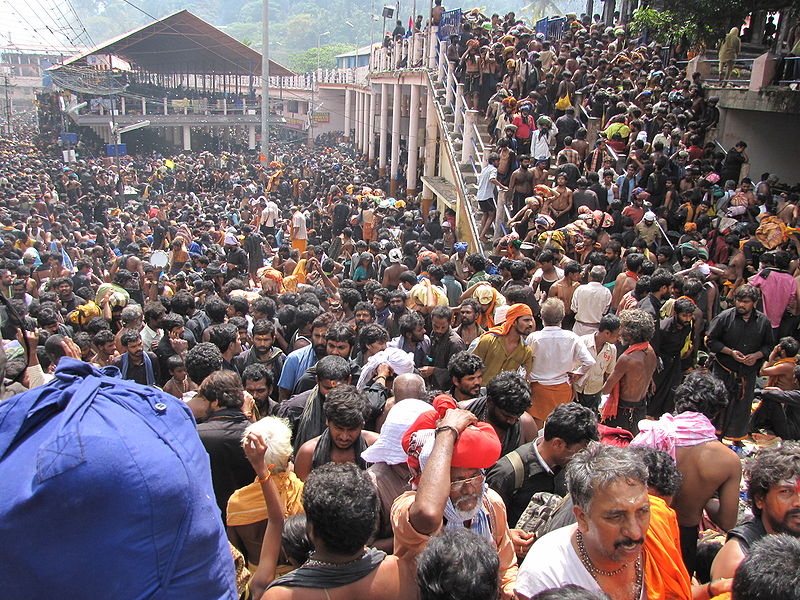
Sabarimala: A Test of faith?

Pilgrims on the way
Every year, in some part of the world, in some pilgrim sites, people die. Tents burned, landslides, stampedes. Yet, year after year people continue to visit these places. As a non-practising anything, I can only tell myself that we don’t stop flying because of air crashes or driving because of road rage or indulging in risk-filled activities and eating the wrong foods knowing they are wrong for us.

However, where anything religious is concerned, both believers and non-believers alike start analysing faith: If there is a god, then why put the devotees through such things? We must understand that these are totally besotted people and they want to see miracles happen because they trust in them, blindly. They are not challenging the superpower; they are submitting to it.

I think such queries are too rational to understand religious faith or the god-mechanism. In fact, there is rarely rational explanation even for air crashes, because it is not always engine failure. It could be a bird hit. I mean a bird in the sky, that pretty feathered creature, can bring down a whole airplane. Turbulent weather can do so. These cannot be factored in by science. So, how can disasters at pilgrim sites?

The miracle light
On Friday, the 14th, 106 people were killed and several injured near the Sabarimala temple in Kerala. There were 200,000 people gathered there at one time. The shrine where the Makara Jyoti (celestial light) appears on its own thrice a year is a sight that every worshipper wishes to behold. There is talk of mismanagement, about how vehicles that are prohibited at the last stretch managed to get in, how there were few cops to man the area, how people had no choice but to push because parts of the rubble were falling on them.

A liquor baron had donated Rs. 18 crore to get the roof of the sanctum gold-plated. This sort of thing is done regularly by the rich in India, but no one bothers about basic infrastructure and, more importantly, management.

The state government has paid Rs. 5 lakh compensation and the Centre has chipped in with Rs. 1 lakh each for the families of the dead and there is money for the injured. This is done when there is large-scale calamity of this kind, but never when an individual is killed in a road accident due to the terrible condition of the roads. And who will take action against the cops who were not there? What about the vehicles when the drivers too are dead? What accountability can there be when there are no accounts?

I am beginning to appreciate these virtual rituals now. I think devotees should follow the rites they wish to and just watch the light or the idol on the internet or on television. And during Haj they can stone the devil in this manner, too, with some sort of interactive software. I know this sounds blasphemous, but I am sure the gods can take care of themselves; it is people who need to be protected.

And let us try and ‘unbrainswash’ them from believing that all this is because god is testing them. Given the way some of our lives go, even the atheists among us must then count as the greatest believers.

- - -

I do have some memories of Sabarimala on my frequent visits to South India during a certain period of my life.

As we’d drive from the Kerala side to Tamil Nadu there would be people walking, often barefoot, in saffron robes mostly to meet Lord Ayyappa, the reigning deity. Women of a fertile age are not permitted in the sanctum because the sage was celibate.

One day I had to return urgently to Mumbai and since there was no night flight, I drove past midnight to reach Thiruvananthapuram airport before dawn to catch the hopping flight at 6.30 AM. There were two drivers, both Tamilians, to ensure that should one feel sleepy the other would be ready to take over. The guy at the counter said the flight was delayed and I could not purchase the ticket since it was not certain what time it would arrive or even if it would make the scheduled stop.

My two escorts, accustomed to an early breakfast, asked if I was hungry. No, I said. Realising that they were, I told them to go ahead. “Madam, you come also,” they said. We went to a small eatery and all eyes turned. I had just worn a loose T-shirt over tights and my lids were heavy from lack of sleep. There were only men in here. Once we settled in, no one cast a glance at all. A banana leaf was placed before us, that was to act as a plate, and all kinds of chutneys were dumped on it, arranged rather neatly though in corners and then arrived my paper dosa, crisp and golden. The two men had ordered half a dozen things. The coffee came in a steel tumbler with an extra one that it had to be poured into from a height with the arm at a right angle. I stopped trying this jugglery but watched with fascination. This cools the beverage and adds froth. The contents of my cup remained in repose.

I could hear the others murmur, if it is possible at all to murmur in Malayalam which is a language that requires one to make groaning and gargling sounds …but there was softness in their demeanour, and I am not romanticising. They had just returned from Sabarimala. Their long fast was over and they were headed back home. They had made it safely, feet calloused, but worth the walk.

I did not take the flight and returned. This time I slept on the drive back. It was fate. Or faith?

Sunday ka Funda

Sometimes, it is the sheer helplessness of their positions that make people come together. What is reputation? How we are viewed by others. Does their perception make us those things? It takes a rich zamindar to make a prostitute see this, but the lyrics could apply to any of us. Why do we become slaves to what people think and say? They see labels, they see invisible branded iron rod marks on us and then make up their minds.

As these simple lyrics state, and I translate liberally:

Such is the way of life that every dawn is turned to dusk
So what are you when even the revered Sita had to go through fire?
Why weep over verbal ire?
People will say things, for speak ill they must


kuchh reet jagat ki aisi hai, har ek subah ki shaam hui
tu kaun hai, tera naam hai kya, sita bhi yahaan badnaam hui
phir kyon sansaar ki baaton se, bheeg gaye tere naina
kuchh to log kahenge, logon ka kaam hai kehna


* Movie: Amar Prem
* Singer: Kishore Kumar
* Music Director: R D Burman
* Lyricist: Anand Bakshi
* Actors/Actresses: Rajesh Khanna, Sharmila Tagore
* Year/Decade: 1971

- - -

This song came flashing to mind because they are telecasting the film this evening and, of course, despite certain old-fashioned stereotypes, it is a beautiful love story...the sublimity contrasting to the brothel locales. In a manner of speaking, we aren't the walls we are pinned against.

14.1.11

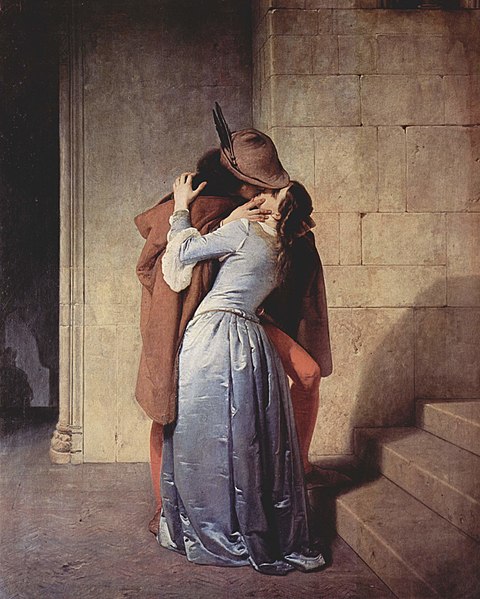
Suck face

I am tired of kissing. First it was kissing as an art, now it is a science. Can people not just be left alone to do with their mouths what they wish to do?

How many of you have ever looked at the Kama Sutra for tips? I doubt it. Every glossy worth its smooth skin has covered this subject and I would in the past get terribly amused. To be honest, wouldn't you rather have a butterfly in your mouth than someone’s tongue fluttering inside in what is clearly a studied exercise?

This, however, is a subject that excites the intellectual. Sheril Kirshenbaum, a scientist at the University of Texas, has written a book The Science of Kissing: What Our Lips Are Telling Us. Did George Bush mean that? Anyhow, she has laid bare the whole shebang about how kissing evolved, why people kiss, why some kisses work and others don’t, why people have a phobia of kissing and others don’t, why it is okay in some societies and not so in others. You get the drift.

I understand all these are important aspects of any activity. Do you know the manner in which you clip your toenails can tell you a lot about your past life? You don’t? Neither do I, but I am sure it can be explored. The point is that most of the material is available, and that is how I found out stuff, and it does not even work as relaxed beachside reading. Like, are you aware about something called the ‘hickey kiss’ when all it means is that you get a blue mark that looks like some editing details in galley proofs of newspapers? Oh, ok, it is supposed to be more animalistic, an out-of-control body experience. Then there are all those different areas where a kiss can be administered, and the motives are quite clear. Does anyone need to figure out what a cheek peck and a foot lick really mean?

Way back in the 1930s there was a manual called The Art of Kissing that spoke among other things of the Vacuum Kiss. The man must position himself as he knows and then when his lips are where they should be he must get on to the task of "sucking inward as though you were trying to draw out the innards of an orange".

I have eaten oranges and as far as I know they don’t have innards. Unless someone means to defrock the fruit and then blow into it or rather from it; sounds more like a conch shell thing. Oranges have slices and the sucking of them is messier than empty or vacuum-like.

The part I dislike about the scientific study, though, is that it says you are more likely to remember your first kiss than losing your virginity. Kirshenbaum, in fact, believes that you can remember 90 per cent of the details of that smooch. I beg to differ and I will provide a counter-scientific theory. While the kiss may have some special memory, it could well have been unmemorable.

How many of you have managed to find a prince by kissing a toad? Or have experienced the kiss of the spider woman? As for virginity, it is culture specific and may matter a whole lot in some societies and not so much in others, and there is also the gender factor – men are less likely to be affected by the loss of virginity than are women, although I believe that men will remember it more clearly because it was a boy becoming man thing. Girls become women when they start menstruating and reading Maupassant after throwing off Mills & Boon. Virginity has a lot to do with giving up oneself and I do not mean to the horse you are riding or the energetic aerobics at the gym that may cause the ruptured hymen.

It has a lot to do with oneself for women and for the conquest by men. Therefore, it is unscientific to believe a kiss will be remembered more.

These theories do start a debate. Did you know that the ‘soul kiss’ is called so because the soul passes through the breath of one mouth to the other? I thought that was the job of resuscitation and the soul kiss, which is how the French got famous, although they call it the English kiss (maybe because you end up with a stiff upper lip), was to cure tonsillitis. But then I am not Woodward and Bernstein and know precious little about Deep Throat.

13.1.11

News meeows

True lies:

In times when exposes have become grandiose, Mumbai Mirror (Jan 11 issue) sent out its reporter to apply for membership to various political parties. He said he was a freelance web writer. This was enough to make him seem educated and he is young, too, which is what
everyone is looking for.

It is appalling to discover that one can become a member of any political party without anyone bothering to check on not only credentials but basic details. He even lied about his address.

The NCP was the quickest, followed by Shiv Sena, BJP and the MNS, whose office was also the most crowded. Within 48 hours he had laminated ID cards for all these parties. The Congress is the only one that asked for proof of address and PAN card number and the form he
has filled will take a week to process. I assume there will be some standard used for that.

What does this reveal? Party members can participate in several activities and have access to programmes organised by them. Should the person wish to take advantage, he can easily do so and there will not be any evidence. A fake name, a fake address, a fake profession - think about these the next time someone sells a political leader and party to you.

Are the political parties desperate or do they want such 'invisible'
people who can hide their shame?

- - -

True idiocy:

"It's true that the price of milk and vegetables are high. Some of this is a reflection of economic prosperity and purchasing power."

- Montek Singh Ahluwalia, deputy chairman, Planning Commission

Someone tell him that we are not talking about limited edition solitaires. A country's economic prosperity is judged by how it manages to improve its main sector - agriculture here.

The high cost of essentials, in fact, is a yardstick of poor policies. I heard someone say on a TV discussion on Doordarshan, I think, that if the price rise is being attributed to bad crop, then why are egg prices high? "Murgi ne tau andey dene band nahin kiye! (the hens have not stopped laying eggs)"

If our purchasing power is so high then even the fairly pricey restaurants would not be replacing onions with cabbages. But who's to tell these kings of fancy economic policies?

- - -

True grit:

This news has made me really happy.

Polio cases in India are down by 94 per cent from 741 in 2009 to 42 last year.

It seems like such a small thing but in our land of bad health care, superstition and lack of initiative, this shows we can do it if we genuinely want to.

Just two drops can save so many people of a debilitating disease and also closed minds.