A measure of how 'backward' a society is to see how it portrays progressiveness. If you need to pat someone for what is considered normal, then it only means you do not view it as quite normal.
The new Tanishq ad for its wedding collection shows what is being touted as a dusky woman, and a mother, getting married. This is supposed to be about breaking of taboos regarding colour and remarriage. In reality it is so bloody self-conscious, besides of course being elitist.
All those who look down upon television soaps should know that these aspects have been handled in them, and quite sensitively at that. There was one recent serial 'Na Bole Tum Na Maine Kuchch Kaha' where a mother of two remarries, and if it means anything she was dusky too. And at no point was it alluded to.
This commercial is about jewellery, and therefore the message too is ornamental. To posit the woman's duskiness we have a fair groom, which amounts to seeking the acceptance of the acceptable. When her daughter says she wants to go 'round and round' the fire when the marriage vows are being taken, it is the man who carries her, his role as knight and proactive partner consolidated.
Don't bother to see this in the light of some great reformist movement. Corporate India that deals with so-called modern sensibilities has played safe by using a religious ceremony, the male as being 'fair' to society, and of course the possibility of such progressive thinking being the prerogative of a few who can afford luxury and by default the luxury of ostensibly going against the norm.
Once again, the 'revolt' has been appropriated.
Showing posts with label change. Show all posts
Showing posts with label change. Show all posts


3.8.13
Is the CIA on a leash regarding Benghazi?
One would probably do a double-take thinking of the Barack Obama administration intimidating the CIA operatives who were in Benghazi, when the consulate was attacked.
From this report — welcome, CNN, to the world of tough questions instead of the toeing-the-establishment-line — it seems there is a huge secret and all the agents who were there that night are subjected to polygraph tests, to ensure they do not leak out any information to the media.
You will watch this clip, but the threat is not small. They are worried about their families, they know they cannot get away.
And they are not even Edward Snowden, who had access to so much more.
---
In September, 2012, I had written this:
»Can you imagine Libyan pro-democracy group overtaking the headquarters of an extremist organisation, that too to protest against the killings at the American Consulate? This is what happened in Benghazi against the Ansar al-Sharia:
"Thousands of protesters took to the street earlier on Friday, declaring loudly that they represent the real sentiments of the Libyan people, not those who were behind the deadly attack 10 days ago, reports CNN. One man stated: 'I am sorry America. This is the real Libya'.”
At first I was baffled and elated by turns. It sounds nice. In many ways, it is. But, is this the real Libya? Can we forget that the anti-Gaddafi rebels were looting property and striking poses in his and his family’s homes, making a mockery of the democracy they were claiming as their own?
This is probably to gain international attention. The signs read: “The ambassador was Libya’s friend” and “Libya lost a friend.” Christopher Stevens was known to be a good person. However, the United States at one time was quite comfortable with Col. Gaddafi. They, too, were friends, although he was friendlier with others.«
---
Given what's happening with the CIA, one wonders whether it is not just a civil war in Libya after all.
From this report — welcome, CNN, to the world of tough questions instead of the toeing-the-establishment-line — it seems there is a huge secret and all the agents who were there that night are subjected to polygraph tests, to ensure they do not leak out any information to the media.
You will watch this clip, but the threat is not small. They are worried about their families, they know they cannot get away.
And they are not even Edward Snowden, who had access to so much more.
---
In September, 2012, I had written this:
»Can you imagine Libyan pro-democracy group overtaking the headquarters of an extremist organisation, that too to protest against the killings at the American Consulate? This is what happened in Benghazi against the Ansar al-Sharia:
"Thousands of protesters took to the street earlier on Friday, declaring loudly that they represent the real sentiments of the Libyan people, not those who were behind the deadly attack 10 days ago, reports CNN. One man stated: 'I am sorry America. This is the real Libya'.”
At first I was baffled and elated by turns. It sounds nice. In many ways, it is. But, is this the real Libya? Can we forget that the anti-Gaddafi rebels were looting property and striking poses in his and his family’s homes, making a mockery of the democracy they were claiming as their own?
This is probably to gain international attention. The signs read: “The ambassador was Libya’s friend” and “Libya lost a friend.” Christopher Stevens was known to be a good person. However, the United States at one time was quite comfortable with Col. Gaddafi. They, too, were friends, although he was friendlier with others.«
---
Given what's happening with the CIA, one wonders whether it is not just a civil war in Libya after all.
13.5.13
Naya vs Purana Pakistan?

Beep-beep. Early morning. Text message from a friend in Karachi. So, bleary-eyed, I read that “My party has won. It is 5 am here and I am going to sleep!" Big smile. But before that there was a swipe about the fate of Musharraf — he knows I do not dislike the former president, which is of course putting it subtly.
Since Pakistan broke my sleep, I jotted down a few quick thoughts on the election results:
1. For all talk of democracy, it boiled down to the Punjabi, Sindhi, Mohajir, Pathan votes, and Balochi, Ahmadi non-votes.
2. There is always talk about a sympathy wave. If that were the case then the ANP that lost quite a few members to murderous devils would not have been routed.
3. Imran Khan is now a leader, so it's time he behaved like one. And not a tribal chief, even though Khyber Pakhtunkwa gave his party the votes.
4. I can already see the gleam in a certain Indian anchor's eyes as his voice quivers while screaming, "The nation wants to know if Nawaz Sharif will take action against Pervez Musharraf for crossing over to Kargil during the war"!
5. Nawaz Sharif has inherited a huge problem - his brother, Shahbaz.
6. Asif Ali Zardari has too many opponents within the PPP, including his son Bilawal. One of them will grow up.
7. Pakistan will continue to be important to the United States, China, Afghanistan and India for the same reasons as it has been for many years.
8. Imran Khan's slogan of 'Naya Pakistan' was the most potent one. Good varnish job, as happens in almost every country.
Let me end with an appropriate couplet by Faiz Ahmed Faiz:
"har chaaraagar ko chaaraagari se gurez tha
varna humein jo dukh the bahut laa-davaa na the"
(The healer avoided healing, but my troubles were incurable anyway)
© Farzana Versey
23.4.13
The Times...it isn't a-changin'...
Like most things in life, The Times of India has been a habit. It is easy to break, but I never felt the need to give it the 'kick'. There was a time, not too long ago, when it made one sound above it all to state that you read the paper because of R.K. Laxman's cartoons. It was a bit like some insisting they read Playboy for the articles.
TOI has completed 175 years. It talks about being young at heart. It has provided me enough boo-boos to pick on; it has educated me about society divas I did not know existed; it has reduced the sanctity of the masthead and of its front page by selling it to advertisers. The only thing that can be said is that it is upfront about it.
Going through today's edition from the archives I found some gems I'd like to share with some observations:


I know there are many naysayers, but had India and Pakistan not continued to be so obsessed with each other as problems, outside forces would have just had to lay off. I find Jinnah's statement pragmatic.

The Emergency has only been spoken of as "the dark chapter" in India's history, mainly because of its clampdown on newspapers. If we think about it without 'freedom of speech' in mind, then just how many literate Indians were there that constituted the reading public affected by it? And Indira Gandhi was right in at least one fact - that India is one of the most relaxed in terms of freedom of expression. Of course, I do not condone the Emergency, but from this quote we can see that 'objectivity' is still not evident in the newspapers and now the electronic media. Reportage continues to tilt and have agendas.
TOI has started one more of its weird 'innovative' ways to separate news from opinion. All op-ed pieces have started to use the first person in small letters. It is not 'I', but 'i'.
i'm not not sure whether it is to convey that the writing is more important than the writer. That won't happen. The mugshot, the byline and bottomline (where you find new professions and of course "bestselling authors") remove all doubt that self-effacement is not in sight.
Yet, as i said, the TOI tries to amuse whenever it can. Aren't we amused?
TOI has completed 175 years. It talks about being young at heart. It has provided me enough boo-boos to pick on; it has educated me about society divas I did not know existed; it has reduced the sanctity of the masthead and of its front page by selling it to advertisers. The only thing that can be said is that it is upfront about it.
Going through today's edition from the archives I found some gems I'd like to share with some observations:

This was the front page on what was undoubtedly the most significant event after Partition. TOI even then loved showing off about being on top of the heap - just above the masthead. However, instead of its now cautious "allegedly", it mentioned in clear words that the assassin was a Maratha from Poona. It also gave Jinnah's words importance. But I doubt if it would really bother today if Czechoslovakia (new name notwithstanding) expressed regret.

I know there are many naysayers, but had India and Pakistan not continued to be so obsessed with each other as problems, outside forces would have just had to lay off. I find Jinnah's statement pragmatic.

The Emergency has only been spoken of as "the dark chapter" in India's history, mainly because of its clampdown on newspapers. If we think about it without 'freedom of speech' in mind, then just how many literate Indians were there that constituted the reading public affected by it? And Indira Gandhi was right in at least one fact - that India is one of the most relaxed in terms of freedom of expression. Of course, I do not condone the Emergency, but from this quote we can see that 'objectivity' is still not evident in the newspapers and now the electronic media. Reportage continues to tilt and have agendas.
TOI has started one more of its weird 'innovative' ways to separate news from opinion. All op-ed pieces have started to use the first person in small letters. It is not 'I', but 'i'.
i'm not not sure whether it is to convey that the writing is more important than the writer. That won't happen. The mugshot, the byline and bottomline (where you find new professions and of course "bestselling authors") remove all doubt that self-effacement is not in sight.
Yet, as i said, the TOI tries to amuse whenever it can. Aren't we amused?
22.9.12
Libya syncing

Can you imagine Libyan pro-democracy group overtaking the headquarters of an extremist organisation, that too to protest against the killings at the American Consulate? This is what happened in Benghazi against the Ansar al-Sharia:
Thousands of protesters took to the street earlier on Friday, declaring loudly that they represent the real sentiments of the Libyan people, not those who were behind the deadly attack 10 days ago, reports CNN. One man stated: “I am sorry America. This is the real Libya.”
At first I was baffled and elated by turns. It sounds nice.
In many ways, it is. But, is this the real Libya? Can we forget that the
anti-Gaddafi rebels were looting property and striking poses in his and his family’s
homes, making a mockery of the democracy they were claiming as their own?
This is probably
to gain international attention. The signs read: “The ambassador was Libya’s
friend” and “Libya lost a friend.” Christopher Stevens was known to be a good
person. However, the United States at one time was quite comfortable with Col.
Gaddafi. They, too, were friends, although he was friendlier with others.
The report has
thrown up one interesting fact, though:
Tribal leaders are the strongest social force in the country and have come forward to demand that the militias disband. Tribal leaders in Benghazi and Darna even announced this week that members of their tribes who are also militiamen will not have protection from the tribes when faced with anti-militia protests, meaning the tribe will not avenge them if they die.
And they say the
civil war is over in Libya…
1.4.12
Sunday ka Funda
“I don't believe in people just hoping. We work for what we want. I always say that one has no right to hope without endeavor, so we work to try and bring about the situation that is necessary for the country, and we are confident that we will get to the negotiation table at one time or another.”
- Aung San Suu Kyi
- Aung San Suu Kyi
25.3.12
The President and the Hoodie

Instead he said:
“If I had a son, he’d look like Trayvon.”
If he had a sister, she’d look like Whitney Houston. What does this really convey? Nothing.
He wants to humanise it, make the Americans feel like they are one big family. It is such a lie, such a lie in Georgia, in Harlem, in the fetid streets where they don’t give a damn about who is looking, but they can beat the shit out of the ‘other’. Yeah, sure, not all whites have jobs, not all whites have it good. No. they do not. But he knows it is different. He ought to know for when he became the first black president of the United States of America he was basking in his blackness, this otherness, this chance to bring about change. He did not. He could not. He became just another mainstream guy, as white as snow. Even the white Cheney looks evil. But not our man Obama.
One month later he wakes up from his sleep to tell his people:
“I can only imagine what these parents are going through. And when I think about this boy, I think about my own kids. Every parent in America should be able to understand why it is absolutely imperative that we investigate every aspect of this and that everybody pulls together — federal, state and local — to figure out exactly how this tragedy happened.”
How? He does not know? Of course, there should be investigations; for that he did not need 30 days. He does not have to pull up all American parents, and ride on their backs. He can express his views. He must stand up for what is right and what is wrong legally, criminally, and racially. He should have the courage to utter the word and not push it under the carpet like so much dust.
If he had come out earlier, there would not be scenes of little kids holding placards in the streets, crying for justice. Already, there are attempts at giving another perspective, anonymous eyewitnesses. It is a shame to see black wearing hoodies, making it beyond a symbol of cultural clothing. It is eerie that they are highlighting it, for it could become one more reason to be beaten up, easily identified as they are. They are not wearing sharp suits and designer gowns and getting their athletic healthy training with organic food added to their menu.
No, mastah, they dun have it so good.
(c)Farzana Versey
8.11.11
Swami and Fiends: Agnivesh's Strategy

What can be worse than Swami Nityanand video clips in uncompromising positions? Swami Agnivesh in Bigg Boss. The whole promos-on-television idea has gone completely haywire – every film is pushed till it kills or dies. The same applies to people. While news channels have fake courts to let the same bunch of people come clean and the others have a more circuitous manner of doing so, entertainment channels are now happily permitting this.
It is completely ridiculous. This season’s Bigg Boss already made Shakti Kapoor look like a saint. Now we have a qualified Swami who will enter the fray. Had he said it was just for another experience or not even tried to explain his stand, it would have been okay. I watch the show between other things and to see him do the dishes, rustle up tea, brush his teeth, walk on the treadmill, relax in a bright pink and yellow room, and wake up in the morning, peeping from under a blanket looking on indulgently as women and men in funny clothes do a jig, might have been as much fun as biting into a too sour slice of fruit. But the honourable Swamiji has got a higher purpose. Of course, everyone told him not to do it, but after watching some episodes he thought he had to create awareness:
“The girls inside the house don’t seem to have any social responsibility. I want to make them realize just how many girl children are killed in the womb and how many women are burnt alive in the name of sati.”
Nobody watches shows such as this to get lectures and the participants probably know about these issues – not one of them looks like she’d fall into her husband’s funeral pyre or kill her female child. And what will he teach the guys? These people are not serving time in jail that they need to be reformed, however shrill and irritating they may be. But, then, it is the ‘spontaneous’ script. The swami is going with his own script, too.
“In the past a lot of people have tried to tarnish my image. I will take this show as a test. I shall maintain my integrity and remain transparent inside the house. I am going to the house with a selfish motive. Like former President of India, APJ Kalam says, I want to ignite the youth through this show. The entire society has to come forward.”
I am afraid, the so-called honesty about selfishness is convenient. Maybe he will tell us he did not fly Business Class? The producers of the show have given him a platform because it will help their TRPs. Just imagine a saint among sinners, that too one who wears a saffron robe but is a secularist. I can already see the ‘aware’ Pooja Bedi welcome him as an activist she has always admired and Lakshmi the eunuch – in her past interviews and public appearances she always maintained a regular profile but on this show keeps clapping like any roadside hijra because that will get more attention – who will want to be his student. I can already see that many of them will not change their mode of dress (low slung jeans and cleavage-revealing blouses) and Agnivesh will not comment on these because he will state he believes the atma (the soul) is what matters.
I wonder why no one looks at A. Raja’s soul.
“I am not doing the show for money. I have never been a greedy guy, I was a professor of law in Kolkata when I left everything and came with one aim-- to change the society. Bringing about a change is my sole purpose and I think this is a strong and powerful medium by which I can spread my message. By doing this show I want to pass on the message to our youth to come forward and bring about a change. I was very happy when I got this offer.”
Is he doing this for free? Greed is not restricted to monetary gains, and just how much does a law professor make? Many of these people who ‘give up everything’ are in fact offered a cushier life trying to change others. It is easier than changing oneself. He just wants to be on TV in another format to show his range. And what is his swamihood all about?
“I will teach them yoga and meditation and will give them love. I have seen 2-3 episodes where they have been fighting but that doesn't bother me as they are better than the members of parliament who throw chairs, break micro phones and abuse each other - that's more embarrassing.”
Give them love? Had any other male said it, there would be a huge noise. This man sounds really too patronising. And why did he not try and do something about what happens in parliament?
The worst possible thing he could say is this:
“If I can stay with the Maoists, I can definitely stay with these people.”
What does he mean by these people? And what is he trying to convey through the comparison with the Maoists – that they are difficult to deal with? That he was in a risky situation? This goes against his own support for the movement.
What a dramebaaz. Anna’s People’s Movement has been one big joy ride for its core group, and each a bigger actor than the other.
If only Bigg Boss had a couple of Kapils on the show, too. Sibal and Maharaj.
27.5.11
Oprah's Divine Comedy: Winfrey the Pooh
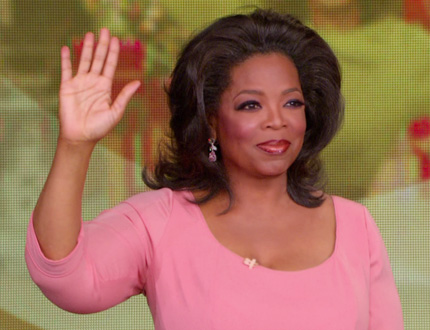
Winfrey the Pooh
Oprah’s Divine Comedy
by Farzana Versey
Counterpunch, May 27-29
They were discussing thighs. The woman was wearing a blue garish printed veil, the uncovered face revealed a touch of kohl in her dark eyes. She was telling her host that what Moroccan men are most attracted to in women are thighs – they like them thick. The Oprah Winfrey show was now not a secret watch in parts of the Arab world; she was hosting it there. As the young woman held forth, Oprah went on a relentless examination of a part of the female anatomy. It was obvious she thought she was breaking some barrier when thighs, men, women and ideas about pulchritude have existed since the existence of civilisation.
Oprah is about breaking imagined barriers.
She has bid farewell to the show after 25 years. What sustained it for this long? Much of what was revealed is what we hear in everyday life, what we experience and what we don’t. Yet, using these same ideas she created an alterative universe. However real the reality in her shows was it was reality amplified by auto-suggestion.
A more comprehensive reading would suggest that the show could be divided into three main ideas.
Cornucopia:
Excessiveness was an important part of the exercise. Laughter and tears were loud and flowing. There would be distended stomachs, bruises more purple than prose. As in Roman feasts, where people went on an eating binge and then vomited to start feasting again, true stories were retched out. Humorist Josh Billings’ take is apt here: “As scarce as truth is, the supply has always been in excess of the demand.”
Without the abundance, there would have been a need for the core. Oprah was about the circuitous route; the essence lay in the maze.
Her personality lent itself rather well to such profligacy, from her girth to the big hair, the big heart, the large camaraderie. But, her projection of little people in fact showed up their littleness. Their foibles and warts were huge as compared to their personalities. They were here in the Confession Box. The studio had an almost-church like atmosphere where the host played priest and choir girl by turns, until the Moses-like denouement.
She did pretty outlandish things, was outspoken, and dressed the part. It camouflaged the traditionalist inside her. It made her craving for infallibility as self-conscious as her vulnerability: “Though I am grateful for the blessings of wealth, it hasn’t changed who I am. My feet are still on the ground. I’m just wearing better shoes.”
And those better shoes came from many a soiled feet that entered the hallowed show. She appeared to tell them that they could do it, but would they have that opportunity?
Dystopia:
Misery was flaunted on the red carpet and posed for the cameras – its couture more discussed than its merits. People on the Oprah show seemed to regurgitate the deviant without owning them. There was a disconnect between the teller and the telling. Even if none of it was stage-managed, one could decipher an element of training, of being ushered into a hall of shame in hushed whispers. It is not difficult for people to sense what is expected. While for the ordinary person this seemed like a purging of evil, an exorcism, celebrities were given to believe that this would humanise them.

There was no mirror more qualified than Oprah. At the grand finale she said: “But I’m truly amazed that I, who started out in rural Mississippi in 1954, when the vision for a black girl was limited to being either a maid or a teacher in a segregated school, could end up here. It is no coincidence that a lonely little girl who felt not a lot of love, even though my parents and grandparents did the best they could – it is no coincidence that I grew up to feel genuine kindness, affection, validation and trust from millions of you all over the world. From you whose names I will never know, I learned what love is. You and this show have been the great love of my life.”
This is true, but most of the recognition talks about her blackness: the first black billionaire, the greatest black philanthropist, the richest African-American of the 20th century. Has black society altered and has the perception about blacks changed? The ‘teacher-segregated school’ is also what the Oprah Winfrey show is about. There was this bubble of sorrow and with every pinprick of a query it would burst. The sorrow would not disappear because it wasn’t there in the first place. The internalisation was left untouched. The balm and the gauze were for this bubble that settled like dew. The show worked as well as faith-healing, people limping back to normal and basking in the warmth of the arc lights and then out in the cold holding on to their crutches. Art had imitated life, but not limited it.
The simulation analogy can be best explained in the totalitarian philosophy as expounded by George Orwell: “It not only forbids you to express – even to think – certain thoughts, but it dictates what you shall think, it creates an ideology for you, it tries to govern your emotional life as well as setting up a code of conduct. And as far as possible it isolates you from the outside world, it shuts you up in an artificial universe in which you have not standards of comparison.”
Oprah had set herself up as a role model, when the millions who were with her were like the Beatles acolytes were for John Lennon. He was one of them but he remained Lennon. She employed the classic Lennon anthem as her modus operandi: Imagine.
Utopia:
Is imagining about hope or about despair? Had there been happy stories, then the Oprah show would have wound up long ago. It is important to ask here whether the hates/loves/desires that dare not take their name have brought about any change. Iconoclasm is a much-abused term. The populist need not be iconoclastic. A show may be a hit, but what kind of impact does it have, has it altered the way people think, feel?
One cannot state that, “Oh, this was just a TV show.” It was not. It became a cult, and cults have some responsibility. Oprah did what she could, but it was the Big O, a few seconds of happy numbness. She treated her staff well, she took her audience on holidays. These are freebies. The stereotype of the Mamma. The world is full of varied ideas and varied behaviour, so it is disconcerting that she did not push the envelope, except when stuffing it with a few dollar bills to assuage guilt and express gratitude.
In fact, archetypes were trussed up and embarrassingly displayed. The brazen wore little and the demure played their part. The obsession with the body only consolidated set views even if they were to debunk them. Alternative sexuality was given the worst possible treatment when she invited an ‘Indian prince’ who is out of the closet. He came in regal finery that he has no right to as a representative of India, which has done away with royalty. The gall of having someone in a position of power, however titular, to convey the views of the gay community was such an Oprah thing to do. You cannot just be a misery maven, you’ve got to lay it thick and be king.
She had a banquet but offered fast food. This was part of the show’s attraction. The host knew what she was doing, even if some of it was subliminal. A broken soul, broken self-worth, fighting for convictions – these brought fear, a persecution complex and arrogance. The arrogance of humility: “What we’re all striving for is authenticity, a spirit-to-spirit connection.”
A spiritual connection does not look for authenticity, which is tied to the strings of dynamic facts and changing alliances within the mainstream. You cannot talk about the facetiousness of fame when you are a product of such evanescent celebrity. It is not the legitimisation that makes for icons but the potential of returning to their ruthless roots. Winfrey did attempt that, but by default, by just blowing up the cocoon a bit more. She reached the world and out at the world, yet her confinement was narrower than it appears. “There is one expanding horror in American life,” believed Norman Mailer, that cogent chronicler of the American’s internal dilemma. “It is that our long odyssey toward liberty, democracy and freedom-for-all may be achieved in such a way that utopia remains forever closed, and we live in freedom and hell, debased of style, not individual from one another, void of courage, our fear rationalized away.”
Such fears on the show were stamped and sealed like factory-produced wares. The potency was in the reaction to the pinch and the pitch. She took the ready-made material and gave it a new language and identity. Pop analysis tends to label such people revolutionaries when all they do is to recreate. To continue with it for a quarter of a century is commendable, but not impossible. That is why Oprah Winfrey will be remembered as a fine juggler, not a magician.
Subscribe to:
Posts (Atom)