Showing posts with label judge. Show all posts

14.10.17

Of Murder and Innocence: the Aarushi Case


I would have been tempted to title this piece, ‘Nobody Killed Aarushi’, which has become the standard headline for media prominent stories where the murderer is not found or let off because of lack of evidence. This sort of headline acts like a salve for the media that feeds off a death, a murder, and sensationalises it to the most cringing level, and then when the verdict goes against all their salacious intent, they find relief in throwing irony in our face: ‘Nobody killed X,Y,Z.’

They blame the police, the CBI, false witnesses, everybody but themselves. In fact, after Thursday’s verdict pronouncing Aarushi’s parents Nupur and Rajesh Talwar not guilty, one finds media persons blaming the media. As though they had no part to play in it, as though their sudden concern for other victims of child marriage and rape makes any frikkin difference now, except to flaunt their throbbing consciences. They ask selfconsciously: do we bother about the poor? My question is: Did you? Did anybody even mourn for or raise questions about the murder of Hemraj, the domestic help of the Talwars who was killed on the same day of May 16, 2008?

There have been other court verdicts before this. It points to the fallibility of the judiciary, not to speak of its judgements not being watertight ever. This is the latest:

Ordering the release of Rajesh and Nupur Talwar, sentenced to life imprisonment four years ago by a special CBI court for the murder of their teenaged daughter Aarushi and domestic help Hemraj in May 2008, the Allahabad High Court has meticulously detailed instances of falsification of evidence by investigating agencies — ranging from “subjective findings” by medical and forensic experts to tutoring of a witness and planting of another, evidence tampering to “deliberate concealment” of evidence.

The Supreme Court had earlier restrained the media from scandalous reporting of what was then seen as the rape and murder of Aarushi. The judges were perturbed that the information the media had was either leaked by the investigating body, the CBI, or was made up of “imaginary reports”.

I am surprised that none of the judges questioned Avirook Sen’s book Aarushi and Meghna Gulzar’s film Talvar that had pretty much the same insider look. Since there is such a noise about the media reportage (some are saying this should be taught in journalism school on how not to report a murder, something you’d never hear these elite do over the murders of the dispossessed), one wonders how these efforts were not questioned since the case was still sub judice.

Most important cases have been leaked out to the media. If there are to be guidelines on reporting, will it prevent opinions? It was Aarushi’s mother who was on the TV channels a day after her daughter was killed. Was she dragged into it? Does anyone recall how Aarushi’s friends were giving out certificates to her? Does anyone even know that many of the ordinary people are trained before they go ‘live’ with their spontaneity?

The problem is when reportage turns into an agenda. It is not the business of the media to pronounce a verdict. Unfortunately, news channels need stories that are not about an occurrence. They rely increasingly on the ability to play messiah. The cult of the exposé is flawed for it starts with a premise and tries to prove it.

It is titillating to watch blurred faces or little black highlighters over body parts to convey that the newspaper or channel are protecting the identity of the victims. These are victims created by the media, just as they are transformed into heroes for no reason other than having once been victims before those cameras.

***

Now that the CBI has become the bad guy, a gentle reminder that it was the CBI that had earlier washed its hands off the case:

“The agency has filed a final report for the closure of the case on grounds of insufficient evidence in the competent court.”

The CBI came into the picture only after the Noida police made no headway.

They had found a weapon, they had a reasonable motive – “immediate provocation”, they knew of missing files and a swapped vaginal swab, they knew that someone was tampering with evidence. Then, why was it so difficult to find out who and why?

It is impossible that the findings revealed absolutely nothing - the DNA sample? The brain-mapping? Who cleared the room before the police came in? It need not have been one person. These were people in different places doing different things. Who was calling the shots? And why?

The judgment speaks of falsification of evidence. What, then, is the truth? Who will try the falsifiers? Who will find the killers? What will Nupur and Rajesh Talwar do next? It must be tough to have a reputation sullied and so many years lost in prison and it must have been even more tough on them to have a daughter murdered in the next room and the place cleaned up while they were around just a few metres away. They should file a case against the Noida police, the CBI and the hospital authorities for shirking their duty and making a mockery of justice. And the media for making a mockery of everything.

They have the power, being educated and relatively better-off than many who do not have the means. Let this be a fight for the silent Aarushis and the silenced ones.

***


Much of the material here has been collated from my previous posts.

9.7.14

Rape, murder, and a demeaning verdict


What exactly are some Indian judges smoking? In a 141-page judgment that sentences a watchman to life imprisonment for the rape and murder of a young lawyer residing in the building he guarded, the language used by the bench is disgusting.

I am against capital punishment, and while the parents of Pallavi Purkayastha naturally wanted the criminal Sajjad Pathan to suffer for the cruelty and their loss it is not a personal battle.

However, should the judge not display some amount of sensitivity? She was attacked 16 times, and the prosecution thought this was extreme cruelty. The judge Vrushali Joshi said:

"It caused her a painful death. This can be termed as cruelty, but not extreme cruelty."


I am aware that these terms are in the rule-book and a judgment cannot rely on emotions, but what are the yardsticks to gauge extreme cruelty?

There is more:

Refuting the prosecution's case that it was a pre-planned murder, the court said when Pathan first answered Pallavi's plea for help after the power went off, he took another watchman to the 16th floor where she lived but did not enter the flat. "At 1am again, when the victim called him, he went with Khalid (electrician) when he could go alone," the judge said. The court added that from the records it appeared that when he saw Pallavi in scanty clothes, "he was excited and it was the point when he thought of ravishing her".


What is this? Where are those who keep talking about 'victim shaming' when it involves celebrities? The judge is casting aspersions on a woman who is not even around to defend herself. I am surprised Sajjad was not let off, given the tone of the verdict. The implication here is that he was a good guy who was in fact not comfortable going to the apartment of a young woman. Why? She was a resident like any other. Worse, the judge says that it was her clothes that "excited" him and "he thought of ravishing her". Rape is ravishment?

It is back again to what women wear, how they live, and the effect it has on the hormonal male mind. That he gets a character certificate for until that moment when he could not control himself should tell us just the kind of society we live in. To take a broader view, an example of this comes from the statement of Pallavi's live-in partner Avik Sengupta (who died due to a brain ailment later). While recording his statement during the trial he had mentioned that she used to complain about Sajjad staring at her. His response was: "You are a pretty woman."

Back to the judgment, some of it is absolutely shocking:

The prosecution had claimed that the most aggravating circumstance against Pathan was that he had boasted about the crime and even laughed about it. But the court observed that he must have laughed as he was frightened after committing the crime and said that Pallavi being a strong girl had resisted him. "One cannot come to the conclusion that he must have enjoyed killing her," the judge said.


So the judge is psychoanalysing it as nervous laughter and covertly blaming the victim for being "a strong girl". The fact that she resisted till the very end — there were blood trails till her neighbour's flat indicating she was seeking help — draws attention to the rapist-murderer's intent and not become reason to highlight his laughing at her strength.

He is young and I agree with the tenure of the sentence. Life imprisonment should set him right. I do not agree with those who think the death sentence works as a lesson. If anything, the judgments should be worded with care and send out a signal to people. Women should be made to feel safe and empowered and men should be made to realise that they have no right to infringe on a woman's body or space irrespective of how she is dressed or how she chooses to live.

The person committing the crime is not the only criminal.

Another point:

Earlier reports that quoted Sajjad Pathan's security agency head as saying that he has brought shame to Kashmiris. Some newspapers played this up. How often do you hear about a whole region responsible for the acts of an individual? Immigrants have been blamed, but it does not become a cause for the state they come from to feel chastised. Sajjad Pathan could be from anywhere.

© Farzana Versey

11.4.12

Buy off the victims: Khwaja Yunus case

Would you trade justice for compensation? The idealistic mind says, no. But would a poor person have to make a pragmatic choice?

In 2002. Khwaja Yunus died in police custody. He was arrested in the Ghatkopar BEST bus blast case in Mumbai under POTA. The extent of his involvement is not clear, but the cops have put forth theories that he had absconded while being transferred to another prison.

Despite this, the Bombay high court on grounds of “violation of fundamental rights” has enhanced compensation payable to his family from Rs. 3 lakh to Rs 20 lakh. Why has this been done?

...a division bench of Justice A M Khanwilkar and Justice P D Kode rejected a plea to prosecute 10 policemen for Yunus's alleged custodial death.

The judges said Asiya Begum was free to file a suit for additional compensation, which would have to be decided on its own merits. The state, which has already given Rs 3 lakh to Yunus's parents, has now been directed to pay the remaining Rs 17 lakh within eight weeks. It was up to the state to recover the amount proportionately from the police officers responsible for Yunus's disappearance, the judges added.

What do we have here?

Initially, Yunus's father Ayub filed a habeas corpus petition for his production. The state CID sought the prosecution of 14 policemen for their alleged role in Yunus's "custodial death". After Ayub's death, Asiya Begum amended the petition to make 14 policemen as accused and sought Rs 20 lakh as compensation.

The judges further said the sanction was limited to the police team that took Yunus out of the lock-up in healthy condition and was allegedly responsible for causing his death or disappearance en route to Aurangabad.

This is an old tactic to make some policemen culpable. Since no one knows what really happened, except the version of the co-accused that Yunus was tortured, it makes one wonder how toothless even the CID is.

Why has the court decided to increase the compensation, the highest to date in the state? What evidence does it have that makes the disbursement of this money a crucial factor?

Yunus was the only earning member, but they cannot be called a poor family. He worked as a software engineer in Dubai. The judgement has also left to the imagination his disappearance and death. This does not sound like justice. The “violation of fundamental rights” that the courts spoke of includes the right to information about why the CID’s appeal was overlooked.

It brings me to the question of whether the increased amount can silence people. Will it set a precedent? The state has paid the sum it felt was due; the rest is left to the culpable policemen. I see a dangerous trend here. Cops are not so rich; they can be used by moneyed people to squash cases with the assurance that they can pay off the victims and their own families will be taken care of. The list of people who can avail of such ‘facilities’ would be politicians, businessmen, rivals, family members, the underworld, just about anyone.

I understand that justice takes way longer than cash deposited in a bank account, and the latter is more important for survival. It would be unfair for me to judge how a victim’s family makes such choices. Yet, some voices should be raised or we will just end up as commodities to be bought and sold.

29.11.11

Sycophants and Slaps

Now the lawyers and judges are fighting. If judges are sycophants, then lawyers are born to be sycophants. It is their brief, for when they represent a client, they are doing chamchagiri for that client. Even in cases of crime and terrorist acts against the state, the prosecution lawyer is supposed to argue on behalf of his client, whether or not s/he is right.

Upholding of truth is based on facts. Facts are based on evidence. Evidence comes from what the cops, the witnesses, and the intelligence agencies see and say. What they see and say need not be equally true and it can and does change. So, they are all sycophants to such altered perceptions and circumstances.

Lawyers ask for adjournments to stall the evidence, to buy time or because they really need to get some more information, or their client cannot depose. They are legally entitled to do so. This means that the judiciary is a sycophant of the rulebooks. Cases go on. Lawyers change; judges change; even criminals change when dead men they had killed turn up alive one fine day, sometimes after years.

 All this sycophancy talk is because senior advocate Ram Jethmalani said:

“Why do you (judges) adjourn when they (lawyers) ask for it? You also have become sycophants to maintain relations.”

Justice P B Majmudar of the Bombay High Court reacted sharply:

“What sort of nonsense statements are being made from a public platform?...Lawyers are making public statements which affect the image of the judiciary. Senior advocates are tarnishing the image of judges by saying such things in public. It affects the public profile of the whole institution. There should be some restraint (on lawyers making statements). From new entrants in the profession to advocates on the verge of retirement, everyone is indulging in it.”

I undersand protocol, but just a flip-side query: If the judge asks the lawyer to quicken the pace, despite the seriousness of the case, and the lawyer acquiesces, then would s/he be sycophants of the judge?

 - - - 


Okay, I missed the tamasha over the tamacha (slap). Every angle has been analysed, I assume. I have read a few, very few. So, here is a small snippet from a report:

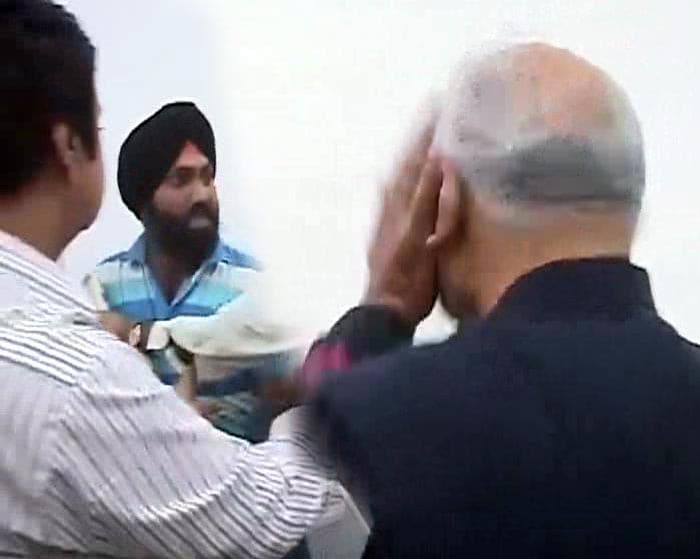
Union Agriculture Minister Sharad Pawar was today slapped by a man at the New Delhi Municipal Corporation (NDMC) centre in New Delhi. The incident occurred while the minister was leaving the premises after attending a literary function.  
The attacker, identified as Harvinder Singh, reportedly blamed Mr Pawar for rising prices of essential commodities. “This is my answer to corrupt politicians,” shouted the attacker as he took out his kirpan (small knife) and threatened to kill politicians. 

When informed about this, Anna Hazare said, “What, only one slap?”

Then the NCP guys went on a rampage to protest – the slap, Anna’s comment and generally because they wanted some action.

So, here are my completely superficial thoughts: 

1. Why do municipal corporations host literary functions and invite agriculture ministers?

2. Aren’t we up to our necks with this corruption thing? Some commentators spoke about ‘disaffection’ of the public. In that case it has nothing to do with corruption. Other politicians have got the shoe treatment; if such disaffection is going to be so pat, then assassinations can also be explained away.

3. Then there are those who think the slap was undignified. Whoa. Slippers are thrown inside Parliament too. What Harvinder Singh did is the equivalent of heckling at rock concerts – everyone wants paisa vasool stuff. If Sharad Pawar sent them sacks of sugar from his fiefdom, they’d be quite happy.

4. Then there are those who think he was so cool in forgiving (he did not, his daughter did) while his goons went about breaking things. This is not cool. This is political smarts. He would have been cool had he stopped the rampage. Mr. Pawar is in no position to be magnanimous given who he is known to be cosy with.

5. Then there are those who say Anna Hazare should not have said what he did, it is not Gandhian. This is funny. Gandhi was around sitting with his charkha, weaving khadi, when all those violent episodes took place and his supporters got the bad end of the stick, quite literally.

Anyhow, Anna and Pawar are two sides of the same bad coin. They are raking it in from the rural/agriculture sector in terms of cash or kind, but appealing to the urban groups, well aware that this is how they can get that spit and polish.

- - -

End note: The turncoat moment in 26/11 anniversary two-bits when celebrity page 3 regulars who had been right up there in colour-coordinated scarves and tunics pushing the ‘enough is enough’ agenda diss “celebrities” and think about the ‘others’, and pat themselves for having refused to appear on TV shows this year. Wow, missed ya babes. What were they doing barfing at the sensitive time when it mattered most? Or is three years later not good enough to get them international mileage?

11.3.11

Case dismissed. Reason: Unusual

One more ‘what is happening to this country’ moment. Ajit Kumar, a subordinate judge in the Jharkhand trial court, has lost his job. The inspecting judge at the High Court said in his report:

“Kumar did not prepare judgments on his own, rather he used to get them prepared through somebody else before delivering them.”

The order had been passed in 2003, but the Supreme Court upheld it only yesterday, March 11, 2011.

How did this case come to light? On a supervision tour the inspecting judge found the judgements “unusual”. Did he go through all the case papers to reach this conclusion? Does unusual figure in legal terminology and in what context? If now the judiciary is wondering about the validity of cases, what is its position regarding the judgements already passed? Are they unfair? Or unusual?

Kumar was a subordinate judge, so did his seniors not notice something amiss? I hold no brief for him and don’t even know where Garhwa, where he operated from, is. But, it took eight years to sack him. Were the cases he passed judgement on reopened?

Now comes the question of asking someone to prepare the judgements. Has any inspecting supervisor gone around checking on superior judges? Does anyone imagine they go through every little piece of argument presented and they don’t have assistants?

We know from several instances that there are many factors at play – government pressure, industrial lobby pressure, underworld pressure, and the conflict between the various commissions of inquiry that are formed. Besides, when cases are moved from certain courts or the agency handling the case is changed, it does affect the judgement. Would anyone have the courage to call the bluff of ‘unusual’ judgements in these high-powered courts and by prominent legal luminaries?

Ultimately, every judgement is ‘unusual’ if it goes against the person who is at the receiving end of a sentence.