Showing posts with label papers. Show all posts

3.5.14

When the Press shackles...


Turn the pages of a newspaper, surf television channels, visit news websites. What you get to see is plenty of freedom. Everybody is free to say what they wish, in a language they choose to, for a motivation only they might know about.

Together with freedom comes responsibility is not just a cliché. When you celebrate World Press Freedom Day at least understand what is expected of you:

Every year, May 3rd is a date which celebrates the fundamental principles of press freedom; to evaluate press freedom around the world, to defend the media from attacks on their independence and to pay tribute to journalists who have lost their lives in the exercise of their profession.

2014 Theme is: Media Freedom for a Better Future: Shaping the post-2015 Development Agenda.


How many are bothered about this? Editors who censor pieces and kowtow to masters of varied stripes are talking about press freedom? Even reports are cut to make space for ads, or if they go contrary to what the sponsors might like. Opinion pieces are censored because, again, they will cause problems.

But, whose freedom is this?

The regional press that has a much wider reach and better understanding of people in the villages and small towns, and certainly has an urban audience as well, is largely ignored.

A few months ago, two well-known TV anchors were said to be planning to quit their jobs. The immediate reaction was that they were under pressure. Op-eds in the international press too gave their example even though both had clarified that no such thing had happened.

More recently, a young lawyer collated some Modi myths to be busted; it was published in DNA. A few hours later it was not there. The immediate reaction was that the fascists had started working.

Let us get this clear: the fascists will. There are several examples. Yet, had anybody bothered to call out the newspaper, ask for an explanation? Had anybody bothered to raise questions other than the one that suited the current anti-wave? This is surprising, for nothing in that piece was new or more damning than some that have preceded it. There was no sharp opinion.

Would it not be more proactive to get the newspaper to respond instead of just riding a, well, wave?

We are already on to other stories, other minor ripples.


Is this about censorship?

The media that seeks the right to write has crossed the line several times. Have you noticed that while film stars and politicians are soft targets, industrialists are treated with deference? And what about the media houses themselves? It is rare that a Tarun Tejpal case comes to light, but even here it became a matter of professional rivalry.

I will only be repeating myself when I say that the deals the media strikes with politicians, with corporate houses (if they are not owned by them), with the underworld too will not be outed. Even in the Tejpal case, two factors were important.

1) After the media had given the Delhi gangrape primetime, sexual abuse has become an issue that cannot be ignored. I won't go into the dynamics of how it twists the victim's situation to suit TRPs and advertising.

2) Without in any way taking away from the crime, there was the political-corporate aspect that oversaw how justice was to be delivered.

In the FoE overdrive, there is rarely any discussion about the reporters on the field, especially in sensitive areas.

It is disgusting to read about how some in the press cling onto their peers who might be unfortunate victims of violence. It is time to wake up. Such incidents take place not because the media houses are outspoken and free, but because the perpetrators of violence won't have it any other way. They have targeted even those who are silent and have no media access. If the press wants to act as though it is upholding democracy, then it better learn to practice the freedom across the board within the organisation, and not be selective.

Or they should make their position/agenda clear. To the readers, their sponsors, and their staff and contributors.

Do they have the courage? No. They keep their options open because they want to curry favours. They do not know who will come to power, which industry will have its projects passed, which celebrity will be feted. So, we have a mélange of people of dubious worth featured consistently until such time that they become redundant for the 'free' media.

9.5.12

Footnotes from the ledge

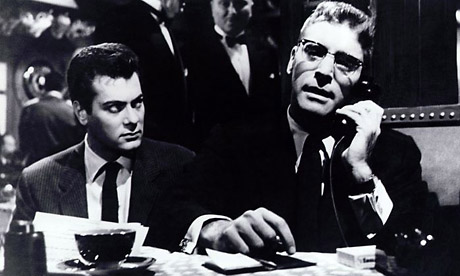
From the film 'The Sweet Smell of Success'

Years ago, a web portal I wrote for in the nascent stages of news and views on the Net in India, decided that it needed a footnote for its columnists. I was accustomed to ones that simply said I was “a freelance journalist” (I crack up when I read “independent columnist” – independent from what, of what, by what? Is that not to be taken for granted?) to the smart “refuses to sit on the fence” (it worked against me after 11 years of continuous writing of that column when I was told I was too independent and don’t take briefs!) to a phrase taken from my blog: “has a healthy disregard for objectivity”.

So, back to that e-portal. As some of you know, I could not imagine ‘writing’ for anything that did not scrunch in my hands. I did not even have a computer. One day, out of curiosity, I was at a friend’s office and casually mentioned this column. We reached the destination and as I scrolled down on my discovery trip, I reached that precious footnote. It was in red, italicised. It said that I, FV, was an “iconoclast”.

I froze. Images of me as Che Guevara flashed on several T-shirts. This was serious, and after a few seconds I was pretty much on the floor laughing, and ROFL was not yet known to us. From that vantage position where I had to look my iconoclastic best, I asked my friend whether he agreed with me that it was a stupid idea; he did. And made it sound more ominous: “It might appear as though you are saying it.”

This is the problem. It is more likely that publications decide. However, the newer lot ask you to send “two-three lines describing yourself”. I once wrote a horribly cheeky one and was told it did not go well with the content.


Sealing my fate!
When I became a serious op-ed addict during college, I recall reading pieces that were written with care for both language and thought. Some were ponderous, no doubt, but many were challenging. For me, this is the purpose of a good edit piece. There was space enough to explore ideas, and not the need to compress because there has to be place for ‘likes’, ‘share’, ‘send’. I understand this is the way to connect, but when some publications ask you to send SMSes to say whether you liked or did not like the column, it is a bit much. The writing becomes another product. Unfortunately, these days it often is.

But I did not know who those writers were. Celebrities and those from other fields had not taken over the business of holding forth on what they were doing. This does not work as ‘inside’ information or adds any authenticity, for they too are writing for an audience and have their own biases.

Do readers care about the qualifications of the columnist? It is a bubble theory. It looks good until you prick it. And the pricking is just giving it a good look-over.

However, mostly the footnote works as a promo for people in different professions. I had once taken a swipe at someone mentioning how his CV exceeded the word limit. It was, therefore, good to read on the ‘Self importance of names and titles’ in Pakistan’s Express Tribune as to how the whole description business has gone overboard. When I was writing for them, I had half a mind adding, “The writer has a degree in Vampirism from the University of Dracula”. (Incidentally, third-person descriptions are supposed to look objective; they make me feel schizophrenic.)

Quite a few publications have these long rambling bottomlines, and most of their columnists are so darned third-degreed, all from the best universities. A good university ideally teaches you to explore, not flaunt knowledge.

We never read any mention of a degree from Gujranwala or Chhatisgarh. Reveals our colonial mindset and, dare I say, adds weight to the publication's reputation. They could probably have a roll-call of Oxford/Cambridge/Harvard types, all with halos. If they can take global roundabouts and quote Greek mythology in Latin phrases with a slight nod to desi lingo, then chances are that more people will notice because snob and blob value go together. They are like the always-open KFC outlets.

The other peeve regarding "X is a former something or the other" reveals our absolute obeisance to the past. Instead of wondering why s/he even at the prime has been rendered redundant, it imbues the individual with the gravitas required of a know-it-all. Much like a divorce might make a discussion on marriage legitimate. If the 'formerhood' has been achieved after much toil, then it works like a tiger's head poking out of the wall.

Now, chances are that if the writer were not a "political economist" or some such and just another bloke with something to say, a piece questioning such self-importance would not have gone through the thinker's pose of editorial discretion.

PS: I posted the last three paras at the website with a footnote that said “~A former ET columnist with several degrees of separation”. It’s still awaiting moderation after hours! (Finally published after 12 hours.)

© Farzana Versey

29.1.11

Switch it on


Now they are going to tell us what quality time is. This is your chance. Wonderful. To register you have to send a text message. Bucks. You log on to the site. Hits. This is a Hindustan Times venture and there are other sponsors, which means you get their products and services in lieu of television.

While it is true that a lot of people have ceased to go out and prefer to watch TV, many of them also indulge in the activities mentioned. If they can. Marine Drive and Oval Maidan are open spaces; senior citizens do get together; yuppies try and spend time with their kids. Not so sure about “dinner with my masterchef”.

Just in case these concerned organisations care to know, in quite a few cities there are power cuts, so TV watching is not uninterrupted. For people with careers, this is time to clean the house, get provisions and be at home. Commuting isn’t easy in a city like Mumbai.

For all the negative points against TV, I think there can be occasions for family and friends to bond. How many spouses discuss the walk they want for or the food they ate? Now think of the conversation about soaps and news, soaps in their own right. Multiplexes have made a visit to the movies quite expensive, so when films barely a couple of months old are telecast, it is a boon for them. Sports that were inaccessible are now on air. These things do create cult figures and covert advertising does push the viewers towards consumerism. But, you cannot walk down a road today and not meet blinking neon lights or encounter someone hawking something, sometimes even themselves – whether it is a helpless person or one on the make, whether it is poverty or glitz.

I watch TV everyday, but that is not all that I do. And there are many like me.

Just imagine if on this grand occasion of ‘No TV Day’ some channel decides to go to town shooting people at random doing what they always do and flaunting it as a success of this bold initiative. And we get to watch it live! Anything can happen.

Anyway, what’s this token one day going to achieve? People will return to their remotes and start surfing. There just aren’t enough waves in the sea.

22.12.10

Over-the-top: TOI/Assange, Sachin/Shane

This is such an obsequious sucking up to a trend, and a trend this WikiLeaky thing has become. The Times of India that often front pages its achievements of being the largest, the biggest, the best, has this on its masthead:


The report quotes Julian Assange:

“There are some very great little journalistic groups in India, pointing out the TOI among others. Journalism in India is quite vibrant in the medium and lower level.”

Quite simply laugh-inducing because he discovered all this “based on his dealings with Indians”. If they are media people, then the very fact that they keep their mouths shut about corruption, when not playing with the powers or games with each other, reveals that their vibrancy is relegated to talking big and thinking small. And just how easily the TOI has accepted validation of being one of the “great little journalistic groups” and possibly from the “medium and lower level”! He obviously does not know about the advertising-editorial relationship, where even the front page is often taken over by some company’s wares or services and where Page 3 pictures are paid for, in cash or kind and ad space is bought with the condition that there will be editorial content favouring it.


- - -


Ok, so Tendulkar is unstoppable. So is Warne. One has clocked up 50 hundreds, the other has sent 100s to 50 or more.

But Sachin is the good guy. Shane is bad. And for those who think the bad guys are the ones who win, not so. Even Shane is praising Sachin.

And Shekhar Kapur says:

“And then I look at Sachin and god still lives in India.”

Has Sachin scored only on Indian soil? Can atheists not appreciate cricket? Does god have to be an achiever and break records? Or is it god giving Sachin those records? Then, does he deserve all the credit?

At least Shane Warne can hog on his hormones and spin that ball without divine intervention.

24.11.10

The Media as Middle Man

India's "Paid News" Scandal

The Media as Middle Man 
by Farzana Versey
Counterpunch, November 24

The sudden interest in the involvement of some Indian media persons in what appears to be lobbying has posed the question about ethics, but it has a lot more to do with the cult of icons. Readers and viewers tend to blindly believe in taglines about ‘truth’ prevailing and ‘we were the first to go there’ with high-profile columnists and anchors; the audience now feels let down and covertly awkward for having propped up these news-bearers.

There is also anger that the exposure was not covered by news channels and only by some print publications. The media is a tightly-knit incestuous lot in India. They know that if they allow one head to fall, theirs will be next on the chopping block.

The story appeared relatively simple. A lobbyist, Nira Radia, working for industrialist Mukesh Ambani called up journalists and discussed ministerial portfolios. The media people offered to set up meetings with ministers and even revealed what stories could be run. There was loads of money - $40 billion - involved in the 2G-spectrum deals that would benefit the corporate lobby. The question is: did it benefit the journalists and how? The newspapers/channels get ads, the political party gets election funds and the media can carry convenient stories along the election trail with staged ‘objective’ moments. The media is the new fiefdom of the politician and political power – from the front door or the back entrance – is the journalist’s reward.

There have been conjectures that these conversations were to make the lobbyist give away information, a snoopy journalistic tactic. But has it been taken to its logical conclusion? Has there been an expose of a nature that could compromise the government which is culpable in this case? No. The man A. Raja who was a cheat got the same portfolio to cheat again. Are the journalists to blame? The motives and ‘real’ reasons are a non-sequiter when facts stare us in the face.

No one can call acting as conduits between politicians and corporate lobbies as part of journalism, but in the past the arrangement was tacit. Press conferences by business houses that handed out goodies were major draws. Does anyone even know about news reports that are paid for and often written by the PR departments of business houses? Does anyone care that such PR people carry press passes and are members of the press clubs? When captains of industry write guest columns for publications, this is advertising passing off as editorial content.

Journalists have often got prime posts in social organisations or are sent on junkets; many of the hugely respected senior names conduct all their ‘investigations’ over the telephone, which means they are fed information by interested groups. While opinions are by nature subjective, reportage ought to be objective. What is reported and how clearly conveys which side the person is on or has been asked to be on. What about owners of channels who get elected and become MPs?

To push the envelope (no pun intended) further, what about freedom of speech? Does the industrial house not have the freedom to lobby? Does the lobbyist not have the freedom to push her case? Does the journalist not have the freedom to act as a go-between? Great media stalwarts like Arun Shourie have played a role in bringing down politicians and governments. Why did they become heroes and why are today’s newsmakers considered unethical? The reason is that they appear to be co-opted, whereas a Shourie fought against the establishment. It is another matter that the fight could have been dictated by the opposition. This is the crux of the argument.

Sting operations get a whole lot of points by a gullible public that assumes those blurred video clips are done as an act of public good. No one bothers to check out the motives behind these moves. It is high time we made the mainstream media answerable, but the alternatives are not always as above-board as they appear simply because they too depend on the largesse of sponsors, advertising and benefactors.

Political stooges have always existed, only the level of subtlety has altered their persona. You just have to spend some time in any of the intellectual hubs in Delhi and you will see a journalist supping with a politician or a bureaucrat. There are TV channels that have given preference to young recruits merely due to their proximity to and sometimes family connections with such powerful people.

The recent revelations have become such a talking point, ironically, because they have been exposed with much flourish outside the mainstream media in India. Internationally, the Washington Post mentioned ‘paid news’ and reported that The Foundation for Media Professionals plans to host a conference on journalists as power brokers. The organisations’s spokesperson said, “We are actually happy that these practices have come out in the open. It forces us to address the problem. We as journalists sit in judgment of others all the time. We should hold ourselves to a higher standard.”

Journalists are fallible and their standards should be decreed by ethics and not morality and most certainly must not become a ruse for nobility. The self-examination should also raise questions about the media conducting kangaroo courts and making a spectacle of helpless common people.

Prominent anchors and columnists are deified only because their visibility, especially during crises and calamities, immediately imbues them with a halo of legitimacy. This gets further sanctity when a scam uses the name of one individual. This does not, in fact, work as a “lynch mob” but serves to buffer the cult. We live in times of short attention spans and shorter memories. Today’s flawed Twitter hero is tomorrow’s Facebook martyr, for the truth may lie not in what was said in the tapes but what was left unsaid.

- - -

Also published in Countercurrents and Khaleej Times