Showing posts with label ethics. Show all posts

18.7.14

Are your jeans distressed by lions?


If you are the sort to shell out over a thousand dollars for a pair of jeans “designed by tigers”, then you have until July 21. Animal conservationists are marketing this bizarre idea to you. Even if you won’t buy the jeans you might feel like you are contributing to the welfare of the poor beasts.

Japanese brand Zoo Jeans includes wild beasts in their design process to create the perfect pair of ripped denim. In order to do this, sheets of material are added to old tires and giant rubber balls and tossed into the animals’ cages at Kamine Zoo in Hitachi, Japan. The lions and tigers then have the chance to chew, gnaw, and scrape at the fabric, taking “distressed denim” to the extreme.

Do they even realise how cruel this is? Lions and tigers are carnivores; they tear into pliable flesh. Bears are omnivores. Denim does not smell or feel like skin or plants, and rubber has a unique scent and feel. The animals probably assume they will be rewarded after they’ve got rid of the ‘excess baggage’.

The zoo and World Wildlife Fund are being horribly insensitive, and to think this is to benefit the animals. WWF and People For The Ethical Treatment of Animals (PETA) rant about ill-treatment; they file complaints against cosmetics and pharmaceutical companies for using animals as guinea pigs. They have a point, but they aren’t doing any better.

These organisations have a history of regressive ads that put human models behind cages, chain them, or make them wear edible clothes. At the same time they use loaded, even sexual, imagery. With Zoo Jeans too, ripped by animals has a certain ring. It defeats the purpose. They end up perpetuating an idea they claim to oppose – that of the ‘wild beast’ as fantasy.


© Farzana Versey

24.11.13

Sunday ka Funda

"Whosoever is delighted in solitude is either a wild beast or a god."
— Aristotle


What happens if beast and human come together? When I saw this photograph, even before reading the article, I found immense beauty in it. Beauty, not courage, not adventure. We have seen divers, all dressed up and prepared to face sharks. In an older video, Christina gets real close, and the BBC commentary even talks about the sexual attraction, of mimicking a shark, of the shark being in a trance.

There are other questions that can be raised about interfering with nature, courting danger. And what happens were the shark to turn violent? Who is to blame? Would killing the shark that you have been embracing until now be deemed self-defence? Can it, if we rally extend the argument, be a crime of passion?

The article does not have answers. However, it describes the encounter:

At the 22-second mark, one man swims down and grabs the dorsal fin of the lemon shark. After riding it for several seconds, he does something truly shocking. He swings around to the bottom of the shark, gives it a bear hug and hangs on belly to belly. His head is precariously located just below the shark's mouth and he hangs on for several seconds before finally letting it go.


Before you watch this, let me ask Aristotle: Is it solitude when man and beast come together in what could be a spiritual (and a broad sense godly) experience?


28.10.13

Bare lies


Would you expect a biology teacher who also takes a geography class to explain mountains and oceans in biology terminology? Or a writer of horror stories to pen a children's novel using the same language? Why then expect an adult film actress to necessarily go topless for a film of a different genre?

As the report states:

Ironic as it may sound, actress Sunny Leone, who is known for her porn films in the US, recently refused to go topless for a scene in her upcoming horror flick.


Why is it ironic? What she does, or did, in a related field was the demands of her work. She has joined Bollywood with different dreams, or else she would have continued in her old job. I have never heard her run down or give a sob story about her past profession, but it is only fair to let her make her choices.

There are other mainstream actors who do agree because of the 'demands of the script' and then go around sounding conservative or, worse, as victims of the industry. However, male actors like John Abraham or Ranbir Kapoor who have flashed their butt can go around citing this as their USP.

Sunny sees the cinema she is doing now differently, as she has every right to do. We are such hypocrites. Many will watch her adult stuff, but run her down and expect her to perform as per type. She finally gave that shot in a bikini.

However, a source has been quoted as saying:

"Though she was allowed to shoot wearing a top, it was later removed using computer graphics. Her breasts were then digitally superimposed from one of her earlier films."


I do not know how she has reacted, but it is a sneaky and unethical thing to do.

It is okay:

If she did not want to physically perform the scene, but has no issues with the portrayal.

It is not okay:

If this was done without her consent and defeats the purpose of her not wanting to even be seen bared.

In very old films, actresses wore flesh-coloured body clothes beneath their flounces and feathers. This included those who made short appearances in cabaret numbers. In some cases body doubles have been used for intimate scenes. They were aware that the audience would be unaware of the 'deceit' and would perceive it as their skin, so why did they do so? Simply because of the discomfort of performing such scenes with a crowd of lightmen, spotboys and others around.

In Sunny's case, the filmmakers think this is her territory anyway, so why the chariness? I have one question for these directors: they shoot such scenes often — are they expected to only direct such scenes and nothing else? And do they identify with these in their personal lives?

© Farzana Versey

---

Also: Of porn and pawns

---

Image: Sunny Leone with Naseerudding Shah and Sachin Joshi in the forthcoming 'Jackpot'

20.9.13

Have stings replaced news?


The anchor held up a piece of paper and shouted down a politician with the precious words: "I have this secret information." A rival channel did its own bit of smirking: "Our sting operation will give you the whole story."

It will not. This too is fed information. The reason there is a surfeit of 'stings' — how can a formal letter by a cop to his bosses be called a sting operation when he has written it and sent it? — is because newspapers and TV channels have saturated the regular routes and want to entertain. Many of the readers and viewers too wish to be entertained, and news stories, however controversial, become more interesting when they stink.

Sting operations get a whole lot of points by a gullible public that assumes those blurred video clips are done as an act of public good. No one bothers to check out the motives behind these moves. It is high time we made the mainstream media answerable, but the alternatives are not always as above-board as they appear simply because they too depend on the largesse of sponsors, advertising and benefactors.

A few noises are being made now about some of these exposés. I wish it had been done earlier, too. Then we would have been spared this rush and rash of scoops where dirt covers only more dirt.

I've said it in earlier pieces, and instead of repeating myself I shall reproduce two extracts, one from 2010, the other from 2007. [Unfortunately, opinions do not qualify as scoops and exposés!]:

Stings that stink, 2007, Asian Age Op-Ed:

Have sting operations changed anything? Have people stopped having their palms greased? Is there more awareness about wrongdoing? Are the culprits shunned by society?

You know the answers. They have, on the contrary, become even more important.

A reporter of a Delhi television channel tried to expose a teacher for forcing her students into prostitution. It turned out to be fake. It was done on the prodding of a businessman as a planned strategy to hit out at the teacher for owing him Rs 100,000. He called up a reporter who we are told harangued her to make a few quick bucks by getting into the flesh trade and supply women. It is said she fell for this bait. A colleague of the reporter was sent as a potential girl ready for the job.

The whole story sounds bizarre. Would a woman in a respectable profession be so gullible as to get into criminal activity? If there is any truth, then why has it been labelled fake? This is not a big channel. Had it been one of those fancy ones, do you imagine anyone would have made such a noise about its lack of authenticity? The reporter has been arrested. I would like to know what is being done to the channel owners. This isn’t just a sensational story. It is about an issue that concerns women and any sensible person. Sting operators cannot get away with it.

Is this about vigilantism at all? (In 2005), there was an exposé where 11 Members of Parliament were bribed to pose questions in the House. The website carried tape recorders and cameras to catch them red-handed and a TV channel aired what they thought was a complete travesty. These clippings were later shown in Parliament. Newspaper reports were dramatic: "Parliament was stunned into shamed silence."

Does Parliament feel no shame when elected members throw slippers and chairs at each other? Has no ministry ever been shamed for taking kickbacks by giving a contract to an undeserving company?

And who were the MPs who were paid Rs 15,000 to just over a lakh for asking questions? Were they important enough names? These nobodies suddenly got notorious fame as "the dirty eleven." I can lay a bet that even if they were not bribed and were told they would be given some media coverage, they would still have done what they did. The sting operation only helped make scapegoats of a few unknowns to let the real sharks march around like saints. A whitewash job has never been simpler.

The real scoop was this, and it had been reported in this newspaper: The television channel gave the sting operators about Rs 58 lakhs. Less than Rs 10 lakhs was spent on the entire operation. The bribe amount was less than Rs 3 lakhs. Other expenses were about Rs 5 lakhs. The equipment was available on loan. Was the balance money returned to the TV channel? Does anyone know?

There should be transparency regarding sting operations too. Jaya Jaitly, who ought to know, had made an interesting comment, that it would be honest if a person went to these sting operators and told them that someone was taking money for asking questions or getting things done; the snoops could then accompany the person and catch the culprit in the act.

---

Would they do a sting operation on cultural organisations or famous "respectable" artistes who get special privileges? What about nominated MPs from the "world of arts" who use their position to further their personal causes? What about NGOs that misuse foreign funds? What about media houses that take money from socialites to promote them?


The media as middleman, 2010, CounterPunch

Journalists have often got prime posts in social organisations or are sent on junkets; many of the hugely respected senior names conduct all their ‘investigations’ over the telephone, which means they are fed information by interested groups. What about owners of channels who get elected and become MPs?

To push the envelope (no pun intended) further, what about freedom of speech? Does the industrial house not have the freedom to lobby? Does the lobbyist not have the freedom to push her case? Does the journalist not have the freedom to act as a go-between?

---

Political stooges have always existed, only the level of subtlety has altered their persona. You just have to spend some time in any of the intellectual hubs in Delhi and you will see a journalist supping with a politician or a bureaucrat. There are TV channels that have given preference to young recruits merely due to their proximity to and sometimes family connections with such powerful people.

The (Radia tapes) revelations have become such a talking point, ironically, because they have been exposed with much flourish outside the mainstream media in India. Internationally, the Washington Post mentioned ‘paid news’ and reported that The Foundation for Media Professionals plans to host a conference on journalists as power brokers. The organisations’s spokesperson said, “We are actually happy that these practices have come out in the open. It forces us to address the problem. We as journalists sit in judgment of others all the time. We should hold ourselves to a higher standard.”

Journalists are fallible and their standards should be decreed by ethics and not morality and most certainly must not become a ruse for nobility. The self-examination should also raise questions about the media conducting kangaroo courts and making a spectacle of helpless common people.


"False history gets made all day, any day, the truth of the new is never on the news." (Adrienne Rich)

© Farzana Versey

14.7.13

A newspaper mortified?

“When we hear news we should always wait for the sacrament of confirmation."

- Voltaire

I understand that sometimes newspapers, in a rush to be the first, might not do a thorough job of reporting. In times of crises and calamities when giving out news is more important, a reader or viewer could take this with a pinch of salt. Often, the sources the media consider above-board could just be feeding them half or misleading news.

Among the most talked-about aspect of the Uttarakhand floods was “Modi in Rambo act, saves 15,000.” It was so obviously exaggerated that all it deserved was sarcasm. Not debate.

But that does not happen. People moved on to this sideshow. It was opportunistic for both sides – the BJP and its opponents.

Now, after three weeks we get a clarification on Page 7 of The Times of India:


It seems obvious that someone enjoyed the piggyride while it was in the news and later decided to do damage control. However, why did the newspaper not issue a straightforward correction instead of this dramatic and obsequious one? The “largest-selling newspaper” regrets inconvenience caused to the individuals concerned, but not to the readers who were misled. Worse, it ends with, “We are mortified by the controversy surrounding the report.”

Why would such a huge organisation be mortified, unless it is threatened? Why did this fear of controversy set in only now? Will the media group’s channel Times Now, whose “most-watched” news show has the anchor demanding of his panellists, “The nation wants to know”, conduct a debate on this? This time the nation is concerned as to why and how its favourite newspaper is mortified.

We’d be happy to help in this hour of distress.  

PS: I have deliberately not cropped out the 40% off from an ad above in the image...after all, it is a matter of discounted news and other rebates! 

27.11.12

Aamir Khan's Khap Panchayat

What happened? A man is killed after appearing on 'Satyamev Jayate

'.

Is there a limit as to how far reality shows can and should expose the participants? When people are willing to have cameras placed in hospital rooms to capture their battle for survival, or even impending death, how valid is the query?

I have consistently questioned the ethics of Aamir Khan's show 'Satyamev Jayate'. The host had begun to believe he was a messiah, riding on lachrymose glands. One thought, disgusting as it was, this is where it would end: Sunday mornings of chicken soup for the soul, followed by the main course of 'this is life' shrugging.

Unfortunately, the attitude remains one of arrogant consciousness.

Abdul Hakim eloped with Mehawish in 2010 against family opposition. The difference in status was the reason cited. The khap panchayat issued a death edict. Adoli village in Bulandshahar district of Uttar Pradesh became more than a dot on the map of India.

On Thursday, Hakim was on his way to get medicines for his pregnant wife; five men pumped bullets into him. Was this a family dispute or honour killing?

Had they not appeared on the TV show would they be saved? Other people are indeed killed even when they don't appear on television. Yet, when a case is highlighted and ordinary people are transformed into media-propped bravehearts, then the irresponsibility of the medium ought to be questioned.

Aamir Khan, upon hearing the news, said: "It was completely their choice. In fact, when I met the couple before our show, they expressed the fear of being killed. They were already getting threatening calls."

Why, then, did he not dissuade them, since the purpose of the show was to help society? Or, wasn't it? 'Satyamev Jayate' was catering to voyeurism, not conscience. It had a clear agenda to mimic soaps, but make it sound realistic. Is that why their faces were not blurred nor their names changed?

One notices this sort of 'authenticity' increasingly creeping into the electronic media. Real people are like us or those around us. It is about being a bystander at an accident site, or even a neighbour of someone who commits suicide. We become part of contemporary events, some of which are deliberately exaggerated.

The manner in which such shows sit in judgement is a form of khap panchayat. They too issue diktats and use the vulnerability of those who suffer. Abdul Hakim was a casual labourer. How did he benefit? Was he desperate to appear on TV.

One would think there'd be some introspection. Instead, Aamir Khan said: "Disturbing and unfortunate incident. Will speak to the government authorities in UP to help and ensure the family is safe. The culprits must be brought to the book. The case is registered on the basis of right facts."

How does he know? If he has the clout to talk to the government, then why not talk about the role of such TV shows?

The case is registered, we know. Now, it is time for 'talaash'.

14.10.12

Kofi with Rajat Gupta. Gates too

We talk about corruption in India, of sycophancy, of using influence. We are ready to take those who commit financial irregularities to court. This is as it should be. 

After the farce of the 'Friends of Rajat Gupta' cabal, it seems to be the turn of the international frat boys club to come forward to support Gupta, who is being tried for insider trading. In what is a clear case of pushing in his favour, many prominent people have asked the judge in the US to show fairness. This is extremely insulting to the judiciary as well as being ridiculous and arrogant. According to a report:

Microsoft Corp co-founder Gates, in one letter among about 200 written to US district judge Jed Rakoff, wrote that he wanted to help “round out Rajat’s profile as you consider the appropriate sentence for him.”
The judge would know his job, but Gates has got his reasons. Those not blinded by his philanthropy would understand how these things work. The report says that when Gupta chaired the Global Fund to Fight AIDS, Tuberculosis and Malaria, Gates became acquainted with him. Is this reason enough for him to have the temerity to write that “many millions of people are leading better lives -- or are alive at all -- thanks to the efforts he so ably supported”? 

I do know of hardened criminals who help social causes -- to make use of tax benefits, or to appease their guilt, or because they truly believe in giving. Does it take away from the crimes they commit? Millions of people benefit from employment in the mafia and with underworld gangs. In times of recession, this is probably crucial to their existence. Will anyone be permitted to speak up for these gang leaders?

Bill Gates' Foundation, its good work notwithstanding, is only one among the many that support the underprivileged. Several NGOs and international agencies too work relentlessly for these causes without as much fanfare. The attitude of, "Look, we save lives" is not only half the story; it does not give those who offer financial assistance the right to believe they can be absolved of anything else they do that is suspect or anti-social. 

The world cannot be held accountable to Wall Street.

  
The timing of the letters is disconcerting because it is close to the date of the final court verdict and also the US elections. Well-known industrialists and academics are not the only ones to have pitched in with their bludgeoning tactics garbed as good wishes. 

Former UN secretary-general Kofi Annan has written to the judge:


“I urge you to recognize Rajat for the good he has done in the world, to give him the credit that he deserves for helping others and to take into account his efforts to improve the lives of millions of people.”
Perhaps, these people do not realise that insider trading is not only about a few million bucks shared between friends. The ramifications have a trickle-down effect that pinches everybody in the long run, and that is precisely what has happened to the US economy, that snowballed and reached half the world. 

This selfish bunch has no ethical right of talking down to the beneficiaries of their wealth simply because of who they are. It is such bluster that makes one wonder about their intentions.

I was told that the American justice system in matters of financial scrutiny is above-board. It would be prudent for the court to call upon Bill Gates and Kofi Annan, and whoever else has written to them, to appear as wtinesses providing evidence that Rajat Gupta is not guilty of insider trading, for which he is being tried. He can sing lullabies, put in dollars in donation boxes, and make the world a better place from his room with a view. That is not what the case is about. 

He may well be let off, and his friends can then celebrate with bubbly and talk of saving the lives of millions. Until then, it would help if they stayed away from matters they have chosen to ignore.

(c) Farzana Versey

My earlier post on Rajat Gupta's Indian friends.

28.7.12

Pakistan's Conversion Circus: Missing the woods for the tree

Sunil on his way to Abdullah

Pakistani society has one more reason to get agitated. A Hindu boy has converted to Islam in front of a live television audience. Sunil became Muhammad Abdullah.

I’d like to take up the editorial in Dawn to show just how this limited concern works.

"In yet another example of how the industry's commercial goals trump ethics, open-mindedness and common sense, on Tuesday a television show broadcast an imam leading a Hindu boy through a live conversion to Islam carried out in the studio as part of the show, complete with the audience joining in to suggest Muslim names for the new convert.

"There is no reason to think the boy was not converting of his own free will, but the whole event had the distinct air of being carried out to give viewers something new and different to watch, even if that meant dragging an intensely personal and spiritual experience into public view.”

This is like suggesting that it is quite nice to carve your meat at a fine dining table, but don’t let us see the butcher’s shop. There is as much ethics in what the paper says as the bleeding rites of passage. I have always maintained my anti-conversion stand, and in this case I might be interested to know a couple of things if ethics is an issue:

  1. This is reality TV. Participants on such shows are paid. Was the boy paid to appear on the show or to convert?
  2. If he was doing it of his own free will, then the question is not about conversion but about the involvement of imams, who object to entertainment programmes. 
  3. Is it not the job of the media to investigate about the motives of the boy – where is he from, what are his reasons, instead of replaying clips?

Sitting on a high horse has become part of the media culture. Editorials are passing judgments and trying to ‘convert’ people into thinking in ways they deem fit all the time, taking political sides, writing treacly pieces on leaders.


Maya Khan in an earlier stint


The host of the ARY show is Maya Khan, who is seen as an Islamist. It is interesting that actress Veena Malik was supposed to host a Ramzan programme and it was vetoed by the mullahs in Pakistan. Did anyone among the liberals question the ethics of someone like the controversial lady hosting such a show? Was it not to grab eyeballs? Would it not be as bad as mullahs looking beady-eyed over a conversion? What are the ethics about having such shows at all in a country that is constantly discussing religious resurgence and its ill-effects?

Who is to decide what form of religion should be portrayed? If you want a Veena Malik type show, then someone else might find a Maya Khan entertaining. Did not Ms. Malik become the hero of a section of the nation when she took on some mullahs on a channel a couple of years ago for her right to expose her body and perform live canoodle scenes? She suddenly became the ambassador of the nation, of liberal Islam, of a fight for modernity.

These are all circus acts, and one does not expect better from reality television and that includes news channels. Part of the hot air is possibly because this is a competitive game, where ethics are the flakes of pistachio on the phirni, not an ingredient. This is borne out by the fact that the editorial is worried about how just to spice things up “religion is now fair game too”.

Talat Hussain, who hosts a political show on private television channel Dawn News, said:

“Think about how Muslims would feel if Buddhists in Burma show a Muslim being converted on a live TV show.”

If this is not spicy and sensational, then what is?

Religion always has been fair game. Why get pedantic about it in a country that relays every religious detail, and “spiritualism” is sold at shrines, as CDs? And just for the information of those who do not know, conversion is not a private matter. The decision to convert might be, but the individual has to perform certain rituals to show that s/he belongs. The whole reason behind it is often social acceptability or pressure.

Question that. But it would not get as much attention, does not give those expressing anger a primetime slot.

It is surprising to read this:

"more disturbingly, what the channel obviously didn't stop to consider is the message this broadcast would send to the country's minorities…The joy with which the conversion was greeted, and the congratulations that followed, sent a clear signal that other religions don't enjoy the same status in Pakistan as Islam does. In a country where minorities are already treated as second-class citizens in many ways, this served to marginalise them even further”

Who has made a noise about this? Where are the minority groups? It is not about the message a television show sends out. Pakistanis do not live in and off studios. The country’s laws discriminate against minorities.

Can anyone file a petition against the channel? Will it change anything? How many Pakistanis have the courage to flaunt their agnosticism/atheism, if that is their proclivity?

In a moment of perfect coordination, it would appear – and that showcases the hypocrisy – President Asif Ali Zardari has formally invited PM Manmohan Singh to visit Pakistan:

Zardari suggested that if Singh’s visit coincided with Guru Nanak's birth anniversary in November, it would be well received by the Pakistani people and reinforce the desire of both countries to promote inter-religious harmony.

Is this not misuse of religion? Do India and Pakistan need to promote inter-religious harmony? At least, India does not need Pakistan for that. And this is being hailed by the same media that has been frothing at the mouth over a conversion. Weren’t Sikhs beheaded in that country not too long ago?

India has enough of its own problems with different religions and sects and castes. But I dread to think what would happen if we had an Ahmadi Prime Minister. Would President Zardari extend an invitation to celebrate anything and promote inter-religious harmony, when the community is ostracised socially and politically?

Perhaps one of the ‘ethical’ people of Pakistan might like to convert to the Ahmadiya faith on public television and send out a strong message?

If you cannot do that, then a coat of varnish is not going to change the shakiness of the walls.

(c) Farzana Versey

7.3.12

Of shooting orders, noses, and pictures that brutalise


President Barack Obama can kill anyone. Or, his administration can. Needless to say ‘anyone’ here means persons who pose a “threat”, and for the United States of America it is the al-Qaida. Now that it has done away with Osama, is moving out of Afghanistan, and is a bit strapped for taking any overt action against Iran, the target practice begins at home.

If the threats come from US recruits of the organisation, the President’s office can get rid of its own citizens abroad without consulting a federal court.

US Attorney General Eric Holder said:

“Given the nature of how terrorists act and where they tend to hide, it may not always be feasible to capture a US citizen terrorist who presents an imminent threat of violent attack. In that case, our government has the clear authority to defend the US with lethal force.”


This is dangerous for a few reasons:

  • If the US government does not know where the terrorists hide or how they operate, and we have evidence of it by the long-drawn out wars, then how would it assume there are threats?
  • If you do not know where they hide and therefore it is not feasible to capture them, then how will it be easy to spot them to kill? 
  • If the US knows that there is a possibility of violent attack, its intelligence agencies would know where it comes from. Isn’t it amazing that these agencies can recognise an American citizen as an al Qaida recruit who is a threat, but cannot figure out what to do with him? Has he put up the Stars and Stripes in some hidden location so that people can recognise his nationality?
  • How would the American government be so sure that the lethal threat is planned against the US? How many times in the past decade has the country been attacked?

This move is just a carte blanche to do as it pleases, round up the usual suspects and make it difficult for ordinary American citizens whose origins are elsewhere. They may be second generation immigrants who have no links with the country of their parents’ birth.

This is not to deny that young people have become acutely aware of their identity. Part of it is brainwashing, and part of it is most certainly the result of being socially targeted without any cause. These are a few. The US is supposed to know a lot about everything that happens in the world, so why can it not keep a track of its own citizens?

Why did it insist on getting David Headley back for trial? How did this US citizen manage to visit India and Pakistan? The US did not capture him. He was handed over. And the story of what he did and why will continue because the United States of America does not want anyone captured. It wants to kill, and not have to answer inconvenient questions.

- - -


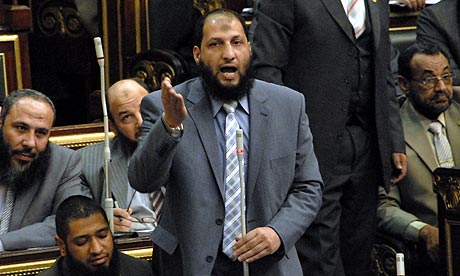
Cosmetic surgery is not halal. An Egyptian member of the Islamic Al-Nour party has discovered. Or, rather, he knew already, that is the reason Anwar al-Balkimy explained away his bandaged nose as the result of being beaten up by gangsters in a robbery attempt.

His fib was exposed and he was expelled from the party and had to issue an apology. However, there will be an official inquiry and if found guilty he might be imprisoned for “creating anxiety among the public” and “worrying public officials”!

Does the public care? If only some of these purist groups took a look behind the hijaabs, they’d find blonde streaks and heavy make-up. Men probably use quite a few things that make them look and feel good.

It is indeed possible that somewhere in the religious texts there is a provision for not tampering with the body. There was no concept of cosmetic surgery until a few decades ago. If a person suffers from severe burns, will there be no skin grafting? This is reconstructive surgery and is meant to repair the appearance, for it does not necessarily hamper the functioning of other organs. So, what is the fuss about? Perhaps, the MP had problems with breathing because of his nose structure. Or, it may as well be that he wanted to alter the shape because he felt like it.

He has not changed as a person, so his nose should concern no one but him and his god, if they insist.

- - -


You are seeing this photograph and are revolted. Everyone is. However, what does come out of this? Today’s Mumbai Mirror had a front page story on this one picture – of a man who survives by begging, has no one and lives on the streets. He was beaten up, and it transpires it was by the cops. The important thing to note is that this photograph first appeared in yesterday’s issue. The writeup expressed remorse and anger, but no one knew who the people beating him up were. In today’s edition, Pritish Nandy says "These brutes must be punished". But, when he states that people just stood there and did nothing, he forgets to ask: did the newspaper’s photographer do anything?

And this is the long caption that went with it:

On a pavement opposite CST, scores of people were momentarily distracted from their vada pavs and chai by the screams of this dishevelled man in the picture. The drama started around 2 pm when a group of six, carrying canes, ordered the man to get into a police vehicle, which already had around 20 others. When he refused, he was thrashed mercilessly; the lashings didn’t stop even when blood started gushing out of his forehead. Shopkeepers by the pavement said the man was homeless, and would often be found looking for food in the garbage bins. There was no confirmation whether the assaulters were policemen; the man was finally bundled into a vehicle, driven away to an unknown destination.

Apparently, somebody wrote this seeing the picture and talking to the photographer. It was a “drama”, and now we have a story.

Is it always about a story, and then the claim of being the first to ‘expose’ how callous we are? Are they not ‘we’? Brutality, anyone?

- - -


Images: Telegraph, The Guardian, Mumbai Mirror

22.2.12

The Dolphin Person


I have nothing against dolphins. In fact, I find them delightful. However, the scientific understanding of them as individuals, raises a few questions.

The Centre for Ethics and Business at Loyola Marymount University in Los Angeles has come up with a ten-point charter for “life, liberty and wellbeing”, among others.

A group of scientists and ethicists argues there is sufficient evidence of the marine mammals' intelligence, self-awareness and complex behaviour to enshrine their rights in legislation. Under the declaration of rights for cetaceans, a term that includes dolphins, whales and porpoises, the animals would be protected as "non-human persons" and have a legally enforceable right to life.

Is intelligence the only yardstick to project an ethical perception of rights? This would put to test many humans – the physically handicapped, the mentally challenged, those who behave differently from what is the norm, and those who might not quite fathom the complex nature of abstract thought. There are parts of the world where people still live on basic necessities and follow rudimentary rules of social intercourse.

"Dolphins are non-human persons. A person needs to be an individual. And if individuals count, then the deliberate killing of individuals of this sort is ethically the equivalent of deliberately killing a human being. The captivity of beings of this sort, particularly in conditions that would not allow for a decent life, is ethically unacceptable, and commercial whaling is ethically unacceptable.”

The scientists quoted examples of how dolphins know to work on the reward principle. Early experiments conducted on rats have shown similar behaviour. Dogs, as in the Pavlov experiment, expressed their reaction through salivation. There is an understanding where survival makes animals and humans behave in a certain manner.

So, is such ethical treatment based on a human paradigm the right and only one? Protecting a species is fine. But is it really necessary to ‘dignify’ it on the basis of being a ‘person’. This, strangely enough, contradicts the effort to not treat human beings as superior. Then, why elevate only some species to that level?

Animal rights activists might want all animals to be protected. The movement against zoos, cages, slaughter, meat-eating has been active and often vocal. They too use the human in a trapped situation to emphasise the point about rights. It does not quite work because there is a tendency to glamorise and bring out the beast in the person behind the cage or dressed in fur. It sexes up the message.

The dolphin lobby is using a parallel argument by saying that they are ‘non-human persons’ and therefore as good as individuals.

I can see that there is a pecking order here, and wonder just how a species will seek to gain the sanctified position of being human. It really isn’t the best thing to be when the record of human rights is abysmal and the ethics of how certain being are treated as opposed to others affords it less ethical validity than an elephant squashing an ant unknowingly.

24.11.10

The Media as Middle Man

India's "Paid News" Scandal

The Media as Middle Man 
by Farzana Versey
Counterpunch, November 24

The sudden interest in the involvement of some Indian media persons in what appears to be lobbying has posed the question about ethics, but it has a lot more to do with the cult of icons. Readers and viewers tend to blindly believe in taglines about ‘truth’ prevailing and ‘we were the first to go there’ with high-profile columnists and anchors; the audience now feels let down and covertly awkward for having propped up these news-bearers.

There is also anger that the exposure was not covered by news channels and only by some print publications. The media is a tightly-knit incestuous lot in India. They know that if they allow one head to fall, theirs will be next on the chopping block.

The story appeared relatively simple. A lobbyist, Nira Radia, working for industrialist Mukesh Ambani called up journalists and discussed ministerial portfolios. The media people offered to set up meetings with ministers and even revealed what stories could be run. There was loads of money - $40 billion - involved in the 2G-spectrum deals that would benefit the corporate lobby. The question is: did it benefit the journalists and how? The newspapers/channels get ads, the political party gets election funds and the media can carry convenient stories along the election trail with staged ‘objective’ moments. The media is the new fiefdom of the politician and political power – from the front door or the back entrance – is the journalist’s reward.

There have been conjectures that these conversations were to make the lobbyist give away information, a snoopy journalistic tactic. But has it been taken to its logical conclusion? Has there been an expose of a nature that could compromise the government which is culpable in this case? No. The man A. Raja who was a cheat got the same portfolio to cheat again. Are the journalists to blame? The motives and ‘real’ reasons are a non-sequiter when facts stare us in the face.

No one can call acting as conduits between politicians and corporate lobbies as part of journalism, but in the past the arrangement was tacit. Press conferences by business houses that handed out goodies were major draws. Does anyone even know about news reports that are paid for and often written by the PR departments of business houses? Does anyone care that such PR people carry press passes and are members of the press clubs? When captains of industry write guest columns for publications, this is advertising passing off as editorial content.

Journalists have often got prime posts in social organisations or are sent on junkets; many of the hugely respected senior names conduct all their ‘investigations’ over the telephone, which means they are fed information by interested groups. While opinions are by nature subjective, reportage ought to be objective. What is reported and how clearly conveys which side the person is on or has been asked to be on. What about owners of channels who get elected and become MPs?

To push the envelope (no pun intended) further, what about freedom of speech? Does the industrial house not have the freedom to lobby? Does the lobbyist not have the freedom to push her case? Does the journalist not have the freedom to act as a go-between? Great media stalwarts like Arun Shourie have played a role in bringing down politicians and governments. Why did they become heroes and why are today’s newsmakers considered unethical? The reason is that they appear to be co-opted, whereas a Shourie fought against the establishment. It is another matter that the fight could have been dictated by the opposition. This is the crux of the argument.

Sting operations get a whole lot of points by a gullible public that assumes those blurred video clips are done as an act of public good. No one bothers to check out the motives behind these moves. It is high time we made the mainstream media answerable, but the alternatives are not always as above-board as they appear simply because they too depend on the largesse of sponsors, advertising and benefactors.

Political stooges have always existed, only the level of subtlety has altered their persona. You just have to spend some time in any of the intellectual hubs in Delhi and you will see a journalist supping with a politician or a bureaucrat. There are TV channels that have given preference to young recruits merely due to their proximity to and sometimes family connections with such powerful people.

The recent revelations have become such a talking point, ironically, because they have been exposed with much flourish outside the mainstream media in India. Internationally, the Washington Post mentioned ‘paid news’ and reported that The Foundation for Media Professionals plans to host a conference on journalists as power brokers. The organisations’s spokesperson said, “We are actually happy that these practices have come out in the open. It forces us to address the problem. We as journalists sit in judgment of others all the time. We should hold ourselves to a higher standard.”

Journalists are fallible and their standards should be decreed by ethics and not morality and most certainly must not become a ruse for nobility. The self-examination should also raise questions about the media conducting kangaroo courts and making a spectacle of helpless common people.

Prominent anchors and columnists are deified only because their visibility, especially during crises and calamities, immediately imbues them with a halo of legitimacy. This gets further sanctity when a scam uses the name of one individual. This does not, in fact, work as a “lynch mob” but serves to buffer the cult. We live in times of short attention spans and shorter memories. Today’s flawed Twitter hero is tomorrow’s Facebook martyr, for the truth may lie not in what was said in the tapes but what was left unsaid.

- - -

Also published in Countercurrents and Khaleej Times

12.5.10

Is this a front page report?

This is the front page of today's TOI. It is a report. How can the 'aman ki asha' logo (highlighted by me) appear right at the centre? Was this 'movement' responsible for the SAARC Summit? Is it behind the efforts of these leaders to meet?

If not, then it is completely unethical and misleading. Or, are we to assume that our elected leaders and government spokespersons are now puppets of the media?

18.4.10

Bared? Marilyn, Oprah, Sunanda…

I do not know which of these ‘outings’ is the worst.

THIS:

Fans of Marilyn Monroe will be able to bid for an intimate snap of the star at an upcoming auction. An xray of the stars chest is set to go under the hammer. The medical photograph was taken at a Florida hospital in 1954 when the actress was being treated for endometriosis. The x-ray shows Monroe’s ribs as well as the outline of her famed cleavage.


I would understand a dress from some film, a personal belonging. This has become quite the norm for the public that seeks such vicarious thrills. But the woman was ill, for god’s sake, and it is an x ray. Isn’t there any shame left? And, why is there a mention of her cleavage. This is beyond disgusting.

OR THIS:

Oprah Winfrey has repeatedly lied about her upbringing and made up stories about sexual abuse to boost her reputation, claims biographer Kitty Kelley in her new book. Where Oprah got that nonsense about growing up in filth I have no idea, the New York Post quoted Winfrey’s cousin Katherine Carr Ester as saying in the book. I’ve confronted her and asked, why do you tell such lies ... Oprah told me that’s what people want to hear, the truth is boring.


Kitty Kelly has her kitty full of tell-all tales. I have my reservations about Oprah’s modus operandi that caters to the most basic instinct – voyeurism. It has often been camouflaged as catharsis, but you can see right through the tears, which often reveal that some of it has been staged. She is also her best subject, using everything from her weight to her money. Just as well. However, I can understand exaggeration as a possibility, but to make up stories of sexual abuse, especially as a child, somehow seems unlikely. If it is true, then it is cruel. Cruel to the telly-viewing world that trusts her implicitly, cruel to herself for needing such a ruse. Also, I’d like to know a bit more about this high moral ground adopted by her cousin. How much was she paid for telling this 'truth'? If she knew about it and felt so strongly, why was she silent all this time? There are hundreds of tabloids and channels waiting for such exposes.

OR THIS:

Sunanda Pushkar's face recently launched a thousand IPL controversies. However, if you've had enough of it, you could try an older variation. The one you've been spotting these days is only a new and improved version. City sources say that the woman, who is in the eye of the Modi-Tharoor storm, had a nose job done by a leading Mumbai-based cosmetic surgeon ten years ago. Sources said that Pushkar also had two other fat reduction surgeries before the nose job.


(Latest reports say she has withdrawn her stake in the IPL.)

Take her to task for the franchise deal, but this is low. The Medical Council should take note of the plastic surgeon Dr Ashok Gupta for revealing these details. It goes against the ethics of his profession. Incidentally, Mumbai Mirror that carried the story showed the before and after pictures and amazingly in all of them the lady is wearing the same lipstick. Is it her fealty towards a certain shade or is someone tampering?

Besides this, it might help if those who socialise with bottle blondes stopped mentioning this aspect of her. It is amusing to see the ladies who lunch get all concerned about power women, which of course Sunanda is not because she has not yet had a chance to appear on Page 3. She is an insult, apparently. She is telling us what to think about Tharoor. How dare she? Phew. People who opine about piffle should not be wondering about how her opinion does not count.
- - -

The sainted and the tainted - Lalit Modi with the Dalai Lama:

No Comments

26.12.09

Old Man and the She

Narain Dutt Tiwari is doing fine. He is the Governor of Andhra Pradesh and was caught with his pajamas down but with his shirt on lying on his back in bed, we are informed, with two women and a third at his feet. The women were “without a shred of clothing”.

Pictures of these appeared on the Telugu channel ABN Andhra Jyothi for an hour before someone had enough of the pajama party.

I have a few technical queries, but first the details.

A woman named Radhika sent the girls in return for mining projects she was promised, the channel said. As the promise was not kept, she handed over some pictures taken by her.

“We have evidence (to back) what we have shown,” said the person from the TV channel.


Right. The woman who did not get what she wanted sent them as bait.

What are the women’s organisations that are protesting going to do about it? Here are some of their quotes…

The Progressive Organisation of Women:

“We have a woman President and another managing the biggest party in the country. We will petition them to take stern action against this man.”


All India Democratic Women’s Association:

“But such action is not taken against a person who holds such a high constitutional position and has besmirched the highest office with this cheap act.”


A Rights activist:

“We must cleanse Raj Bhavan with milk.”


Is this a sex scandal? As Governor, Raj Bhavan is his house. Was he using office space? Did he leave a meeting for the rendezvous? Did he physically abuse the girls? The media has referred to them as call girls – have they complained against him? Did he call them? No. Then, what ruse did they use to get in?

Now, for my tech stuff. The man is lying down. These are stills. Was he stripped? Did he strip the women or did they opt to do it themselves? Did he pay them? Who took the pictures if they were occupied at the task at hand and they were wearing nothing where they could hide a spy cam? Was the camera positioned beforehand? Was a staffer involved? Is anyone thinking about security risk?

The issue of Telengana is still causing hiccups. Perhaps, this was a diversionary tactic and a political manouevre. Opposition TDP president and former CM N Chandrababu Naidu said:

“The Raj Bhavan incident shows the low level of ethics. Everyone should be ashamed. The governor should either resign immediately or should be sacked.”


Ethics! What a lovely word it is, can be used for anything. Is it ethical that some woman wanted to get favours, chose to bait him and get pictures taken and then sent them off to a TV channel that telecast it? How does it affect people’s morality? Do the Andhraites consider N.D.Tiwari as a role model who they have been emulating and this act has come as a shock and altered their perception of sexuality and high office?

And why are some people wondering about the ethics of having the TV channel muzzled? Don't we sit and ask questions about the ethics of reality shows? How different is this and how will it contribute to social understanding of anything? If those shows are staged, then what about this one?

We are a bunch of hypocrites. Had he used one of the circuit houses that our hardworking babus regularly do, would it have been okay? Had he given that mine deal, would it be fine? Had the TV channel not aired it, nobody would know. Then what? Would anyone talk about ethics?

As regards washing the Raj Bhavan with milk, where are the ethics of wastage?

People do not consider politicians as paragons of virtue, anyway. What about other professionals or figures we treat with awe and the tamashas they indulge in? Why do they get hushed up?

This one will be, too. There have been many cases down the years, but we just don’t seem to be able to accept them. Oh, Nehru’s relationship with Edwina was platonic kind of stuff. A lot does happen. And if it is consensual, then why not? If we want saints, we will ask for saints. Let these men and women continue to do what normal people do or wish they could do.

There was another instance about someone claiming he was his father. ND has had such disappearing stints earlier, and once everyone buys enough time for Telengana things will be forgotten, including that mine deal.

Obviously, his spokespersons have denied it was him. Poor guy, trapped in this titular post, cannot even show off. Or he would qualify for the Viagra Ratna award if he did more than just lie down.
- - -

Image: The picture is about the paternity case and obviously old, for the boy brought it up when he was 29

21.12.09

Whose Euthanasia Is It, Anyway?

Dead Right

Whose Euthanasia Is It, Anyway?
by Farzana Versey
Counterpunch, December 21 2009

She held my hand in a firm grip the night before she died. The room where she lay in coma was airy and it was home. The doctors had given up on my maternal grandmother, but we had not. I would sit by her bedside and talk to her or just read; I was told that voices registered. She probably knew when her time was up when she gripped my arm. Early next morning I started my monologue again, touching her wrinkled skin and looking into her beautiful grey uncomprehending eyes. In the need to convey my warmth I did not realise that her body was cold. She was dead. Was it selfish love that would not let her go? She went anyway.

The reason for this personal anecdote is the Indian Supreme Court admitting an appeal to end the life of a woman lying in a lobotomised state for 36 years. There are medical, emotional and ethical issues here.

Aruna Shanbaug was a nurse at the KEM Hospital in Mumbai. On November 27, 1973, when she went to the basement after her shift, she was sexually assaulted by the sweeper Sohanlal Bartha Walmiki. He used a dog chain to strangle her, leading to loss of blood supply and oxygen to the brain. It debilitated her in so horrific a manner that she was rendered paralysed, blind and has been comatose for over three decades.

The plea to the court has asked it to direct the hospital to stop force-feeding her. A question arises out of this simple demand: Is she eating enough at all that the forced feeding would put an end to her life? She is subsisting on mashed food and chokes on liquids. Her body is skeletal, but she breathes. Perhaps it isn’t food alone that is keeping her alive. Why is there no clarity about how she should be relieved of her painful existence?

The lawyer asks, “Is not keeping the woman in this persistent vegetative state by force feeding violative of her right to live with dignity as guaranteed by Article 21 (right to life) of the Constitution? She is beyond cure. Let the court inquire about what medical science has in store for her. It appears that there has been utter indifference of medical world towards her.”

* * *
The right to live with dignity is not merely a medical subject. The courts would have to look into other aspects of the idea of dignity. Since Aruna is not in a position to know whether her state lacks dignity, it would therefore follow that those responsible for her care ought to be granting her that dignity.

Years ago a doctor had spoken up for death by choice and said, “How many of us realise the meaning of euthanasia? It means a good death. We talk of ethics when we prolong a useless life, so where do ethics go when we carry out abortions? Even the foetus have life and we kill them happily just because it suits our convenience. Do we then pause to think that the foetus may have had a mind to live on, may have had a brain which was that of a genius? There may be thousands of Arunas in India and we keep them alive no matter what and incur massive expenses to keep a useless life ticking.”

After the reappearance of the case, there have been other points of view. Dr. Ravi Bapat, who was supposedly among the first of the team that responded to Aruna on the morning she was discovered lying under the stairway, is against the SC petition. “It is idiosyncrasy, no living cell ever wants to die…Aruna is like a mentally challenged person now. Would any parent of a mentally ill child move the court in a similar manner? It is sickening how every five years someone raises Aruna’s case just for publicity.”

Ironically, the only two parties who have not gained mileage out of this are her callous family, that did not have the means or the patience to see her alive as the symbol she was to become, and her doctor fiancé who after three years of caring for her realised that her case was closed and went on with his life.

That is what life is about – to make choices. There is no love that keeps her alive. Her family gave up on her; the rapist is free, and the hospital has kept her room locked for fear he may return. Is she in a position to give evidence?
It is crucial to point out that there is virtually no comment about the rapist. Reports mention that after his seven-year jail term he is working as a ward boy in a Delhi hospital. How do they know? Is someone in touch with him and for what reason? If he is using his real name, then were his new employers aware of his crime? He was sentenced for attempted murder and robbery – he made away with Aruna’s earrings. Why was no rape case pursued? Because he had sodomised her. It is rather strange that in a country where the law against homosexuality is only now being given a fresh look, this was not deemed as rape. Besides, sodomy is illegal in India. How did he get away with it?

* * *

In all these years whenever the ‘story’ was covered in the media, the emphasis was on Aruna and for the most part her fight in a locked hospital room, hunger, pain, soiled clothes, stiff immobile hands and legs, the voice beastly, the brain half dead. Today at 61, the routine continues. She whines, is still afraid of male voices; we get these same dispatches in graphic detail. Aruna’s helplessness is made to appear heroic.

This is not about a lone woman’s fight nor a miracle, for it neither uplifts the spirit nor her body. She does not even recognise that she has survived.

This is not the tale of a support system. The crime was committed by a hospital staffer in the hospital premises and the authorities have a reputation to uphold. There should instead be an urgent need to look into the conditions of public hospitals and also the general wards of some private hospitals. They are in a pathetic condition. With Aruna’s case, there ought to have been a greater need to examine the level of security. By cocooning her in a room, the authorities have got away without being answerable for such a lapse. They could have fought the case against the rapist who was their employee; they could have issued notices against him being employed anywhere else.

What use is a lifeless person when the perpetrator of the offence is free? Does it drive home a point at all, least of all about the goriness of such a gruesome act? Aruna is not seen as a rape victim but a caged human kept alive.

This is not a tale of sisterhood. The nurses have rallied around for professional reasons – it could have happened to any of them. Their compassion is based on a ‘special bond’, we are told. How is it possible? Most would be a new batch, younger women for whom she is merely a publicised character.

This is not at all a story about a spectacular beginning, a meaningful middle and a fitting denouement with a moral thrown in somewhere.

And that is alarming. No ethical questions about the crime and the system are asked. Once the courts grant her the right to die there will be demands to legalise suicide by those who feel their life is not dignified enough. There will be related issues where you may not ban books that tell you the easy ways in which to meet your end. You may not prevent a discussion by the Hemlock Society. And you may not raise eyebrows over the concept of assisted death.

In societies where penury itself is a sin and avarice a virtue, the prospect of such methods being legally manipulated by poverty-stricken families and greedy relatives is frightening.

Aruna Shanbaug needs a peaceful departure and it should have been done long ago, quietly and with dignity, and not until the story was sapped off its juice. She has suffered enough – first in the basement, then in bed and then relentlessly under the media glare. She may not be aware of the latter two, which makes it worse.

What right are we then talking about when she does not even have the consciousness to know how her life is being used?

11.2.09

Advani sells himself to Pakistan

A Pakistani website is a rather unusual place to find an advertisement of BJP leader L K Advani campaigning for the forthcoming Lok Sabha polls. But there he is in the online edition of Dawn, Pakistan’s premier English newspaper, with the slogan: ‘Advani for PM’.


Good show. Wonder why. Here some of us end up writing for Pakistani papers and there is a hue and cry and this man hawks himself in a newspaper started by Mohammed Ali Jinnah. Are Pakistanis going to vote for him? Does he imagine that Indian Muslims will be impressed? What is the smart idea?


And why does the newspaper publish this ad? Does it have no ethical bone in its body? You publish reports where you say that Kasab is a Pakistani, so should that country promote our leaders and get into a tangle? What is going on? Who is Dawn to sell the idea of who the Indian PM should be?


Is this a paid ad? Were regular charges applied? Are there no standards applied to advertising?


And does Mr. Advani not have any moral qualms about this? If Pakistan is sponsoring terrorism, then how dare he use their largest selling English daily as a forum for his political ambitions?


This is shameless behaviour.