Showing posts with label globalisation. Show all posts

5.3.13

Wharton Woes: Modi Gets a Feel of Poison Ivy League


Those applauding the Wharton School of the University of Pennsylvania for dropping Narendra Modi from its list of keynote speakers had better pause. 

If anything, Wharton can be seen as the ‘Vibrant’ wing of the university. By denying Modi the opportunity to address what is clearly a capitalist-driven agenda, it has managed to imbue itself with a liberalism it may not possess. It is essentially a conformist management institution and the sole concern is to further precisely what Narendra Modi is claiming to do.

The Wharton Economic Forum is run by students, so clearly there are many who did not consider inviting Modi wrong. Even the protests are conformist, and playing into a politically-correct pattern from the humanities stream, working the stereotype. The US administration had already denied the Gujarat chief minister a visa in 2005, and that stands.

Recall the last time this happened, senior BJP leaders like L.K. Advani, Manohar Joshi, Arun Jaitley addressed a rally when Gujarat organised a ‘Bharat Swabhimaan Divas’ (self-esteem day) to regain the lost prestige of a state chief minister who could not visit America to address some hoteliers in Florida.

Modi had responded with: 

“No court of India, or the world, has passed any judgment against either the Gujarat government, or its chief minister. The decision is heavily lopsided, against the tenets of democracy and human rights and a violation of natural justice. The American government, which prides itself on being a democracy, has indulged in the misdeed of insulting the Indian Constitution and the five crore people of Gujarat.”

Modi is not India. And he has gone against the tenets of the Constitution and degraded the self-esteem of his people.

Mr. Advani had said, 

“The US regards India as a ‘pushover state’. However, this time they have chosen the wrong person. The fight for swabhimaan initiated by Narendra Modi will become the fight of the entire nation. It must be noted that even those who are ideologically against us have stood by Mr. Modi.”

This was an insult to the country, for India has not fallen prey to US moves in its internal policies or even on how to deal with foreign powers. The entry of multinationals too is debated and argued.

If his self-esteem was so important, why did Modi agree to address the forum via satellite on March 23? This time the BJP spokesperson Prakash Javadekar said, “It doesn’t matter as Americans don’t vote in India.”

But, a huge PIO population does exercise this right. Then, there is the funding and a promise of investment. Besides, America is itself an imperialistic power. How much does its antipathy towards Modi have to do with the fact that he "did nothing to prevent a series of orchestrated riots that targeted Muslims in Gujarat” and how much because it wants to ensure that the economic promises made by Modi could considerably reduce its leverage in the market and lead to the prodigals returning home?

The main sponsor, Gautam Adani, Chairman of the Adani Group, has backed out as a protest. Other speakers too are dropping out.  The Shiv Sena that has problems with Indians from other states coming into Maharashtra, has said, ”Wharton’s move is an insult to India.”

There is some noise about how Modi will become a martyr because of it. The rightwing parties have little opportunity to get sympathy votes, so clutching at such straws often helps ride a storm.


Why has the rejection of Modi become such a huge issue?

The educated middle class aspires to get into Ivy League colleges. One has to only see the desperation over getting an entry into this rarefied world. The alumni associations help these wishes come true with annual sponsorships. The universities are happy to gain a bunch of bright students who will add to the US economy in future. However, its mainstay is the significant contribution by India's rich. All the scions of business families have performed the ritual of that mandatory MBA, and the parental wealth has helped a good deal to keep these universities in a happy frame of mind.

That is the reason Wharton had no ethical or technical issues when Anil Ambani got a lecture series dedicated to his father Dhirubhai, a man who used the simple old-fashioned method of keeping people in fine fettle to get where he wanted without any management technique. Wharton is, therefore, not terribly picky. It is important to note that Anil Ambani has not commented on Modi's invitation being cancelled. Just a month ago he had hailed him as the "king of kings".

The Wharton Forum has no lofty principles. Described as one of the big-ticket “India-focused business conferences that provides a platform for leaders to discuss the opportunities present in India and the challenges that need to be addressed", this meet is essentially about how to make the most of the Indian economy that has suffered fewer blows than the US or Europe.

So, whether it is Modi or anyone else, this would be like a preview trade delegation. It has been doing so for 16 years and has never got much attention.

The protest petition states:

“We find it astonishing that any academic and student body at the University of Pennsylvania can endorse ideas about economic development that are based on the systematic oppression of minority populations, whether in India or elsewhere. Our role as scholars and students—and indeed as would-be entrepreneurs and business managers—must be to develop conscientious and efficacious modes of economic organization, not to piggy-back onto the inhuman policies of politicians who not only lack a commitment to human rights and to ideals of social justice, but whose political success is based on the suppression of substantial sections of their own citizens. Modi still does not have a US visa to enter the US, but Wharton plans to present him on Skype to the audience. Recently there have been efforts to whitewash Modi’s grim record and to grant him respectability. Wharton’s invitation lends itself to doing just that.”

All good. But business models anywhere in the world ride on political initiatives. The very idea of a liberalised economy lends itself to some amount of wiggling. The Occupy Wall Street Movement was not organised by big business and bankers. A group of Wharton students, essentially expats, are indulging in diaspora nostalgia. How many minorities are accommodated in US universities? Pointing out a universally-recognised wrong in India does not absolve the flaws within their own system. 
 
To make up for the snub, news has come in that the expats under the aegis of ‘Overseas Friends of the BJP’ have decided to redeem him. He will address them at Edison, New Jersey, Chicago, Illinois, of USA through video conference.

One hears that Aap Aadmi Party chief Arvind Kejriwal has been invited. This is irony for he will be the only aam aadmi they will get to see, as the university has no place for commoners. How many cabbies and corner store owners have been to management schools in the US or even in India?

Recently British Prime Minister David Cameron on his visit to India went to express his regret over the Jallianwalla Bagh massacre. He was not revisiting history; he was ensuring that the Southall population kept the UK economy buzzing via Amritsar. He assured that the brightest students and big bucks got easy access to the old colonisers.  And he is not against the Gujarat chief minister. Most political leaders use a convenient modus operandi of semantics and split ‘acts of commission and omission’ with proactive development.

This is what the Wharton Economic Forum had done.  And this is also what the protests are doing. They are merely denying him space to speak. Will any of them sign petitions that say they would not invest in Gujarat and do business with anyone associated with Modi and the state?

If they get a good ‘package’, they’d pick it up in the future when the T-shirts and the slogans are frayed and the management cap seeks out talking heads.

(c) Farzana Versey

21.2.13

What Makes Premji a ‘Muslim tycoon’?
Can we see his philanthropy without religious blinkers?

Right said, Premji? Pic: The Telegraph


Azim Premji is the right type of man. India deserves every bit of him and his contribution, both as entreprenueur and philanthropist.

Therefore, when he announced recently to give more, it sounded just right:

“I strongly believe that those of us who are privileged to have wealth should contribute significantly to try and create a better world for the millions who are far less privileged.”

No one can have a problem with this. However, it raises two issues.

  • Did he have to sign up with the ‘Giving Pledge’ group, co-founded by Bill Gates and Warren Buffett? I have discussed my reservations about this sort of philanthropy earlier. It is his money, his country, his concerns. Globalising it obscures intent, if not action. He is right that education is the way forward. Unfortunately, there appears to be an increasing move for ‘quality’ education, ignoring the massive illiterate ‘market’.   
  • Is it necessary to make him into a showpiece of a community? There is a difference between keeping a low profile and not being proactive. It is indeed commendable that he does not flash his faith (a luxury he has, incidentally, because money has no religion), but what about the desperation by others to thrust it on him, and for him to do the proper secular thing?

I will have to reproduce in entirety the piece I wrote in 2007 in Counterpunch as a response to the execrable interview in Wall Street Journal. Azim Premji may be “The Bill Gates of India” (which tells us more about our foreign obsession than globalisation), but even the international media will sell his story tagged with religion:

Is Azim Premji really the world’s richest Muslim entrepreneur? Is there a list which mentions the richest Hindu, Jew, Buddhist, Christian, Scientologist, atheist, Rastafarian?

Unlikely. At least nothing that would make the Wall Street Journal want to give it front page legitimacy. Talking of legitimacy, surely we are talking about legitimate enterprise, for the underworld and the mafia, Muslim or otherwise, are flush with money. In all likelihood, they are investors in the big companies.

Mr. Premji heads Wipro, India's third-largest IT exporter. Its fortune rests at $17 billion. I like rich people. But this gentleman is not just rich; he has been saddled with baggage. And the newspaper goes out of its way to prise it open by saying that he defies all conventional wisdom about Islamic tycoons - he does not hail from the Persian Gulf and does not wear his faith on his sleeve.

Where did the term ‘Islamic tycoon’ come from? What is unconventional about not wearing your faith on your sleeve? Is it even important to discuss?

Of course, it is. Imagine the world we are living in. Azim Premji has to be displayed as the nice guy – no beard, well-fitted suit, an amiable demeanor, likeable. He might have been a crass bore with filthy lucre, the Tom Cruise type who had to jump on an Oprah Winfrey sofa to declare his love for a Kate to become interesting. Mr. Premji has been given a moment quite unlike that cheesy one. He has been profiled (and do pardon the pun) in an article titled, “How a Muslim Billionaire Thrives in Hindu India”.

I am an Indian and have always lived in the country of my birth. It is not a Hindu nation. It may have a majority of Hindus, but then it has a majority of illiterates. Why wasn’t the report called, “How a literate billionaire thrives in illiterate India”? There are many such potential headlines I may offer, but I should hope the point has been made.

This ‘Muslim billionaire’ has thrived because he had a family business to start with. He had money to get a decent education and he had the spirit of enterprise. Hindu India did not contribute to these, neither did Muslims. It is an individual achievement.

It is unfortunate that Muslims are being made accountable for aspects of life that would under normal circumstances not identity them with religion.

Yaroslav Trofimov, the writer of the article, says, “Yet, to many in India's Muslim community, Mr. Premji's enormous wealth, far from being inspiring, shows that success comes at a price the truly faithful cannot accept. They resent that Mr. Premji plays down his religious roots and declines to embrace Muslim causes – in a nation where people are pegged by their religion and where Hindus freely flaunt theirs.”

What price has Mr. Premji had to pay? He has quietly gone and made a success of his business. There is no resentment against his hesitation to talk about his Muslim identity, and no Muslim social organisations are dependent on his largesse.

What is resented is the fact that in a country where most of the 150 million people of the community are ghettoized, the likes of Premji are touted as examples of Hindu tolerance. This just does not wash. It is most patronizing, and a huge insult to those who do make a decent living but are tagged in ways that are negative simply because they lack the visibility of a high-profile profession. On any given day there will be a handful of Muslims taken out of the celebrity closet to reveal the mothballed magnanimity of the majority community.

No one wants Premji to stand up and be counted. But there is no reason for him to play along with this secular sham, and he has been doing so for a while. He said in an interview to the paper, “We have always seen ourselves as Indian. We've never seen ourselves as Hindus, or Muslims, or Christians or Buddhists.”

The report further states, “Mr. Premji has mentioned his Muslim background so rarely in public that many Indian Muslims don't even know he shares their heritage. None of Wipro's senior managers aside from Mr. Premji himself are Muslims. The company maintains normal working hours on Islamic high holidays.”

This does not sound like a report in a respected newspaper but something straight out of a pamphlet. What heritage are we talking about? Is there one Muslim heritage? His last name could well be Hindu as his roots are in Gujarat. What is so heart-warming and significant about not working on Islamic holidays? Does it become news when many Hindu-owned companies celebrate religious festivals with a puja (prayer) and in fact during Diwali (that is an unabashed ode to the goddess of wealth) people even offer prayers to account books? Is it news that this includes Muslim entrepreneurs? What is the purpose behind such a statement? And why is it surprising considering that most of the 70,000 employees of Premji’s company are non-Muslim?

These are devious little tricks. No one mentions good old Adnan Khashoggi and his cruise liners in which the international high and mighty had fun vacations.

Isn’t there a mean between riding the Islamophobia and secular waves? The latter is as ridiculous as Mohamed al Fayed screaming about being discriminated against by British society because of his religion.

Azim Premji is a thriving businessman in the globalized world he keeps talking about. A globalized world that is unwilling to dignify him as just another wealthy guy and has to mention his religion not just in passing but as the very crux of his defiance – a defiance that is as imaginary as other stereotypes.

He says with what appears to be an element of arrogance, “All our hiring staff are trained to interview in English. They're trained to look for Westernized segments because we deal with global customers.”

Indeed. The Chinese, the Japanese, the Russians are doing rather well for themselves, and they don’t go around kowtowing to some colonial mentality that talks about English in such a fashion. He mentions that most Muslims are educated in Urdu. Perhaps he might like to check the statistics that say Urdu is a dying language. Perhaps he might like to sponsor some schools for Muslim children; he can do so incognito so that his secular credentials are safe. Perhaps he might like to know that even madrassas these days use his computers, so it is entirely possible they are cracking codes on them. Perhaps he might like to not even entertain questions about his Muslim identity. He is rich enough to afford to say, “No comments”. That is true liberation.

However, being called a Muslim tycoon is like being addressed as a hot Eskimo. And who doesn’t like a touch of oxymoron?
Are we grown up enough to accept him without strings attached and our baggage of expectations and stereotypes? Why does he or anyone need to do something specifically, and self-consciously, secular to prove their nationalistic stripes?

---
Update Query: Wonder why I forgot to add here that among all the industrialists who sang paeans and promised and were promised a rose garden during Narendra Modi's 'Vibrant Gujarat Summit', Azim Premji was not around. He is or Gujarati origin and interested in development. What made him stay away? A point that needs to be noted. 

18.1.13

Buoyancy vs. Vibrancy: Modi's Bubble


A Gujarati friend living in London was chuffed. "I think he's done it, he'll make it," she wrote. Her family could be here, but they are not. And will never. The excuse is "The children were brought up in a western culture, they won't adjust."

So, how globalised is it really? Many like my friend are mere cheerleaders. I avoided writing about it, but that note made me think.

Narendra Modi turned out in good form as a salesman during the recently-concluded Vibrant Gujarat Summit.

When a man hawking his state is trumpeted as hero, he is pushed into a slot. The background noises about Modi as national leader and prime ministerial candidate come from soothsayers, not pragmatists.

Modi has scuttled his chances at being a national leader, forget the candidate for the top job by acting as drumbeater. As he said:


"Once upon a time, Gujarat was the gateway to the Globe from India. Now it is becoming the Global Gateway to India. Gujarat welcomes you through open arms with this event which has grown far beyond the boundaries of Gujarat."

The statement proves just how regional he is. A good indication of a thriving global economy would be if migrants from the state have returned despite doing well abroad and not because of a slack overseas economy that forces them to invest in their roots.

For foreign investment, Gujarat has always had a thriving middle class. Modi has only given it a visible face, a name. He has made the trader his brand - marketing asmita, self respect. Curiously, this version of swadeshi is essentially based on a western model.


Much has been said about big business tycoons and their syrupy odes to him. Let us see what they really mean.

***

“I am proud to say that RIL is a Gujarati, Indian and a global company. We began from Gujarat and we come back here again and again to invest." - Mukesh Ambani

Indeed, Dhirubhai Ambani started from here. Their major benefactors back in those days were in Delhi. The AGMs of Reliance are held in Mumbai. They've built schools, hospitals in Mumbai. Their showpiece houses are in Mumbai. Their wives' promote cultural activities in Mumbai. They are not investing in Gujarat, but investing in property for their pollution-causing factories there.

***

"Narendra Bhai has been described in different ways. My personal favourite comes from what his name literally means in Sanskrit - a conjunction of Nara and Indra. Nara means man and Indra means King or leader. Narendra bhai is the lord of men and a king among kings." - Anil Ambani

This was probably the most treacly account, but we are a nation that deifies. Narendrabhai himself dresses up in mythological garbs and it pleases the junta, just as any road show would. Anil Ambani, like his brother, will pick and choose the options in Gujarat. They know they are the real kings, as Forbes keeps telling them.

***

“Gujarat has made a remarkable progress. We see almost every state embarking on an investors' summit now - a pro-active approach established with a walk the talk approach of the government here." - Adi Godrej

This is essentially playing politics. Investors' summits have often been organised by business organisations. You don't need a political leader for that. Giving Modi credit for it is the sort of palm-greasing industrial houses do before they get their files pushed. Here, it is a preemptive strike.


***

“There is something about the food in Gujarat that makes Gujaratis not just entrepreneurial but they are remarkably free of the fear of failure. And to me, this freedom from the fear of failure is at the root of entrepreneurship and innovation. In future we will talk not just of China model in India, but Gujarat model in China.” - Anand Mahindra

This is the consolidation of the state as a separate entity. When big industrial houses attend summits in Mumbai, do they reduce such talk to Maharashtrian food or the Marathi characteristics? No. It is redundant to their own aspirations. What Mahindra is in fact conveying is that this spirit was there before Modi and shall be there always.

The China reference was cheeky. China has gone ahead with its economy, but internally continues with its heavy-handed policies. It would be more than happy to clone any model and later make cheap fakes that will probably sell like hot dhoklas in Gujarat itself.

***

The state is an option like any other. Those investing here are contributing to its image- building much like a wedding family ensures a sturdy and trussed up mare for the groom to ride on to take back his wife.

Ratan Tata spoke about how he first did not invest and then he did, and is now convinced about Gujarat. He forgot to add that he was shunted out of West Bengal where he started his Nano project.

I felt a bit sad when Narendra Modi said in his concluding speech:

"All these people who are greeting us, trying to speak our language, they just want to be part of our economic success."

Foreign diplomats made the right noises and it was to ensure that the huge diaspora in their countries continues to add to the economy from their spice-laden havens in Wembley and New Jersey. Not in Jamnagar and Ahmedabad.

But it does not hurt to look through a bubble and see sudsy rainbows.

© Farzana Versey

22.9.12

Tussi chha gaye, Sardarji! Will Manmohan Singh's Moment Last?

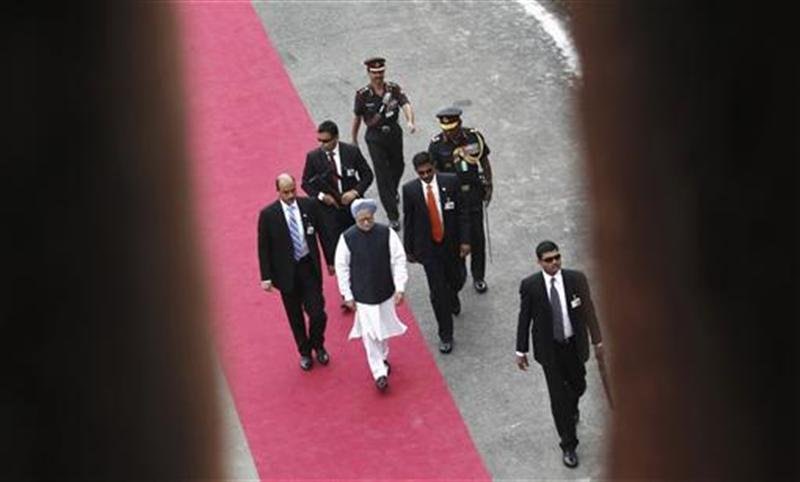
Time to roll out the red carpet?

I am not alluding to Dr. Manmohan Singh’s faith by addressing him as ‘Sardarji’ here. Sardar is a leader, and for the first ever time he spoke as one in his eight-year-long tenure. But all good packages don’t always have fresh and edible contents. In fact, the fine print on the package can be misleading.

Yet, I’d like to learn from the PM’s speech on the economic policy decisions for two reasons:

  1. I know precious little about the economy in terms of fiscal deficit and inflation. Therefore, I cannot see the issue holistically.
  2. He addressed the nation directly, instead of selecting a favourite media outlet to express his views, which is truly what a leader ought to do.

There were obvious political moments:

No government likes to impose burdens on the common man. Our Government has been voted to office twice to protect the interests of the aam admi.”

The aam aadmi does not read party manifestos. The aam aadmi, and even industry bigwigs, like freebies.

The government has taken away the freebies:

“Let me begin with the rise in diesel prices and the cap on LPG cylinders. 
We import almost 80% of our oil, and oil prices in the world market have increased sharply in the past four years. We did not pass on most of this price rise to you, so that we could protect you from hardship to the maximum extent possible…Much of the diesel is used by big cars and SUVs owned by the rich and by factories and businesses. Should the government run large fiscal deficits to subsidize them?”

This is utterly wicked. But, then, that is what politicians do. It is not as though the corporate guys will take out a morcha; Dr. Singh works in a FICCI manner, more or less. This is really a buffer comment to hide the small cars, small homes that will bear some of the burden. It may not be huge, but with this statement he has tried to build confidence, conveying that the rich will take the blows. Reminiscent of Indira Gandhi’s “Garibi Hatao” slogan that later transmogrified into the License Raj.

It is time to revisit history and the PM did just that. He brought in 1991 when he as finance minister in P.V.Naramimha’s Rao’s cabinet made the economy ‘free’. The problem was, and continues to be, that freedom will always be in the hands of a few; that it might percolate to the lower strata is a bonus, never the main concern. I don’t wish to be a killjoy, but weren’t the big scams with lobbying and kickbacks the result of just this free-for-all?

Fine, kerosene has been left untouched because it is used by the poor. This is simplistic thinking, especially when he asks:

“Where would the money for this have come from? Money does not grow on trees. If we had not acted, it would have meant a higher fiscal deficit, that is, an unsustainable increase in government expenditure vis-a-vis government income. If unchecked, this would lead to a further steep rise in prices and a loss of confidence in our economy.  The prices of essential commodities would rise faster.  Both domestic as well as foreign investors would be reluctant to invest in our economy. Interest rates would rise.  Our companies would not be able to borrow abroad.  Unemployment would increase.”

He has created a Robinhood scenario. Rich subsiding the poor. Only, the rich will get a backdoor entry through “building investor confidence”. Is this good for the economy in the long run? How many of the poor will be employed, how many health and education schemes will see fruition as a result? Of course, this is putting the cart before the horse. The reason is that the horse can gallop away and leave the cart behind.

The PM’s views on the world situation, however, cannot be discounted:


“You should know that even after the price increase, the prices of diesel and LPG in India are lower than those in Bangladesh, Nepal, Sri Lanka and Pakistan.”


“The world is not kind to those who do not tackle their own problems. Many European countries are in this position today.  They cannot pay their bills and are looking to others for help.  They are having to cut wages or pensions to satisfy potential lenders.”


There is absolutely no doubt about this. India has remained relatively unsullied by the fall of the big economies, but who had to bear the brunt? And who were the people responsible for part of the major bungling? Wall Street. Big men with big greed.

His emphasis on global investment is a huge concern.


“The world is not kind to those who do not tackle their own problems…I am determined to see that India will not be pushed into that situation.  But I can succeed only if I can persuade you to understand why we had to act.”


It is, indeed, better for a nation to let its citizens work on the money than depend on loans directly. The “begging bowl” syndrome has not afflicted India to a great extent.

And this, the country can be proud of. The country should also be proud when people question it, for only then can there be true progress. India is not a single state whose development module can whitewash its other ills. To be more blunt, Manmohan Singh is not Narendra Modi.

We all know that there is a need for growth, but it cannot happen with a magic wand. In the process of the economy being stabilised, there might be little tremors. Can’t help but paraphrase Rajiv Gandhi’s comment (“When big tree falls, earth will shake”): When big tree is planted directly in the soil, there will be some mud that will come loose.

At this moment, my ‘aam aadmi’ imagination can only conjure up diesel-guzzling SUVs being splashed with sludge.

© Farzana Versey

20.4.12

The colour of fire: Agni-V

I hate missiles. They are inhuman. But, of course, you might say, that is the idea. I hate missiles because I like a fair fight, if at all. Firing missiles with a push of a button is not fair. Don’t give me examples of other countries and how all is fair in love and war. It is not.

Yet, we in India have been jubilant over the Agni-V ballistic missile that took off from Wheeler Island off the Odisha coast on Thursday.

I tried to get excited as I saw a few clippings on television and then some photographs. 


In repose it looks like a giant-sized pencil. It reminded me of a fairytale where a young character stares wide-eyed at this marvel and tries to grasp it in her hand and she just cannot. And then with a great rumbling sound it moves on its own and whooshes off into the sky, writing out something on the clouds in red letters. The girl cannot read it clearly and the pencil is gone. She cries. For some reason I think of the character as a girl. Maybe, I am rewinding to my own childhood.

Missiles are an adult childhood game. I want to applaud this longest range ballistic missile with a range of over 5,000 kms. I want to start clapping when I read newspaper reports that call it “a high five moment”, “a game changer”. I want to make angry faces at the US for lecturing us to “exercise restraint” and to Chine for calling it a “political missile”. We are just playing. So what if it can reach most parts of China. I can reach China too.

I still see that little girl and a colour pencil. But now I look closely and it has ‘Bharat’ written on it, and then it pierces the clouds and withstands heat of 3000 degrees Celsius. I had no idea heat could ever get that hot. I do not know many things. I am sweating in 35 degrees C. This must be one swell of a missile. It has the right name. Agni – fire.


We are now part of the elite club of nations with Inter-Continental Ballistic Missile (ICBM) technology like U.S., Russia, France and China. I read that, “India's policy of no-first-use of nuclear weapons, Agni-V will provide the country with depth in deterrence.”

This makes me feel good. The missile can reach very far, can destroy, but unless somebody else uses it first we will not do anything. I don’t know much, but I only hope it does not start to rust, or its parts do not get consumed with all the wiring inside. If it can withstand so much heat, then it must be careful not to burn itself. It happens with so many things in life.

I know you will tell me to shut up and stop this fairytale. You will quote some scientist who said, “Today, we have made history. We are a major missile power.”

Okay. I want to be part of history, of an elite club. I also want every little girl and boy to get a colour pencil just like Agni-V to act as deterrence against hunger, and to bring some cheer in their lives.

25.9.11

Can India afford the Formula race?

While I am against the globalisation mirage of India, I think that any of us firing the gun from the shoulders of the poor and dispossessed, unless they are specifically the target of discourse, is patently unfair. I can speak only for myself and in many ways all of us who are English-speaking/educated and have access to technological modes of communication can be deemed elitist, at least at the level to access to information and its dissemination.


The subject of India’s debut in the Formula 1 circuit is bound to raise the same questions about whether we can afford it. We cannot afford nuclear weapons, we cannot afford branded goods, we cannot afford fancy cars mainly because they hog up space. Who is this 'we', though? It is not a single group.

Let us take the arguments - well-meaning though they are - raised in an email from a discussion group:

It is strange that India, a zero in international sports (track & field, football etc) is to host this most expensive of sports.

Tickets will be priced at Rs 30,000 (£400) for two days. Germany’s ace Michael Schumacher has apparently given his blessings while America’s Lady Gaga (who usually sings and gyrates near naked) has been invited to perform at the F1 event. India elites have long been hungry for the western presence and approval. There is no doubt that the track must have been planned and constructed with total foreign knowhow.

It is true that we do not have a great record in sports, but that is mainly due to the cussedness of sports politics. Our hockey team wins and they are offered a piddly sum as reward. This is supposed to be our national game. How did it come to be so? Because we were good at it, the very best. Those were not days of sponsorship. In cricket, too, we have been fairly consistent, and rather good well before the advent of IPL and one dayers and T20. We have done well in golf, in snooker, in chess, in athletics, in archery, in weightlifting, in tennis, in badminton, and we have climbed mountains. It is not about who has done better. Let us not forget that even a Usain Bolt gets disqualified.

Many of these sports require sponsorship or patronage. Remember Sania Mirza’s training was paid for by a businessman. Most equipment and clothes don't come cheap. If we send shabby-looking players, our internationalists will be the first to object about our ‘image’. Training in many of these games is in fact expensive. Yet, quite a few of our current sports stars had rather humble beginnings, if we look at any major sport. There is a pecking order, no doubt about it, but does it have to do with an elitist sport?

It is far less elitist than horse racing, and not many strive to become jockeys. Yet, every year there are a few prime derby events and it must be said it is the only sport where the gamblers get more prominence, or the owners rather than the real players. Car racing and go-karting appeal to a larger audience, and like any sport test the stamina and skill of the drivers. It is also extremely risky. India has been silently conducting racing events for years now, and the tracks outside Chennai and Bangalore do not depend on foreign knowhow. I happen to know some people and have visited the Sriperumbadur track. The glamour aspect is there primarily because cars are anyway associated with it through advertising. We should be more worried about the number of foreign cars that are entering the Indian market and roads.

If we can get thrilled about Bill Gates coming and lecturing us about philanthropy then Schumacher’s visit is great. We have had some of our own drivers play at the international level. And Lady Gaga or any pop star from any field is an added attraction. When Oprah wants to do India she does not find ordinary people but our celebrities; that ‘gay prince’ appeared twice on her show with full royal regalia making a mockery of our democracy.

As regards ticket pricing, Indians eating out cough up this much at five-star hotels; they attend western classical music concerts which cost a pretty penny; they blow up on several other products, and they are made to feel wonderful when they buy a dinner table at a charity function if Richard Gere attends. The overheads cost more than what the charity gains.

Consider the fact that 80% of Indians have to live on RS 600 a month. They would need to save four years of earnings just to watch a bunch of overrated foreign drivers going round and round the course 60 times. Clearly the event is not for the masses but probably to impress the westerners that India has come of age – it is an ‘emerging power’, no matter that it is a starkly poor and malnourished country.

I am not sure if not having these races will solve poverty. These games are indeed not for the masses, just as reading and writing in English are not.

18.8.11

Tea from Ivy League

 
I like tea. So, when I heard that a Harvard Business School graduate decided to get into the tea business, I thought we were in for a true son-of-the-soil story. Oh, I forgot. I am a cynic. I am not supposed to like all this. There has to be a niggling thought.


Right. It is a bit more than niggling. People enter these top institutes and then decide to give it all up. It is rarely simple. I have met a few who did quit cushy jobs because of conviction. Amuleek Singh Bijral tries his hand at modesty:


“There are thousands of chai wallas in this country and I’m just one of them. The beverage that I sell has a history of three and a half thousand years. I have a technology background and I sell tea. People think it’s exotic and unconventional... I don’t.”


One, he was addressing students from the Indian Institute of Management and other biggie schools on the subject of “unconventional entrepreneurs”.


Two, he is the owner of Mountain Trail Foods and his Amuleek Chai Points have ten outlets all over Bangalore.


Three, if it is not all that exotic, then why does he bring in history? Do those thousands of chaiwallas think like him?


Among his staff are IIT and IIM graduates. This is just another business enterprise. As expected, there is a tendency to believe they are better and will offer something more:


“Chai is a global phenomenon. Everywhere I go I see people cribbing about lack of good tea. I wanted to do a scalable business and one that had a big market. Chai provided both.”


Everything has to be a phenomenon. Chai is part of the imbibing habits of people across the world, just as performing morning ablutions is. It does not become a global phenomenon. Indian tea has always been in demand – whether it is Darjeeling, Assam, or the green tea from Kashmir.


The problem with the unconventional entrepreneurs is that profit-making is the sole imperative, whatever else they may say. It is fine for their benefit, but this is one more attempt – and I am not singling out this gentleman – to create a different demand. It works in tandem with the multinational ethos.


How does it alter the social consumer landscape? It could take away the business from smaller companies and most certainly from the small chaiwallas. It will not be much different from the Baristas. You make it into a corporate culture and automatically it is seen as organised, clean, efficient and of superior quality. Add to this, the man is from Harvard, so he will be better at reading tea leaves. Crystal ball gazing is big business, isn’t it?


Imagine, the locals saying, “Brake-fast at Tea-fanny”…


On a personal note, I like tea in so many different ways. There is the green tea that has to just have a touch of the fragrance; a little more and it is not green anymore.


For regular tea, I do a yoyo between the wimpy version where the flavour is left to the imagination and the several types that hit you. We call the first light tea. Who can forget Farooque Sheikh’s character in the delectable Sai Paranjpye film Katha twirling the keychain and saying that he only drinks light tea? It was an indication of being westernised.


Brewed tea can be brewed delicately, with tea leaves added to boiling water and left for a couple of minutes. Or it can be introduced at the beginning and go on and on to become ‘kadak’ (strong). Most Indians like it this way. There are some who will have tea only ‘cooked’ in milk - the famous doodh patti chai. One can add saffron to it.


I love my masala chai. I don’t care about the travesty of it. Tea without a touch of ginger and cardamom may be pure, but I like to sin.


I believe that too is a global phenomenon…


5.5.11

Quote uncoat

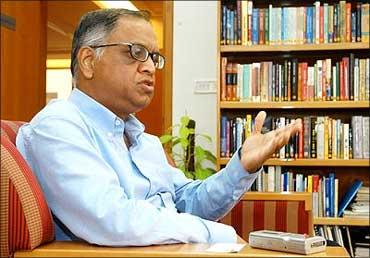
One can never step into Narayana Murthy’s shoes. I am just stepping into a position called chair of the board

- K. V. Kamath, new CEO, Infosys

For all the humility and ‘aal izz well’ formula of Infosys, the fact remains that Narayana Murthy made the decisions. He was the throne of Egalitaria. He may now be ruminating about “siesta and sitcoms”, but there won’t be any let-up. The hierarchy here might not have been vertical, but it is most definitely horizontal with all the speed-breakers and zebra crossings in place.

Okay, I don’t know anything about Mohandas Pai and whether he quit because he wanted to be CEO, but was the company not started by seven broke blokes? Where are they in this successful enterprise? Does the world gasp for any of them and the way Infosys played the global game according to global standards? Truth is it became a one-man enterprise with one man being nice about the rest. It is a private company and people can do what they want with it, but it most certainly was not about real inclusiveness.

What Mr. Kamath says is not only about stepping into shoes; the chair itself is Narayana Murthy.

11.3.11

Kannada Calling, Mr. Narayan Murthy

Any Kannada books?
Infosys Chairperson N R Narayana Murthy can afford the luxury of emotions, among other luxuries. The Karnataka government wanted him to inaugurate the Vishwa Kannada Sammelan. Kannada writer Baragur Ramachandrappa was not happy with this. Murthy finds it “absurd to label him anti-Kannada”. These were the words in the report, but not by Mr. Ramachandrappa. He had written to the chief minister:

“I can understand them inviting him to inaugurate the World Investors’ Meet. His contribution to the field of business is immense. But what has he contributed to Kannada and its culture. The establishment needs to understand that they are organising a Vishwa Kannada Sammelana and not a Vishwa Karnataka Sammelana. The subtle distinction is that the former has a cultural context to it. How does Narayana Murthy fit into this scenario? He is not a cultural face.”

Culture in this context is specific to the arts and not to social mores. So, there is indeed a distinction. But the government wants a global face. Why must regional literary and artistic activities be held hostage to how the international community perceives them? Apparently, Mr. Murthy had advised the authorities to choose a litterateur, but they said it was not relegated to Kannada. In that case they ought to change the title of the event. Money power seems to be doing all the talking and also getting legitimised as the cultural faƧade. It would not hurt Murthy to be seen as such since roots have such currency, especially among global Indians. No wonder he said:

“Kannada is the language of my emotions.”

Emotions are private. They are not displayed at seminars and most certainly not as an identity card.

As happens often, it becomes a tussle between the local language and English. Baragur pointed out:

“He always quotes Chinese model, where English is being encouraged but says nothing about the fact that major IT companies there have developed software in the Chinese to ensure that their mother tongue is part of the next generation too.”

This is a moot point and not a lesson we are ready to learn. The Chinese have managed a fine balancing act and most of their enterprises can in fact said to be culture-driven, in that there is little compromise on that front. In India, at least in urban areas, we discourage regional languages; it is considered too vernacular.

This is not to dismiss English. I am writing in it. This is to give a holistic approach. But Mr Murthy’s take is different:

He said he would have 200-250 peons, drivers, etc asking him every year to get their kids admitted to English-medium schools. They asked him to take up the issue with the government so that the children of the poor can also become engineers and doctors. Murthy told the government: “Why don’t we have information on TV and press about the advantages of English and Kannada medium by qualified people. Let people then decide.”

How will people decide? Will there be elections on this issue? Or a committee will be formed? How can one lay down the advantages of a language when it is an evolving entity that is used to express several things at different times?

It is no surprise that peons and drivers would want their children to study in English-medium schools. They should not be denied it. But, as he himself stated, he studied initially in a Kannada school and went on to be what he is. Therefore, language is not an impediment. One is not so concerned about the poor getting into English-medium schools as much as the rich not being tutored at all in Kannada or any other regional language. Murthy is skirting this issue by firing from the shoulders of the poor.

This brings us to his role in Kannada culture. He may be the face of Karnataka and Bengalaru (Bangalore) more particularly. He probably does sponsor cultural activities. However, it is time the government stopped patronising people for the wrong reasons – whether they be entrepreneurs or even cultural upstarts who curry favour with the establishment. And if they want to showcase not just Kannada, then they can get whoever they wish to inaugurate the sammelan. Narayan Murthy may then not even need to waste his emotions.

- - -
More on the 'worth' of CEOs as calculated by students here

22.12.10

Mohamed Haneef and the Middle-class

Mohamed Haneef and the Middle-class
by Farzana Versey
Countercurrents, December 22

Julian Assange has given the Indian middle-class and the media the thumbs up. He is probably not aware of the lobbying controversy. Besides mentioning our “vibrant” journalism, he told an Indian newspaper that he was optimistic because “you have a rising middle class. You have more people getting access to the internet. So, I am quite hopeful of about what is going to develop in India”.

The middle-class, whether rising or otherwise, tends to be complacent. Such leaks have worked as scoops before; we have had politicians eat crow and then gone on to crow about it. That’s how it works here and that’s how it works elsewhere. The moralistic middle-class did not flinch about a Bill Clinton and it elects parties that have $1000 ticket events for fund-raising, not to speak about celebrity endorsements. And in Australia how many middle-class people booed out the former Prime Minister John Howard for his anti-immigrant statements, specifically targetting a certain religious group?

This brings us to the closure of the case of the Indian doctor, Mohamed Haneef, who was arrested in Australia, where he worked, and imprisoned for two weeks without a charge against him only on the basis of a suspicion of involvement in the Glasgow International Airport terrorist attack. He will be paid compensation, reportedly worth Aus $1 million. The manner in which his inquiry was conducted, the lack of evidence or rather the wrongful use of evidence, shows that there was a vicious attempt to incarcerate him, probably also the first showpiece for its 2005 Australian Anti-Terrorism Act. Since July 2007 when he was arrested to now, he has had to fight to prove that he is innocent.

The rising middle-class did not come out to support him, not in India, not in Australia. A ‘public outcry’ has become just another ruse for demonising the victim, for it furthers the case for kangaroo courts. The internet is obsessed with people and events that are ‘happening’. There won’t be any leaks about these incidents, even though none of this can happen with the connivance of the powers. This was a cross-continental case. Why are the authorities not being put on trial for bungling it, as the independent inquiry has found they did?

Dr. Haneef will get the money, and he had “sought damages for lost earnings, the interruption to his medical career, damage to his reputation and emotional stress”. Unfortunately, the emphasis will be on the monetary aspect and not on the real issue of making a case on the basis of suspicion. It raises questions about how the stereotyping starts at the top and percolates down to those who have access and are ‘wired’ to the world. This is just such a superficial indulgence. I can imagine how the media will want to know what he will do with the money, will he take up the cause of others like him, all hinting at the settlement. Rules have been flouted, but that will be forgotten. He has had to live with being tainted when terror screams out from the power peaks of establishments that terrorise people into believing that they are at risk. It is made out to be some kind of epidemic, and the rising middle-class wants to be safe because it is awfully sorry for itself. This is the package deal of morality combined with upward mobility.

Dr. Haneef, too, talks about moving on. This is the middle-class fallacy. No one moves on; they just move ahead and don’t look back in anger. This lack of ire is what will make sure that any expose remains in the realm of a whodunit. It is time for popcorn.

I was surprised to read a senior official’s comment that the WikiLeaks model would work in India. “There is incredible amount of corruption and a lot of it is well documented. The problem is that our government servants, who have access to these files, are very, very afraid to leak documents. They don’t even trust most reporters.”

Since when has corruption begun to be well-documented? In really big cases, there are files that have been passed and dates with names that can be pinned down. But it is the government servants who are the beneficiaries. It is convenient to point fingers at the politicians, but what about the bureaucracy? Yes, the same much-in-demand, dowry-enabled bureaucracy? Before entering a politician’s cabin, everyone from the trader to the big businessman, has to go through babudom, the kingdom with lost keys. The same one with the middle-class morals has to rise, after all. The uniform changed from polyester shirts, to the safari suit and is now more striped Park Avenue or even the odd Marks and Spenser’s.

This babu is the one who files the culpable files as well as those implicating innocents. Why are we not concerned about the latter? Why is it only about the wrong-doings when the ones who have done no wrong far outnumber the criminals? Look at the undertrials in prison, look at those waiting for provident fund or fighting to get their dues. Is there exposure about such cases?

There used to be a middle-class that cared, even if it sat helplessly, hand in head, chopping onions. Now, it does not. It isn’t only because onions are expensive, but because in the world of quick news you cannot just crib about price rise; you need to have a point of view about onion and the economy that drives it. This is spoon-fed and the middle-class person feels empowered with such knowledge. With this empowerment, sitting in a creaking armchair, now called antique instead of just a doddering old piece of furniture, this person will forget that buying power is being systematically reduced for essentials. The big players sell big dreams on plasma TV screens. It is all about the Big Picture.

The Raj Kapoor cinematic fantasy in black and white has become a mall rat flaunting, “Mera joota hai Japani, yeh patloon Englistani, sar pe lal topi Russi, phir bhi dil hai Hindustani” (My shoes are Japanese, trousers English, cap Russian, but the heart remains Indian.) This heart is now in the right place – at the centre of the hub. It isn’t about donning a cap, but how far we can go with the visiting Russian leader Dmitry Medvedev. Even a song that warmed so many people’s lips has now become a propeller for collaboration and business and the global euphoria.

The official quoted earlier had added, “It is not that we don’t have whistle-blowers in our system, but they need to be assured of secrecy.”

We did and Satyendra Dubey was killed. The rising middle-class did not have time. And that is what is frightening. Every case is a pushover. Until the next one comes along and we clear the cache.

22.12.09

Global Bubble of the Revivalist

Maverick: Global Bubble of the Revivalist
by Farzana Versey
Covert, December 15-30

Those who left have it good. While Prime Minister Manmohan Singh wants them to return home as “brain gain”, the right-wingers have been lauding them for precisely the same reason with an additional halo – the global revivalist.

In one of the fancy social satsangs at the altar of Mammon the luminaries wanted to know where Hindus figured on the world stage. There was no talk about India. It is precious, then, to talk about marauding Mughals and Christian missionaries. Does this not amount to merely following those notorious footsteps, the only difference being monetary power added to spiritual piffle?

Has anyone tried to understand how in those hundreds of years of occupation, India did not become a Muslim or a Christian nation? Those Hindus who converted to certain sects, like Bohras and Ismailis, are among the most educated and successful people in the country today.

In the world of the freshly-minted sophisticated anti-secularist, such details do not matter. To this mind the restoration of a hotel must be seen in the context of the Somnath temple which rose after each fall. It deviously disregards the fact that the rebuilding has been carried out by the management that has also generously set up a non- religious Trust to rehabilitate those who were affected in other areas as well. The global clock-turner is busy patting his back over restoration of places of worship and landmark sites, but there is absolutely no concern about resurrecting the ordinary citizen’s right to livelihood and dignity.

Listing the achievements of expatriates is typical of this tunnel vision. Of the few that become entrepreneurs or have prominent careers, there are thousands who perform ordinary tasks. Many have entered those western countries illegally or gone through agents after a lot of effort. Instead of wondering why this happens, this neo world citizen with a limited cultural baggage is basking in the reflected glory of achievers who had to go elsewhere to make their fortune and earn their fame because their homeland did not nurture their dreams.

The Knights and Nobel laureates refer to their Indian roots only when there is a bit of exotic drama required. How can they be considered a part of revivalism of ancient culture? Would they identify with the dubious idea of taking religion to new lands? They are on Forbes power list because of how much they influence society. Osama bin Laden is sharing space, too. If some build temples, then there are others like Swraj Paul who donate to the London Zoo. They pay huge sums to political parties in their adopted lands to get leverage for themselves and not their faith. It is quite simply business acumen and social opportunism at work. It has got nothing to do with keeping the flame of any potential Ram Rajya alive.

Yoga and levitating gurus is old hat and has little to do with healing powers and more to do with hype. It did not start with the new revivalists but old hippies. Being honoured and having festivals celebrated work as totems for ethnic minorities who may indeed possess talent. But, as Venkatraman Ramakrishnan made it amply clear, his “nationality is simply an accident of birth”. He would not want to be hailed as a global Hindu hero or be placed on the same pedestal as ashram evangelists.

In the excitement over the well-heeled, fossils of accruing mutual fund culture whose high-walled existence is no better than ghettos, the revivalist boasts that his religion is the only one that does not have a history of massacres. Loss of memory means ignoring the past of what some rulers did to demolish Jainism from South India between the 8th and 12th centuries, and the contemporary history of the Sikh carnage, the Mumbai riots and Gujarat genocide. To clothe these in the garb of a global phenomenon that has risen from the suffering of centuries is skulduggery and hypocrisy.

Perhaps it might do them well to ponder over a small fact that those Hindus who are today a part of the White House clique have been appointed by a half Muslim, half Christian.

Shall we call such resurrection a case of appeasement since delusional apocalypticism can only be a mirage?